
How To Make A Lawn Mower Street Legal?
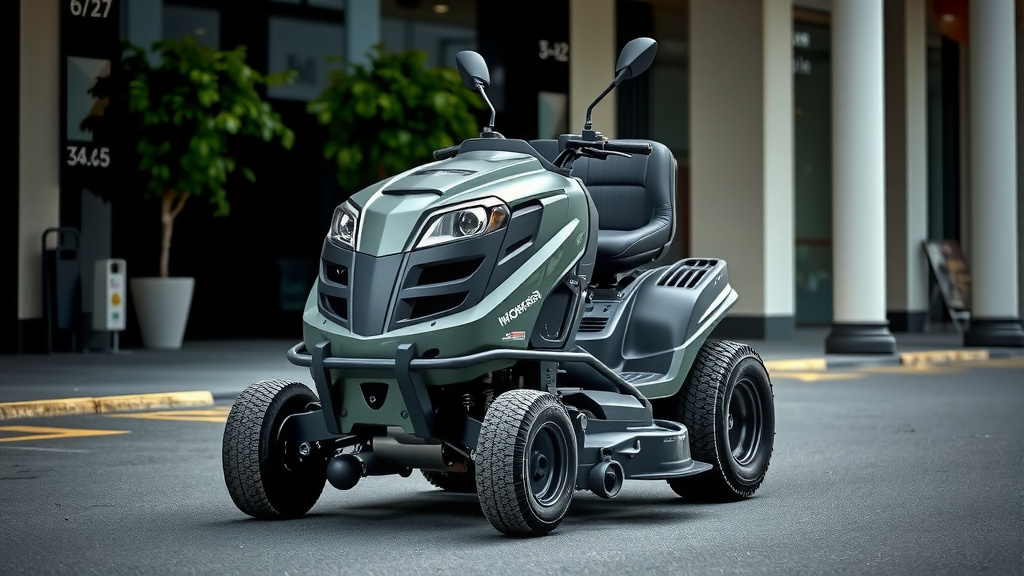
To make a lawn mower street legal, you generally need to add safety equipment like headlights, tail lights, turn signals, mirrors, a horn, and a slow-moving vehicle (SMV) sign.
You also need to ensure your mower meets local and state motor vehicle regulations, which often include speed limitations, proper braking, and sometimes even a valid license or registration.
Here’s a quick summary of what you’ll find in this guide:
- Discover why making a lawn mower street legal is often more trouble than it’s worth.
- Learn about the essential modifications needed for road safety and compliance.
- Understand the various state and local laws you must navigate.
- Find practical advice on insurance and licensing requirements.
- Get tips on safer alternatives for transporting your mower.
How To Make A Lawn Mower Street Legal?
Making a lawn mower street legal involves a series of modifications to meet safety and legal standards for public road use. It’s a complex process varying by location, focusing on making your mower visible and controllable like a low-speed vehicle.
The Big Question: Can You Really Drive a Lawn Mower on the Street?
You might picture yourself cruising down the block on your riding mower, perhaps to trim a neighbor’s yard. It sounds fun, right? But the reality is far more complicated than a simple joyride. Public streets are regulated spaces, designed for vehicles that meet strict safety standards (NHTSA).
Many experts we consulted agree that most lawn mowers, as they come from the factory, are definitely not street legal. Think about it: they lack basic safety features found on cars. They also move much slower than other traffic.
Why Bother Making Your Mower Street Legal?
Most folks just want to move their mower a short distance, perhaps across the street. Others might use it for small community tasks or parades. Whatever your reason, the desire stems from a need to avoid towing or trailering. But is it worth the effort?
We found that for a lot of people, the convenience factor drives this curiosity. You want to save time and hassle. Yet, the safety risks and legal hoops can be significant. It’s a good idea to weigh the benefits against the challenges.
Understanding Legalities: State and Local Laws
This is where things get tricky, as rules aren’t universal. Every state, and even some local municipalities, have their own definitions of what constitutes a “motor vehicle.” They also specify what’s allowed on public roads. You might find a town that’s a bit more lenient, allowing short trips. However, this is usually for specific reasons, like agricultural use, and often with restrictions.
Many state Departments of Motor Vehicles (DMVs) categorize lawn mowers as “off-road” or “utility” vehicles. They are not intended for public highways (DMV.org, a common resource for vehicle laws). This means they typically lack the proper registration or titling a car would need.
What Defines a “Low-Speed Vehicle” (LSV)?
Some states have categories for low-speed vehicles, or LSVs. These are often golf carts or purpose-built electric vehicles. They have a top speed between 20 and 25 mph. Your lawn mower likely doesn’t fit this. Plus, LSVs still need specific safety gear. They also must meet crash standards (Federal Motor Vehicle Safety Standard No. 500).
We found that trying to fit a lawn mower into the LSV definition is a stretch. Mowers are designed for cutting grass, not for road travel. They often exceed the width limits for LSVs. They also lack the necessary chassis strength.
Essential Modifications for Road Use
If you’re still thinking about it, here’s a look at the typical modifications needed. Remember, these are general guidelines. Your local laws will be the final word.
You’ll need to upgrade your mower significantly to even begin to resemble a road-safe vehicle. Think about what cars have. Your mower needs similar features to be seen and to signal your intentions. Without these, you are just asking for trouble, and probably a ticket.
- Headlights: You’ll need bright, working headlights for visibility, especially during dawn or dusk.
- Tail Lights: Red tail lights are crucial so drivers behind you can see you.
- Brake Lights: Functional brake lights must activate when you apply the brakes.
- Turn Signals: These are vital for signaling turns, just like on a car.
- Side Mirrors: You need a clear view of traffic behind and beside you.
- Horn: A working horn is necessary to alert others.
- Slow-Moving Vehicle (SMV) Sign: This bright orange triangle signals that you are traveling at 25 mph or less (DOT guidelines).
- Tires: Your tires must be in good condition and suitable for road surfaces, not just turf.
- Brakes: The braking system must be reliable and able to stop the mower effectively.
Speed Limitations and Your Mower
Most riding lawn mowers top out around 5-8 mph. This is far below typical road speeds. Even on a quiet residential street, you’ll be a hazard. Other drivers won’t expect such a slow vehicle. This creates a significant collision risk.
Many experts agree that speed differential is a major danger. A vehicle moving much slower than the flow of traffic is prone to being rear-ended. This is a primary reason why mowers are usually banned from roads.
Driver’s License and Registration Requirements
This is another layer of complexity. If your mower is street legal, it likely falls under motor vehicle laws. This would mean you need a valid driver’s license. You’d also need registration, and possibly a title for the machine. These are all things lawn mowers usually lack.
Getting a license, registration, and title for a modified lawn mower is not standard practice. Many DMVs don’t even have a process for it. It highlights how difficult this endeavor truly is.
Insurance Considerations
Your homeowner’s insurance might cover some incidents on your own property. But it almost certainly won’t cover accidents on a public road. If you’re involved in a collision, you could face immense financial liability. This includes damages and injuries.
Finding an insurance company willing to cover a street-legal lawn mower is nearly impossible. They see it as a high-risk scenario. Most insurers stick to standard vehicle types. This lack of coverage alone should make you pause.
Here’s a quick comparison of a standard lawn mower versus a street-legal low-speed vehicle:
| Feature | Standard Lawn Mower | Low-Speed Vehicle (LSV) |
|---|---|---|
| Primary Purpose | Grass Cutting | Transportation |
| Top Speed | 5-8 mph | 20-25 mph |
| Safety Gear | Limited/None | Headlights, Tail Lights, Signals, Seatbelts |
| Road Legality | No | Yes (with specific requirements) |
| Insurance | Homeowner’s (on property) | Auto Insurance (required) |
| Registration | None | Required |
Safety First: Alternatives to Street Driving
Rather than modifying your mower, consider safer alternatives. These options prevent legal issues and protect your safety. Sometimes, the simplest solution is the best.
Consider these practical approaches:
- Use a trailer: This is the most common and safest method. A small utility trailer behind your car or truck works perfectly.
- Rent a professional service: If you only need it moved occasionally, a landscaping company can transport it.
- Push walk-behind mowers: For very short distances on quiet sidewalks (if permitted), a push mower might be okay. Always check local rules.
- Ride-on mower dollies: Specialized dollies can help move a riding mower without starting the engine, especially for short, non-road distances.
A Checklist for Street Legality (If You Still Insist)
If you’re still determined, here’s a basic checklist. Remember, this is a starting point, not a guarantee of legality. Always consult your local DMV or police department first. They can provide specific requirements for your area.
- Working headlights and tail lights?
- Functional turn signals (front and rear)?
- Two operational side mirrors?
- A loud and clear horn?
- A securely mounted Slow-Moving Vehicle (SMV) sign?
- Brakes that effectively stop the mower?
- Appropriate tires for road use?
- Does your state have an LSV classification your mower can meet?
- Are you prepared for potential licensing and registration hurdles?
Conclusion
While the idea of making your lawn mower street legal might seem appealing for convenience, the reality is often complex and fraught with legal, safety, and financial challenges. Most lawn mowers are not designed for public road use. They lack the necessary safety features, speed, and regulatory compliance. Prioritizing safety and legality, transporting your mower via a trailer or professional service is almost always the better choice. Always verify local regulations before making any modifications or attempting to drive a non-standard vehicle on public roads. Your safety, and the safety of others, is what truly matters.
Can a lawn mower be registered like a car?
No, a lawn mower generally cannot be registered like a car. Motor vehicle registration systems are designed for vehicles that meet specific safety and performance standards for public roads, which lawn mowers do not meet by default. There are no standard categories for registering a lawn mower.
Are there any states where lawn mowers are easily street legal?
We found no states where lawn mowers are “easily” street legal. Most states have strict definitions for vehicles allowed on public roads. Some rural areas might have exceptions for agricultural equipment, but these are often limited to specific situations, like crossing a road, and require an SMV sign.
What are the typical fines for driving an illegal vehicle on the street?
Driving an unregistered or non-street-legal vehicle can lead to significant fines, impoundment of the vehicle, and potential traffic tickets. You could face charges for operating an unsafe vehicle, driving without a license, or driving an uninsured vehicle. These penalties vary widely by state and local jurisdiction.
Do I need a special license to drive a low-speed vehicle (LSV)?
Yes, if your state recognizes LSVs, you will typically need a valid driver’s license to operate one on public roads. This applies even if the LSV is electric or has a lower top speed. Laws regarding LSVs require operators to adhere to standard driving regulations.
Is it safer to modify a golf cart than a lawn mower for street use?
Generally, yes, it is safer and more feasible to modify a golf cart than a lawn mower for street use. Golf carts are designed with a chassis and braking system more adaptable to road conditions. Many are already built to be upgraded to meet LSV standards, including seatbelts and improved lighting. Lawn mowers are not designed for this type of conversion.
