
How To Mow Lawn With Lines?
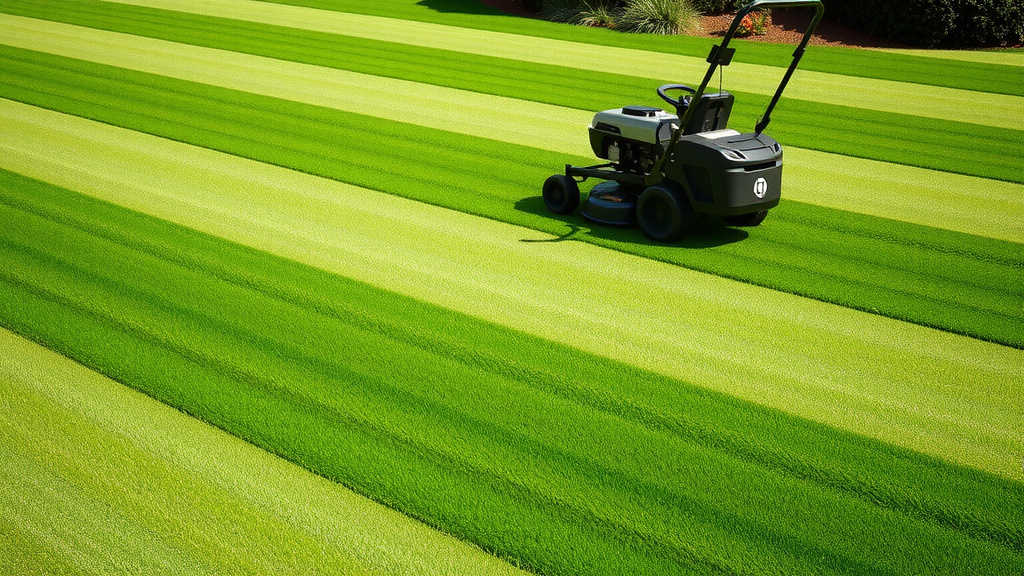
To mow a lawn with lines, begin by mowing the perimeter, then choose a straight path across your lawn.
Alternating your mowing direction with each pass creates those striking, professional stripes.
Here’s a quick overview of how to achieve those beautiful lawn stripes:
- Always mow the perimeter first to create a clean border.
- Choose a consistent mowing pattern, like straight lines, across your lawn.
- Alternate your mowing direction each time you cut to “bend” the grass blades.
- Ensure your mower blades are sharp for a crisp, clean cut.
- Overlap each pass slightly to avoid missed spots and enhance striping.
How To Mow Lawn With Lines?
Creating those classic lawn stripes involves a simple technique: mowing the outer edges first, then alternating your cutting direction with each pass. This method leverages how light reflects off bent grass blades to form visible lines.
Understanding Lawn Stripes: It’s All About Light!
Have you ever wondered what makes those perfect stripes appear? It is not magic, we found, but physics! When you push your mower over grass, the blades bend. If they bend in one direction, they reflect light differently than blades bent the opposite way. This contrast is what creates the visual stripes you love.
Why Direction Matters for Striping
Think of it like brushing your hair. If you brush it all one way, it looks smooth. Brush it the other, and it might look different. Grass works similarly; its direction of bend dictates how much light it reflects, making some stripes appear darker and others lighter. Many experts say that the heavier your mower, the more pronounced your stripes will be (University Extension).
Getting Started: Your Pre-Mowing Checklist
Before you even fire up that engine, a little prep goes a long way. This initial step helps ensure a smoother process and better results for your perfectly striped lawn.
- Clear the Deck: Walk your lawn and remove any sticks, toys, or debris. These can damage your mower blades or become dangerous projectiles.
- Fuel Up: Check your fuel level. Running out of gas mid-stripe is never fun!
- Check Blade Height: Set your mower deck to the desired cutting height. For striping, slightly taller grass often shows stripes better than super short cuts.
- Blade Sharpness: Are your blades sharp? Dull blades tear grass, leaving ragged edges, which makes it harder to see distinct lines. We found that sharp blades are essential for a clean, professional look.
- Tire Pressure: For riding mowers, consistent tire pressure helps keep your deck level, ensuring an even cut.
Mastering the Perimeter Pass: Your Foundation
Starting with the perimeter creates a clean border around your entire lawn. This border gives you space to turn your mower around without cutting into flowerbeds or landscaping. It is your guide for straight lines.
Mowing the Edges
Begin by mowing one or two passes around the entire outer edge of your lawn. This initial perimeter cut establishes a clean border and provides a convenient turning area for your subsequent straight passes. It’s like drawing a frame around your masterpiece.
The Straight-Line Technique: Where Stripes Are Born
Now for the main event! The key to great stripes is consistency. Pick a starting point and stick to it.
Choosing Your First Stripe
After your perimeter passes, pick one side of your lawn to start your first straight line. For the most dramatic effect, many prefer to mow parallel to the longest edge of their lawn. This creates longer, more visible stripes.
Keeping Your Lines Straight
Look ahead, not down at your mower. Fix your gaze on a point about 10-15 feet in front of you. Aim for that point as you mow. As you approach it, pick a new distant point. This technique helps you maintain a consistently straight path.
Overlapping Each Pass
Overlap each pass by a few inches, typically about 2-4 inches, depending on your mower’s deck size. This ensures you do not miss any patches of grass and helps blend the stripes seamlessly. It is like painting a wall; you want to slightly overlap each stroke.
Alternating Directions: The Secret Sauce
This is where the magic really happens. Alternating your mowing direction is non-negotiable for visible stripes.
The Back-and-Forth Method
After completing your first straight pass, turn your mower around and make your next pass right alongside the first one, but in the opposite direction. For example, if your first pass went north, your second pass should go south. We found that this consistent back-and-forth motion is what “trains” the grass to create those defined lines.
Advanced Tips for Striping Perfection
Want to take your striping game up a notch? These extra steps can make a real difference.
Consider a Striping Kit
Many lawnmowers can be fitted with a striping kit. These are rollers that attach to the back of your mower, bending the grass blades more aggressively than the mower wheels alone. Research often connects these kits with significantly deeper and longer-lasting stripes (Lawn Care Journal).
Optimal Cutting Height
Cutting your grass a little taller, perhaps between 2.5 to 3 inches, often enhances striping. Taller blades have more surface area to bend, making the light reflection more noticeable. Very short grass can struggle to show distinct lines.
Moisture Levels
Mowing when the grass is dry helps blades stand up straight before cutting and bend cleanly afterward. Wet grass tends to clump and does not stripe as well. Aim for mid-morning after the dew has dried.
Troubleshooting Common Striping Issues
Even with the best intentions, you might run into some snags. Here are quick fixes.
| Issue | Possible Cause | Solution |
|---|---|---|
| Faint Stripes | Dull blades, short grass, too light a mower, inconsistent overlap | Sharpen blades, raise cutting height, consider striping kit, ensure proper overlap |
| Uneven Lines | Not looking ahead, inconsistent turning, varying speed | Focus on a distant point, make smooth turns, maintain steady pace |
| Missed Patches | Insufficient overlap between passes | Increase overlap to 2-4 inches, depending on mower deck |
Maintaining Your Striped Lawn
Your work is not done after the last stripe is laid. A little maintenance helps those lines last.
Vary Your Mowing Pattern Regularly
While you want to alternate directions each time you mow to create stripes, it is important to occasionally change the overall pattern (e.g., vertical one week, horizontal the next). This prevents ruts, grass wear, and promotes healthier growth by preventing the grass from constantly bending in the same direction (Agricultural Extension).
Fertilization and Watering
A healthy, dense lawn shows stripes better. Regular fertilization and proper watering support vigorous growth, which in turn means more robust grass blades to bend and reflect light. Think of it as giving your canvas the best possible foundation.
Conclusion
Mowing your lawn with lines is a rewarding endeavor that transforms your yard into a beautifully manicured space. By understanding how light interacts with bent grass blades, preparing your lawn, and consistently applying the perimeter and alternating-pass techniques, you can achieve those professional-looking stripes. Remember to keep your blades sharp, overlap your passes, and consider a striping kit for an even more dramatic effect. With practice and attention to detail, your lawn will soon be the envy of the neighborhood!
How often should I change my mowing pattern?
Many experts recommend changing your mowing pattern every two to three cuts. This helps prevent the grass from getting “trained” to lean in one direction too much, which can lead to thinning or wear over time, especially in high-traffic areas.
Does the type of grass affect striping quality?
Yes, the type of grass can definitely affect how well your lawn stripes. Grasses with wider, stiffer blades, like Kentucky Bluegrass or tall fescue, tend to show stripes more prominently than finer, softer grasses. Thicker, denser lawns also generally stripe better.
Can I stripe my lawn with a push mower?
Absolutely! You can achieve stripes with a push mower. While a heavier riding mower or a striping kit might create more dramatic lines, the fundamental principle of bending grass blades applies. Just focus on consistent, straight passes and alternating directions.
What is the best time of day to mow for striping?
The best time to mow for striping is typically mid-morning or late afternoon, after the dew has dried but before the hottest part of the day. Dry grass cuts cleaner and bends more effectively, leading to crisper lines. Avoid mowing during peak heat or when the grass is wet.
Do I need a special lawnmower to create stripes?
No, you do not necessarily need a special lawnmower. While some mowers or aftermarket striping kits can enhance the effect with rollers, any standard rotary mower can create stripes. The key is the technique: sharp blades, consistent height, and alternating your mowing direction with each pass.
