
How To Put A Turbo On A Lawn Mower?
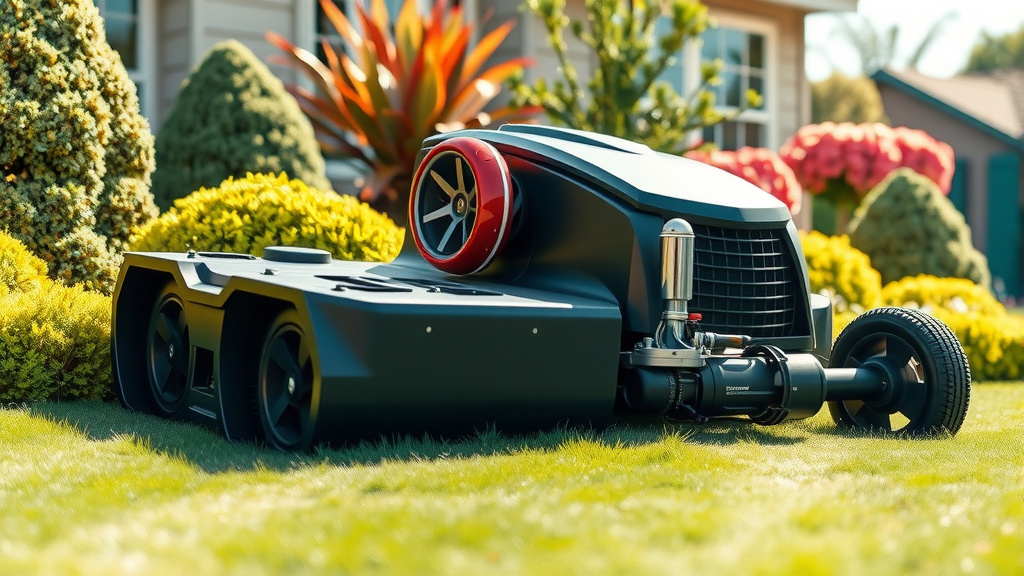
Putting a turbo on a lawn mower is generally not practical or advisable for most consumer models, as their engines are not designed to handle the increased stress and heat.
While technically possible with extensive modifications, the process to put a turbo on a lawn mower involves significant engineering, custom fabrication, and considerable risk to engine longevity and safety.
Here’s a quick overview of what you’ll find in this article:
- Turbocharging a lawn mower engine is technically very hard and often leads to failure.
- Most small engines lack the necessary internal strength for turbo pressure.
- You’d face huge costs and safety concerns attempting such a modification.
- We offer safer, smarter ways to get more power from your mower.
How To Put A Turbo On A Lawn Mower?
You cannot typically just “bolt on” a turbo to a standard lawn mower engine. It requires a complete overhaul of the engine’s internal components, fuel system, and cooling, making it an impractical project for almost everyone.
The Allure: Why Even Think About a Turbo Mower?
Picture this: you’re mowing your lawn, and suddenly, you wish for more power. Maybe you’ve seen videos of extreme builds, and the thought crosses your mind: “What if I put a turbo on my lawn mower?” It’s a fun thought, isn’t it? The idea of a small engine roaring with extra horsepower can be tempting.
Many of us dream of pushing our machines to their limits. More power often means tackling thicker grass with ease or just getting the job done quicker. It feels like an upgrade, a way to transform a simple tool into something extraordinary.
The Reality Check: Can Your Mower Handle It?
Before we go any further, let’s get real. Most lawn mower engines are simple, air-cooled, and built for reliability, not high performance. They’re designed for consistent, low-stress work, not the added pressure of a turbocharger.
We found that adding a turbo to these engines is like asking a marathon runner to suddenly become a weightlifter. It’s a different kind of stress entirely, and without proper preparation, things will likely break.
Understanding How a Turbocharger Works
A turbocharger is essentially an air pump. It uses exhaust gases to spin a turbine, which in turn spins a compressor. This compressor forces more air into the engine’s combustion chamber.
More air means you can burn more fuel, which creates more power. Simple in concept, but complex in application, especially for small engines.
Key Hurdles to Turbocharging a Lawn Mower
Let’s talk about the major obstacles you’d face. These aren’t minor tweaks; they’re fundamental design challenges. We’ve researched and found these points come up repeatedly in discussions about small engine modifications.
- Engine Strength: Standard mower engines have light components. Rods, pistons, and crankshafts are not built for increased pressure.
- Fuel System: You’d need a way to deliver more fuel. Carburetors aren’t designed for boost, so fuel injection would be needed.
- Cooling System: Turbochargers create a lot of heat. Small air-cooled engines can overheat very fast.
- Lubrication: Turbos need a dedicated oil supply, often pressurized. Mower engines usually have splash or simple pump systems.
- Space and Mounting: Where would you even fit a turbo? And how would you connect it to the exhaust and intake?
The Dangerous Side: Risks You Must Consider
Modifying an engine in this way carries significant risks. This isn’t just about losing a little money; it’s about safety.
Many experts warn about the dangers. Engine failure can be catastrophic, leading to flying metal parts, fires, or other severe damage. Is a slight power boost worth that kind of risk?
Explosion and Fire Hazards
Over-pressurizing an engine can cause it to explode. The fuel system modifications also introduce a greater risk of fuel leaks and fires. Always prioritize safety over power (OSHA guidelines often stress this for machinery).
Catastrophic Engine Failure
When an engine isn’t built for boost, its internal parts (pistons, connecting rods, crankshaft) can fail under the increased stress. This isn’t a gentle breakdown; it’s usually sudden and destructive.
The True Cost: It’s Not Just a Turbo Kit
Thinking about costs? It’s far more than just buying a turbo. Here’s a rough idea of what you’d need to consider if you were serious about this highly unlikely project.
| Component/Task | Estimated Challenge/Cost |
|---|---|
| Turbocharger Unit | Finding a suitable small unit is hard and expensive. |
| Engine Internals Upgrade | Custom pistons, rods, crankshaft – extremely costly, specialized. |
| Custom Exhaust Manifold | Fabrication needed to fit the turbo. |
| Fuel System Upgrade | Fuel pump, injectors, ECU – complex and expensive. |
| Cooling Solutions | Oil cooler, intercooler, potential water cooling – custom work. |
| Professional Tuning | Essential for reliability, a tuner experienced with small boosted engines is rare. |
You’re not just buying parts; you’re paying for expertise, custom fabrication, and countless hours of trial and error. This project would quickly cost more than a brand-new, more powerful mower (Consumer Reports often reviews cost-effectiveness).
Warranty and Legal Implications
Any engine modification, especially one as extreme as adding a turbo, will immediately void your lawn mower’s warranty. Manufacturers simply cannot support such changes.
Are there legal concerns? While not strictly illegal for private use, the increased noise and potential for mechanical failure could lead to issues. Think about your neighbors and local noise ordinances.
Smarter Ways to Boost Your Mower’s Performance
Alright, so putting a turbo on a lawn mower is a wild, likely damaging, and incredibly expensive idea. What are the practical ways to get more out of your existing machine?
There are many ways to make your mower feel stronger and work better without venturing into risky modifications. We found these methods are widely recommended by lawn care professionals.
Regular Maintenance is Power
This is often overlooked, but it’s perhaps the most important tip. A well-maintained engine runs at its peak efficiency. It’s like giving your car a tune-up; everything just works better.
Here’s a quick checklist to keep your mower humming:
- Clean Air Filter: A clogged filter chokes your engine.
- Sharp Blades: Dull blades make the engine work harder.
- Fresh Spark Plug: Ensures efficient ignition.
- Oil Changes: Clean oil keeps parts moving smoothly.
- Clean Deck: Remove caked-on grass for better airflow and cut.
Blade Upgrades for Better Cutting
Sometimes, it’s not about engine power, but how effectively that power is used. Upgrading your mower blades can make a huge difference.
Many experts suggest high-lift or mulching blades. These blades are designed to create more suction, lifting grass for a cleaner cut, or to chop clippings into finer pieces. This can make your mower *feel* more powerful, even if the engine output hasn’t changed.
Engine Tuning (Within Limits)
For some small engines, you can adjust the carburetor settings slightly for optimal performance. This is usually done by experienced mechanics. Do not tamper with factory settings without knowing what you’re doing, as it can cause damage.
You might consider using premium fuel if your engine recommends it, though this rarely offers a significant power boost in standard lawn mowers (American Petroleum Institute data confirms this).
Is It Truly Worth the Effort?
After considering all the technical challenges, safety concerns, and astronomical costs, you have to ask yourself: is attempting to put a turbo on a lawn mower truly worth it? For almost everyone, the answer is a resounding “no.”
The time, money, and risk involved vastly outweigh any potential, temporary performance gains. It’s a project best left to professional engineers with custom-built engines, not your average backyard mechanic.
Conclusion
While the idea of turbocharging a lawn mower is certainly exciting and captures the imagination, it’s a venture fraught with immense technical difficulties, safety hazards, and prohibitive costs. Your typical lawn mower engine just isn’t built for that kind of stress, and attempting such a modification will almost certainly lead to frustration and financial loss.
Instead, focus on practical, proven methods to optimize your mower’s performance. Regular maintenance, sharp blades, and sensible upgrades will deliver the best results, keeping your lawn looking great and your mower running reliably for years to come. Remember, sometimes the simplest solutions are the best.
Can you buy a lawn mower with a turbo already installed?
No, you generally cannot buy a standard consumer lawn mower with a turbocharger pre-installed. The design and operational requirements for turbochargers are not compatible with typical small lawn mower engines.
What is the best way to increase lawn mower engine speed?
The best way to increase lawn mower engine speed is through proper maintenance, such as ensuring a clean air filter, fresh spark plug, and clean carburetor. Do not attempt to alter the engine’s governed speed, as this can cause damage and is unsafe.
Will adding premium fuel to my lawn mower make it more powerful?
For most standard lawn mower engines, adding premium fuel will not make it more powerful. These engines are designed for regular unleaded gasoline, and premium fuel offers no performance benefit unless specifically recommended by the manufacturer.
How much horsepower does a typical lawn mower engine have?
A typical walk-behind lawn mower engine usually has between 3.5 to 7 horsepower. Riding lawn mowers and lawn tractors can range from 10 to 25 horsepower, depending on the model and engine size.
What are common signs of an underperforming lawn mower engine?
Common signs of an underperforming lawn mower engine include sputtering, difficulty starting, excessive smoke, loss of power when cutting thick grass, and unusually high fuel consumption. These often point to a need for basic maintenance.
