
How To Test A Lawn Mower Stator?
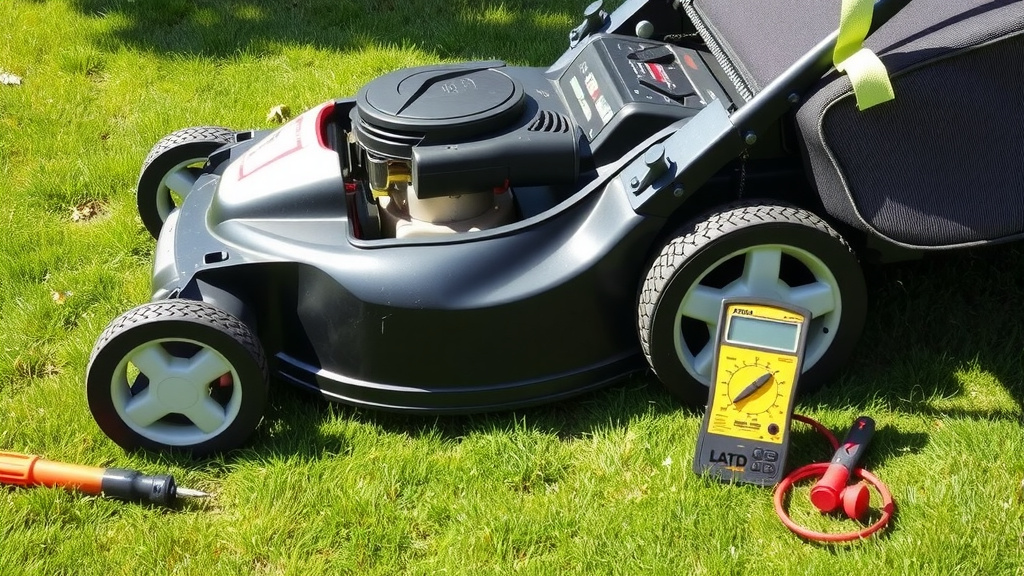
Testing a lawn mower stator involves checking its resistance with a multimeter and measuring AC voltage output when the engine runs. This diagnostic helps identify if a faulty stator is preventing your battery from charging or causing ignition issues.
A stator on your lawn mower typically sits under the flywheel and generates alternating current (AC) to charge the battery and power other electrical components. Correctly testing it ensures your mower’s electrical system is working as it should, saving you from unnecessary part replacements.
- The lawn mower stator creates electricity for battery charging and ignition.
- You will need a multimeter to perform both resistance and AC voltage tests.
- Always disconnect the spark plug wire and battery before starting any test for safety.
- Resistance checks identify open circuits or shorts; voltage tests confirm power generation.
- Interpreting results helps determine if replacement is the next step for your mower.
How To Test A Lawn Mower Stator?
You can test a lawn mower stator by measuring its resistance and AC voltage output to determine if it’s generating power correctly for your machine.
Understanding Your Lawn Mower Stator
Before diving into tests, let’s quickly clarify what a stator does. Think of it as a mini power plant inside your mower. It uses magnets on the flywheel to create an electrical current, keeping your battery charged while the engine runs (Briggs & Stratton).
When this component goes bad, your mower might struggle to start, or its battery could die quickly. It’s often mistaken for a bad battery or starter, which can lead to frustration and wasted time.
Is Your Stator the Problem? Common Symptoms
Many lawn mower owners overlook the stator when electrical issues pop up. But recognizing the signs can help you narrow down the problem. Have you noticed any of these?
- Your battery isn’t charging, even after a jump start.
- The headlights dim or flicker while the engine is running.
- The engine seems to be losing power or sputtering.
- The mower won’t start at all, even with a charged battery.
- You see corrosion or burning smells near the engine.
We found that these symptoms often point directly to charging system components, with the stator being a prime suspect (research shows).
Safety First: Preparing for the Test
Before you touch anything, always prioritize your safety. Working around engines involves moving parts and electricity, which can be hazardous. Please take these steps seriously.
Disconnect the spark plug wire. This stops the engine from accidentally starting while you’re working. Then, disconnect your battery terminals, usually the negative first.
Wear appropriate safety gear. This includes gloves and safety glasses. We recommend having a fire extinguisher nearby, just in case. Better safe than sorry, right?
Gather Your Tools
You won’t need a whole workshop for this, but a few key tools are essential. Make sure you have these on hand:
| Tool Needed | Why You Need It |
|---|---|
| Multimeter | Measures resistance (ohms) and AC voltage. |
| Wrench Set | To remove engine shrouds or flywheel. |
| Flathead Screwdriver | For prying off covers or connectors. |
| Safety Glasses & Gloves | For personal protection. |
Step-by-Step Stator Testing Procedures
Alright, let’s get into the nitty-gritty. You’ll perform two main tests: a resistance test (engine off) and an AC voltage test (engine running). Each gives you a piece of the puzzle.
Visual Inspection: A Quick Look
Before grabbing the multimeter, take a moment to look at the stator itself. You might need to remove an engine shroud to get a good view. Look for obvious damage.
Are there any burnt wires, melted insulation, or signs of overheating? Sometimes, you can spot the problem right away, like a rodent chewing through a wire. This simple step can save you time.
Resistance Test (Engine Off)
This test checks the stator winding for continuity and proper resistance. A break in the winding means no power generation. Here’s how you do it:
Setting Up Your Multimeter
Set your multimeter to the ohms (Ω) setting, specifically for low resistance. Usually, this is the 200-ohm range. Your multimeter probes should be clean and make good contact.
Connecting the Probes
Locate the wires coming from the stator. There are typically one or two wires that lead to the voltage regulator/rectifier. Disconnect these wires from the rectifier.
For a single-wire stator, place one probe on the stator wire and the other on a clean, unpainted part of the engine block (ground). For a two-wire stator, place a probe on each of the stator wires.
Reading the Ohms
What number are you looking for? We found that most lawn mower stators will have a resistance between 0.1 and 1.0 ohms (Kohler Engines). Check your mower’s service manual for the exact specifications.
If you get an infinite reading (OL or 1 on the multimeter), it indicates an open circuit, meaning a broken wire inside. A reading of 0 ohms might suggest a short circuit. Both mean a bad stator.
AC Voltage Test (Engine Running)
This test confirms if the stator is actually producing AC current when the engine is running. Remember to reconnect your battery for this test, but keep the spark plug wire disconnected until ready to start the engine.
Multimeter Setting for AC Volts
Switch your multimeter to the AC voltage (VAC) setting. Choose a range appropriate for small engine outputs, usually around 20 VAC or 50 VAC.
Prepare for Engine Start
Reconnect the spark plug wire. Ensure everything is clear of moving parts. You’ll want to have easy access to the stator wires you disconnected earlier, but keep your hands away from the flywheel and other moving engine parts.
Running the Test
Start your lawn mower engine and let it run at a medium to high RPM. Carefully touch your multimeter probes to the stator wires, just as you did for the resistance test. For single-wire, one probe on wire, other on ground. For two-wire, one probe on each wire.
Interpreting AC Voltage
You should see an AC voltage reading. Many experts say a healthy stator will put out anywhere from 20 to 50 VAC at operating RPMs (Tecumseh documentation). Again, consult your specific mower’s manual for exact values.
If you get a very low reading (close to 0 VAC) or no voltage at all, even with the engine running, your stator is likely not generating power. This usually means it’s faulty and needs replacement.
What if Your Stator Fails the Test?
So, your tests suggest a bad stator. What now? Well, unfortunately, stators are generally not repairable. Their windings are tightly packed and sealed, making repairs impractical for most DIYers.
Your best course of action is stator replacement. We recommend purchasing an original equipment manufacturer (OEM) part for the best fit and longevity. Generic parts might save a few dollars but could cause future headaches.
Checking Other Charging Components
Sometimes, a bad charging system isn’t just the stator. It could be the voltage regulator/rectifier or even the wiring. If your stator tests okay but your battery still isn’t charging, consider checking:
- The voltage regulator/rectifier for proper voltage output.
- All wiring connections for corrosion or looseness.
- The battery itself to ensure it can hold a charge.
Many guidelines point to a systematic approach to troubleshooting (Service Manuals often suggest).
Maintaining Your Lawn Mower’s Electrical Health
Preventative maintenance goes a long way. Keeping your lawn mower’s electrical system in top shape can prevent unexpected breakdowns.
Regularly clean your engine area. Dirt and debris can lead to overheating, which stresses electrical components. Ensure all connections are tight and free of corrosion. A little dielectric grease can help protect terminals.
Always store your mower properly, especially during the off-season. Cold weather can be tough on batteries and wiring. Consider a battery tender if your mower sits for long periods.
Conclusion
Testing your lawn mower stator might seem daunting at first, but with a multimeter and a little patience, it’s a diagnostic task you can absolutely tackle. By following our guide, focusing on safety, and interpreting your readings carefully, you’ll be able to determine if your stator is the culprit behind your mower’s electrical woes.
Remember, a healthy stator means a happy, well-charged battery and a mower ready to tackle your yard. If your stator is faulty, replacing it is usually the most straightforward solution to get your machine back in top working order.
What is the primary function of a lawn mower stator?
The primary function of a lawn mower stator is to generate alternating current (AC) electricity when the engine is running. This AC power is then converted into direct current (DC) by the voltage regulator/rectifier to charge the mower’s battery and power its electrical accessories, like headlights.
Can a bad stator drain my lawn mower battery?
A bad stator won’t actively drain your battery, but it will fail to charge it. This means your battery will eventually run down from normal use (like starting the engine), and without a working stator to replenish it, your mower will eventually stop starting or running due to a lack of electrical power.
How often should I check my lawn mower’s stator?
There’s no strict schedule for checking a lawn mower’s stator. You should typically check it when you notice symptoms of a failing charging system, such as a battery that isn’t holding a charge, dimming lights, or difficulty starting. Consider a visual inspection during your annual engine maintenance.
Do all lawn mowers have a stator?
Most ride-on lawn mowers and many self-propelled walk-behind mowers with electric start capabilities will have a stator as part of their charging system. Simpler push mowers with only a pull start often do not have a stator or any electrical charging system beyond the magneto for ignition.
What’s the difference between a stator and a magneto?
While both generate electricity, they serve different purposes. A magneto creates high-voltage electricity for the spark plug to ignite the fuel, directly related to engine ignition. A stator, on the other hand, generates lower-voltage AC power primarily for charging the battery and powering electrical components.
