
How To Transport Lawn Mower?
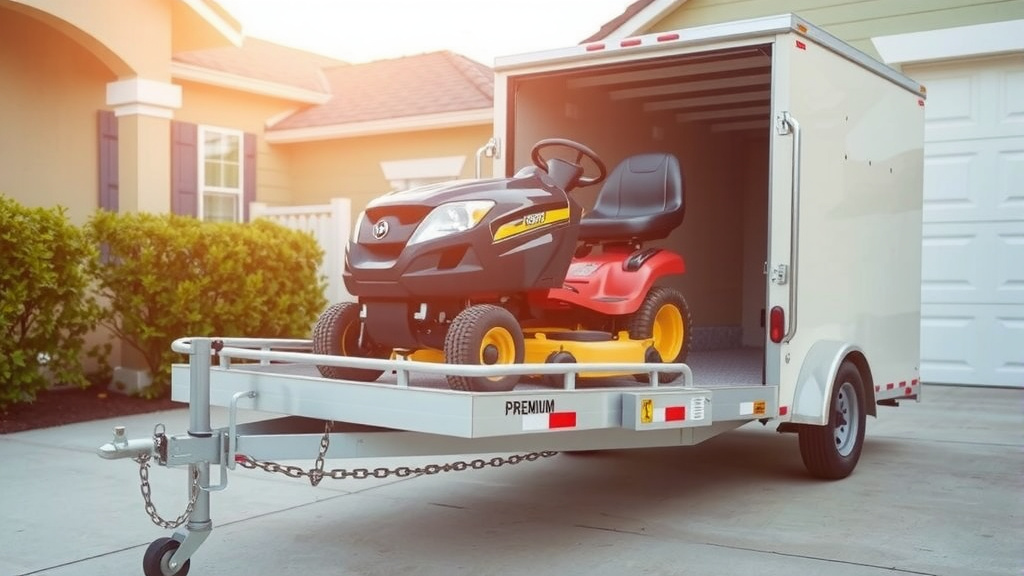
To transport a lawn mower safely, first drain its fuel and oil, disconnect the spark plug, and clean off any debris. Then, secure it tightly using heavy-duty straps in a truck bed or on a trailer, ensuring it cannot shift during transit.
Properly preparing and securing your lawn mower is essential to prevent spills, damage to your vehicle, and accidents on the road, making the journey smooth and worry-free.
Here’s a quick rundown of what you’ll learn about transporting your lawn mower:
- Always prioritize safety by draining fluids and disconnecting power.
- Choose the right vehicle for your mower’s size.
- Use heavy-duty straps to prevent any movement.
- Drive carefully, remembering you have heavy cargo.
- Follow a simple checklist for a stress-free move.
How To Transport Lawn Mower?
Transporting a lawn mower might seem straightforward, but it requires careful preparation and the right technique. You want to ensure your mower, your vehicle, and everyone on the road stay safe and sound.
Let’s walk through the best practices to get your lawn mower from point A to point B without a hitch. We’ll cover everything from small push mowers to larger riding models.
Why Safe Lawn Mower Transport Matters
Think about it: a lawn mower is a heavy piece of machinery, often containing flammable liquids. If it shifts or tips during transit, it can create a serious hazard. Nobody wants spilled gasoline in their truck bed!
Beyond safety, proper transport protects your investment. A well-secured mower is less likely to suffer bumps or scrapes, ensuring it arrives at its destination in perfect working order.
Safety First: Your Number One Priority
Your personal safety and the safety of others should always come first. Accidents involving unsecured equipment can be extremely dangerous, leading to injuries or damage.
By taking a few extra minutes for preparation, you can avoid a lot of potential headaches. We’re talking about peace of mind during your drive.
Before You Load: The Essential Pre-Transport Checklist
Before you even think about lifting or rolling your mower, there are a few critical steps. These aren’t suggestions; they are must-do items for safe transport.
Imagine a road trip where your gear shifts around – not fun, right? The same applies here. A little planning saves stress.
Emptying Fuel and Oil: A Critical Step
This is arguably the most important step. Fuel can leak, creating a fire risk and a messy, smelly hazard in your vehicle.
Many experts say you should drain the gas tank completely. For oil, you might not need to drain it all, but it’s wise to keep the mower upright or drain it if tilting is unavoidable (research supports this for preventing engine damage and leaks).
Some newer mowers are designed to be tipped without spilling, but it’s always better to check your owner’s manual first to be sure.
Disconnecting the Spark Plug: Preventing Accidental Starts
Even if the fuel is drained, an engine can sometimes fire with residual fuel vapors. Disconnecting the spark plug wire removes any chance of an accidental start while you’re loading or moving it.
This simple step takes seconds and provides a huge safety benefit. It’s like putting your car in park and turning off the ignition.
Cleaning Your Mower: Why It’s Important
Nobody wants to haul a dirty mower. Grass clippings and mud can fall off, making a mess of your truck bed or trailer. Plus, that grime might contain invasive plant seeds.
Give your mower a quick clean-up with a hose and brush. A little effort here goes a long way in keeping your transport vehicle clean.
Here’s a quick preparation checklist:
- Drain the fuel tank.
- Check and manage oil levels.
- Disconnect the spark plug wire.
- Clean off grass and debris.
- Close the fuel shut-off valve if present.
Choosing Your Transport Method Wisely
The type of mower you have often dictates your transport options. A small push mower is easier than a heavy riding mower. Consider the size and weight.
We found that having the right vehicle makes the entire process much smoother. Don’t try to cram a big mower into a small space.
Transporting in a Truck Bed
A pickup truck is a popular choice for transporting mowers. For push mowers, you might be able to lift it with help. For riding mowers, you’ll need sturdy ramps.
Always load the mower with the front facing forward, or the engine toward the cab. This places the heavier part over the truck’s axle for better weight distribution (many transportation guides recommend this).
Using a Trailer for Larger Mowers
For zero-turn mowers or larger riding mowers, a utility trailer is often the best solution. It offers more space and a lower loading height, making it easier to maneuver.
Ensure your trailer is rated for the mower’s weight and that your towing vehicle can handle the load. Safety chains and working lights are non-negotiable for trailers.
Can You Use an SUV or Van?
While possible for very small push mowers, we generally advise against using an SUV or van due to the risk of fuel or oil spills inside the passenger compartment.
If you absolutely must, ensure the mower is completely free of all fluids and thoroughly cleaned. Use a tarp or plastic sheeting for added protection.
Securing Your Lawn Mower Properly
Once your mower is loaded, the next step is crucial: securing it. An unsecured mower can shift, tip, or even fly out of your vehicle, causing catastrophic results.
Many experts emphasize using quality tie-down straps with a good working load limit. Bungee cords are not sufficient for this task.
Strapping Down Push Mowers
For push mowers, use at least two heavy-duty ratchet straps. Hook one strap to a sturdy point on the mower’s frame and another point on your truck or trailer, pulling it tight. Repeat with a second strap, creating an X-pattern for stability.
Ensure the mower can’t roll or slide. Give it a good shake to test its stability; it should feel firmly planted.
Securing Riding Mowers and Zero-Turns
Riding mowers require more straps, typically four. Attach straps to each corner of the mower’s frame, connecting them to strong anchor points on your vehicle or trailer. Pull them tight until there’s no discernible movement.
Lower any attachments or decks if possible. Engage the parking brake on the mower itself for an extra layer of security.
Here’s a quick comparison of transport options:
| Transport Method | Best For | Key Considerations |
|---|---|---|
| Truck Bed | Push mowers, smaller riding mowers | Ramps needed for riding mowers, weight distribution. |
| Trailer | Large riding mowers, zero-turns | Trailer capacity, hitch type, proper lights & chains. |
| SUV/Van | Only very small push mowers | High risk of spills, fumes, interior damage. |
Driving Safely with Your Mower
Once everything is secured, your journey begins! Remember, you’re now carrying a heavy, potentially bulky load. Your driving style needs to adjust accordingly.
Drive slower than usual, especially around turns and over bumps. Avoid sudden braking or acceleration, which can put stress on your straps.
Periodically check your straps and the mower during longer trips. Pull over safely to ensure everything remains tight and in place. A quick visual inspection can prevent problems.
Conclusion
Transporting a lawn mower doesn’t have to be a stressful ordeal. By following these practical steps, you can ensure a safe and damage-free move for your valuable equipment.
Remember, preparation is key: drain fluids, disconnect the spark plug, and secure your mower properly. Choose the right transport method and always prioritize safety on the road. Your efforts will result in a smooth journey every time.
What is the safest way to transport a lawn mower in a truck?
The safest way is to drain the fuel and oil, disconnect the spark plug, and then load the mower onto the truck bed using sturdy ramps. Secure it with at least two (for push mowers) or four (for riding mowers) heavy-duty ratchet straps, creating an X-pattern to prevent any movement.
Do I need to drain gas from a lawn mower before transporting it?
Yes, it’s highly recommended to drain all fuel from your lawn mower before transport. This prevents hazardous spills, reduces fire risk, and avoids potential damage to your vehicle’s interior from fumes or leaks (many guidelines like those from the Department of Transportation support this for safety).
Can a lawn mower be laid on its side for transport?
Generally, it’s best to keep a lawn mower upright. If you must lay it on its side, consult your owner’s manual for specific instructions. Laying it on the side where the carburetor and air filter are located can cause oil or fuel to leak into the engine or air filter, leading to starting problems later.
What kind of straps should I use to secure a lawn mower?
You should use heavy-duty ratchet straps specifically designed for securing cargo. Bungee cords are not strong enough and should never be used for this purpose. Ensure the straps have a sufficient working load limit for the weight of your mower.
How do I prevent a riding lawn mower from rolling off ramps?
To prevent rolling off ramps, ensure the ramps are securely attached to your truck bed or trailer and are rated for the mower’s weight. Drive slowly and steadily up the ramps, keeping the mower in low gear. Once on board, engage the parking brake before turning off the engine and securing it with straps.
