
How To Use A Tachometer On A Lawn Mower?
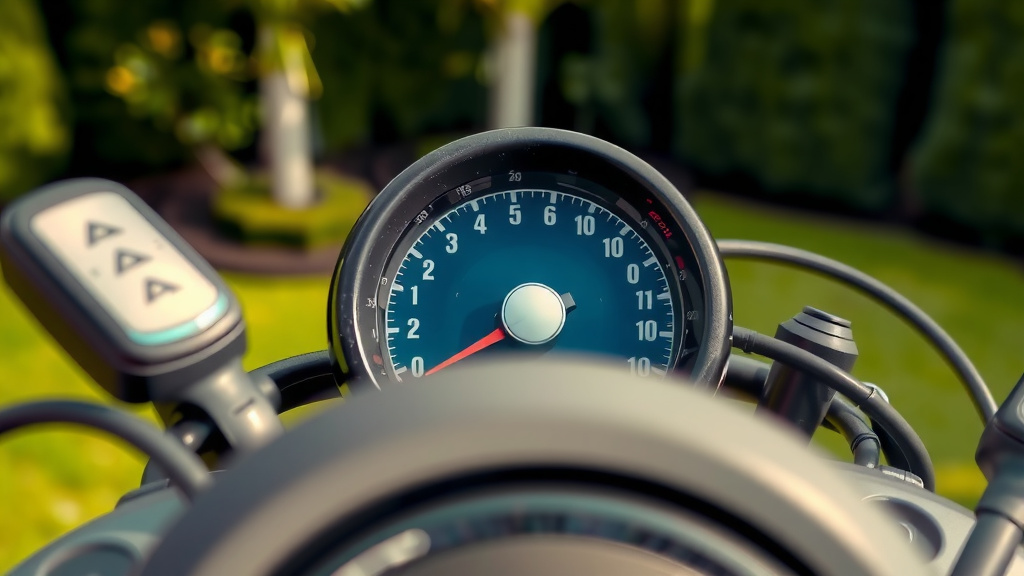
To use a tachometer on a lawn mower, first ensure the engine is off and cool for safety. Then, depending on whether you have an inductive or photo tachometer, you will either wrap the inductive lead around the spark plug wire or attach reflective tape to a rotating part like the flywheel.
Once connected or applied, start the mower, and the tachometer will display the engine’s revolutions per minute (RPMs), allowing you to monitor and adjust for optimal performance.
- Understanding your lawn mower’s RPMs is key for a perfect cut and longer engine life.
- Tachometers, either inductive or photo, help you measure these crucial RPMs accurately.
- Proper engine speed ensures efficient fuel use and prevents unnecessary wear and tear.
- Monitoring RPMs can help you diagnose potential engine issues early on.
How To Use A Tachometer On A Lawn Mower?
Using a tachometer on your lawn mower lets you measure the engine’s speed, often shown as revolutions per minute (RPMs). This simple tool is incredibly helpful for maintaining optimal performance and ensuring a clean cut every time.
Why You Need a Tachometer for Your Mower
Ever wonder if your lawn mower is running at its best? A tachometer provides that clear answer. It’s not just a fancy gadget; it’s a critical tool for any serious lawn care enthusiast.
Understanding RPMs for Optimal Performance
Your mower’s engine has a recommended operating speed, or RPM range. When it runs too slow, you get a ragged cut. Too fast, and you risk excessive engine wear and higher fuel consumption. We found that maintaining the correct RPMs extends your mower’s lifespan and keeps it running smoothly (Engine Manufacturers Association).
The Link Between Engine Speed and Cut Quality
Imagine trying to cut hair with dull scissors. It tears, right? A mower running at incorrect RPMs does something similar to your grass. Optimal engine speed creates the blade tip speed needed for a clean, sharp cut, preventing grass tearing and promoting healthier turf.
Types of Tachometers for Lawn Mowers
There are two main types of tachometers you’ll commonly use for lawn mowers. Each has its own way of measuring engine speed, but both get the job done.
Inductive Tachometers Explained
Inductive tachometers are perhaps the most common for small engines. They work by sensing the electromagnetic pulses from your spark plug wire each time it fires. Many experts say they are simple to use and quite accurate for most home users.
Photo Tachometers Explained
Photo tachometers, on the other hand, use a beam of light. You attach a small piece of reflective tape to a rotating part, like the flywheel. The tachometer then counts how many times the light beam is interrupted as the part spins, giving you the RPM reading.
Choosing the Right Tachometer
For most DIY enthusiasts, an inductive tachometer is often the easiest. It requires less setup and is very straightforward. If you’re looking for extreme precision or working on engines without easily accessible spark plug wires, a photo tachometer might be a better fit.
Getting Ready: Preparing Your Lawn Mower
Before you even think about attaching a tachometer, you need to prepare your mower. Safety always comes first, so let’s walk through those steps together.
Safety First, Always!
Before doing any work on your mower, make sure the engine is completely off and cool. Disconnect the spark plug wire to prevent any accidental starts. This small step can prevent serious injuries, as many safety guidelines point out (Power Equipment Institute).
Clearing the Deck
Ensure the area around your engine and under the deck is clear of debris. You want a clean workspace so you can easily access the necessary parts without interference. A clean mower is a happy mower, and a safer one too.
Step-by-Step: Using an Inductive Tachometer
This is where the rubber meets the road! Let’s get that inductive tachometer hooked up and get some readings.
Connecting Your Inductive Tachometer
Most inductive tachometers have a wire with a small clamp or loop. Wrap this wire around your spark plug wire a few times, usually 3-5 wraps. Make sure it’s snug but not overly tight. This connection allows the tachometer to “listen” to the engine’s pulses.
Reading the RPMs
Reconnect your spark plug wire. Start your mower and let it warm up for a few minutes. The tachometer should now display the engine’s current RPMs. You might see numbers fluctuating slightly, which is normal as the engine settles into its operating speed.
Understanding Your Mower’s RPM Range
Your mower’s owner’s manual is your best friend here. It will list the recommended RPM range for optimal operation. Often, we find that most walk-behind mowers run around 2,800 to 3,200 RPMs, while riding mowers might be a bit lower. Here’s a quick reference:
| Mower Type | Typical RPM Range (Approx.) | Notes |
|---|---|---|
| Walk-Behind Mower | 2,800 – 3,200 RPM | Ideal for clean cutting and engine longevity. |
| Riding Mower (small) | 2,600 – 3,000 RPM | May vary by engine size and design. |
| Zero-Turn Mower | 3,000 – 3,600 RPM | Often higher for commercial-grade performance. |
Step-by-Step: Using a Photo Tachometer
If you’re using a photo tachometer, the process is slightly different but still straightforward. Remember to follow the same safety precautions.
Applying the Reflective Tape
With the engine off, find a clean, rotating part of the engine, like the outer edge of the flywheel. Attach a small piece of the reflective tape that comes with your photo tachometer. Make sure it’s flat and secure.
Aiming and Reading
Start the mower. Point the photo tachometer’s laser or light beam directly at the reflective tape as it spins. The device will then calculate the RPMs by counting how many times the tape passes the sensor. Hold it steady for an accurate reading.
What Your RPMs Tell You
Getting a number is great, but what does it mean? Understanding your RPM readings helps you become a more knowledgeable mower operator and troubleshooter.
Too Low RPMs?
If your mower’s RPMs are consistently below the recommended range, you might notice a rough, uneven cut. The engine could be struggling due to a clogged air filter, old fuel, or an improperly adjusted carburetor. Research often connects these issues with poor engine performance (Small Engine Repair Manuals).
Too High RPMs?
On the flip side, RPMs that are too high can lead to excessive engine wear, overheating, and increased fuel consumption. It’s also harder on the mower’s components. This often points to a governor issue or incorrect carburetor adjustment.
Adjusting Your Mower’s RPMs
Adjusting engine RPMs usually involves tweaking the governor spring or carburetor settings. This can be a bit delicate, so if you’re unsure, consulting a professional or your mower’s service manual is always a good idea. Small adjustments can make a big difference in performance.
Common Mistakes to Avoid
Even with a simple tool like a tachometer, a few common pitfalls can lead to inaccurate readings or frustration. Here’s a quick checklist to help you get it right every time:
- Forgetting to disconnect the spark plug wire before any adjustments.
- Not allowing the engine to warm up properly before taking readings.
- Using a tachometer on a dirty or clogged engine, which can skew results.
- Failing to consult your mower’s manual for specific RPM recommendations.
- Ignoring safety warnings during the measurement process.
Conclusion
Using a tachometer on your lawn mower is a game-changer for maintaining a healthy engine and achieving a perfectly manicured lawn. By regularly checking and adjusting your mower’s RPMs, you’re not just ensuring a better cut, but also extending the life of your valuable equipment. It’s a simple yet powerful step in becoming a true lawn care expert. So, grab your tachometer, take those readings, and enjoy the fruits of your well-tuned labor!
What is the ideal RPM range for a typical lawn mower?
The ideal RPM range for most residential lawn mowers usually falls between 2,800 to 3,200 RPMs. However, this can vary based on the specific engine model and manufacturer’s recommendations, so always check your owner’s manual for the most accurate figures.
Can I use a car tachometer on my lawn mower?
While both are tachometers, car tachometers are generally not suitable for lawn mowers. They are calibrated for different engine types and often require a direct electrical connection that isn’t readily available on small engines. Specialty small engine or inductive tachometers are designed specifically for this purpose.
How often should I check my lawn mower’s RPMs?
It’s a good practice to check your mower’s RPMs at least once a season, or whenever you perform routine maintenance like changing the air filter or spark plug. If you notice a change in engine performance or cut quality, that’s also a good time to check.
What causes a lawn mower’s RPMs to fluctuate?
Fluctuating RPMs can be caused by several issues, including a dirty carburetor, clogged fuel filter, an incorrectly adjusted governor, or even old, stale fuel. Addressing these common problems often stabilizes the engine speed and improves overall performance.
Is it possible to damage my engine by running it at the wrong RPMs?
Yes, running your engine consistently outside its recommended RPM range can cause damage. Too high RPMs can lead to excessive wear on internal components and overheating, while too low RPMs can strain the engine and lead to premature wear due to inefficient operation. Maintaining correct RPMs is key for longevity.
