
Can You Use a Chainsaw to Cut Down a Tree Yourself?
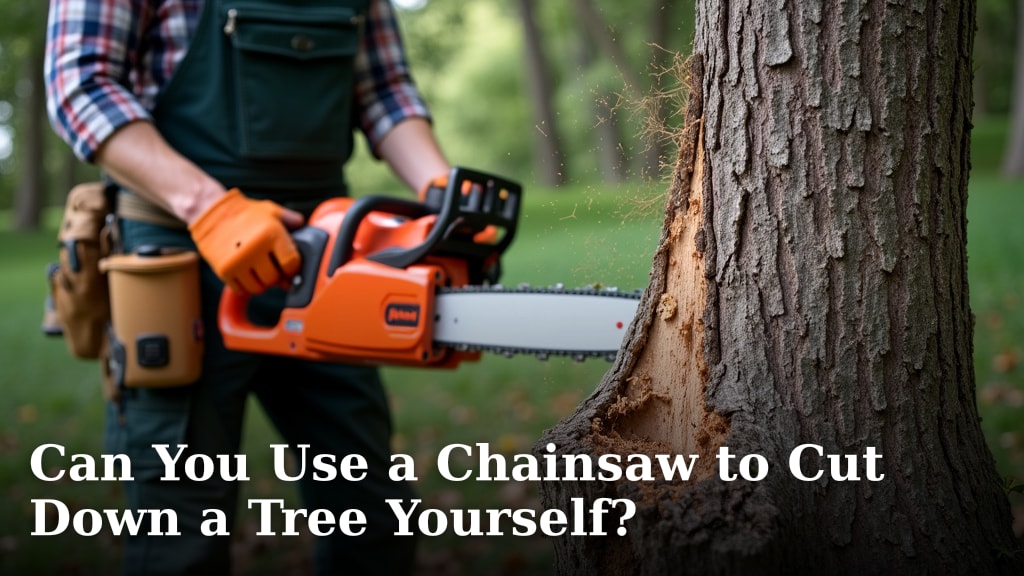
Yes, you can technically use a chainsaw to cut down a tree yourself, but it’s a task that demands serious skill, preparation, and respect. Many homeowners underestimate the dangers involved, which can lead to accidents. It’s not as simple as just pulling the trigger and watching the tree fall.
While a chainsaw is the right tool for the job, the decision to DIY depends heavily on the tree’s size, its location, and your own experience. We found that even small trees can pose unexpected challenges. It’s wise to weigh the potential risks against the cost of hiring a professional arborist.
- Chainsaws can fell trees, but it’s risky for amateurs.
- Tree size and location greatly impact DIY feasibility.
- Safety gear and proper technique are non-negotiable.
- Consider professional help to avoid severe accidents.
Let’s get into the details to help you decide if tackling that tree yourself is truly the best path forward, or if it’s time to call in the experts.
Felling Trees with a Chainsaw: Is It a DIY Job for You?
Using a chainsaw to cut down a tree yourself can seem like a straightforward task. You have the tool, you have the tree, and you have a vision of it falling neatly. We’ve found that this approach often overlooks many serious risks. It’s a job that requires more than just confidence; it demands knowledge, skill, and extreme caution.
Many homeowners consider DIY tree felling for cost savings. While that’s understandable, the price of a mistake can be far greater than hiring a professional. Our research shows that even seemingly simple jobs can quickly turn dangerous without the right preparation. Let’s break down what you need to consider before you even think about starting that engine.
Assessing the Tree and Your Surroundings
Before you grab your chainsaw, you need to be a good tree detective. The type, size, and condition of the tree are your first clues. You also need to look at everything around it. What’s in the path of the fall? What’s in the escape route?
Understanding Tree Characteristics
Not all trees are created equal when it comes to felling. Some are naturally easier or harder to bring down. You need to observe the tree’s lean. Does it naturally lean in one direction? This is a major factor in how it will fall. A tree leaning heavily in one direction will try to fall that way, regardless of your cuts.
Also, check for any dead branches or signs of rot. These can make the tree unstable and unpredictable. Dead limbs, called “widowmakers” by arborists, can snap off unexpectedly during the process, posing a severe hazard. We found that assessing these factors thoroughly can save you from a lot of trouble.
Evaluating the Fall Zone and Escape Route
Where do you want the tree to land? This is your fall zone. It needs to be clear of buildings, fences, power lines, vehicles, and people. Always assume the tree will fall in a direction you didn’t expect. A clear fall zone is crucial for safety.
Equally important is your escape route. Many experts recommend a 45-degree angle away from the intended direction of fall. You need at least two clear escape paths. Plan them out in advance. When the tree starts to fall, you need to move quickly and safely away. Never run directly backward; this is a common mistake.
Chainsaw Basics for Tree Felling
If you’re new to chainsaws, the idea of using one to fell a tree can be intimidating. It’s a powerful tool that requires respect and proper handling. Even experienced users can face problems if they aren’t careful. We found that understanding the basic operation and maintenance is key.
Choosing the Right Chainsaw
Not all chainsaws are built for felling larger trees. For serious tree cutting, you typically need a saw with a longer bar and more power. A general-purpose saw might work for very small saplings, but it’s often underpowered for substantial trees.
The bar length should ideally be at least two inches longer than the diameter of the tree you plan to cut at chest height. For example, for a 12-inch diameter tree, you’d want at least a 14-inch bar. Many professionals also opt for saws with anti-vibration systems and chain brakes for added safety. We found that the right tool makes the job much safer and more efficient.
Essential Chainsaw Maintenance and Safety Features
A well-maintained chainsaw is a safer chainsaw. Before you start, always check the chain tension, chain sharpness, and oil levels (both bar oil and fuel mix). A dull chain can bind and cause kickback, a sudden upward thrust of the saw. Kickback is one of the most common causes of chainsaw injuries (CDC).
Modern chainsaws have safety features like chain brakes and throttle lockout triggers. Make sure you understand how these work and that they are functioning correctly. A functioning chain brake can stop the chain very quickly if the saw is kicked back. We found that regular maintenance is often overlooked but absolutely critical.
Mastering the Felling Technique
Felling a tree isn’t just about cutting. It’s a precise sequence of cuts designed to control the direction of the fall. This requires understanding the basic principles of how trees fall and how to guide them.
The Standard Felling Cuts: Notch and Back Cut
The process involves two main types of cuts: the face notch and the back cut. The face notch is a V-shaped cut on the side of the tree where you want it to fall. This cut removes a wedge of wood and guides the tree’s initial movement. It should be about one-third of the tree’s diameter deep.
The back cut is made on the opposite side of the face notch, slightly higher than the notch. Its purpose is to sever the remaining wood. Crucially, you must not cut all the way through. You leave a “hinge” of uncut wood between the notch and the back cut. This hinge acts like a door, controlling the fall and preventing the tree from twisting or kicking back unexpectedly. Many forestry services stress the importance of this hinge.
Making the Face Notch
The face notch is typically made with two cuts. First, an angled top cut goes downwards. Second, a horizontal bottom cut meets the end of the angled cut. The angle of the top cut is usually around 45-70 degrees. The goal is to create a clean wedge of wood that can be removed.
Executing the Back Cut and Hinge
The back cut is made parallel to the base of the face notch. It’s vital that the back cut is not lower than the notch’s horizontal cut. If it is, the tree can fall uncontrolled. The hinge wood should be about one-tenth of the tree’s diameter. We found that a well-made hinge is the single most important factor in a safe felling operation.
Controlling the Fall with Wedges
For larger trees or when you need extra control, felling wedges are essential. These are plastic or wooden wedges driven into the back cut as you make it. As the saw cuts deeper, you drive the wedge further in. This helps to widen the cut and prevents the tree from binding the saw or falling back on you.
Using wedges ensures the tree begins to lean into the intended direction. It also helps keep the saw from getting stuck. This step is particularly important if the tree doesn’t have a strong natural lean. Many professionals consider wedges non-negotiable for many felling jobs.
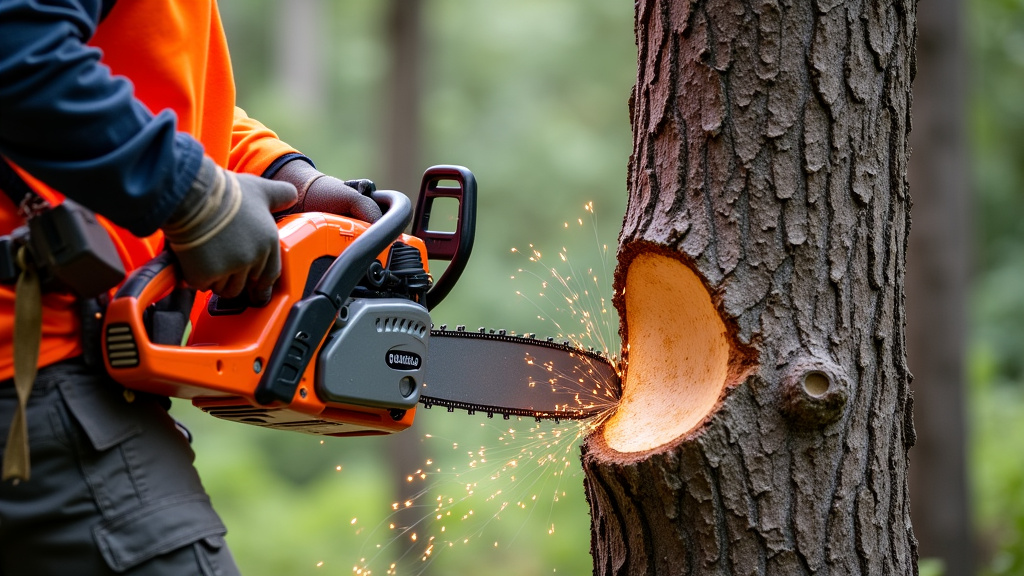
Personal Protective Equipment (PPE) is Non-Negotiable
If you’re going to use a chainsaw for any reason, especially felling a tree, wearing the right protective gear isn’t optional – it’s mandatory. The risks are simply too high to go without. We found that skipping PPE is a gamble most people can’t afford to lose.
Think of PPE as your first line of defense against serious injury. It’s designed to protect you from cuts, impacts, and debris. Every part of your body needs coverage. You wouldn’t go into a boxing match without gloves, right? This is far more dangerous.
Essential Protective Gear Checklist
- Chainsaw Chaps or Pants: These are made of special material that can stop or slow a moving chain, preventing severe leg injuries.
- Helmet with Face Shield and Hearing Protection: Protects your head from falling branches and debris, your eyes from flying wood chips, and your hearing from the loud engine noise.
- Safety Glasses: Even with a face shield, an extra layer of eye protection is wise.
- Sturdy Work Boots: Steel-toe boots offer protection from falling objects and provide good traction.
- Work Gloves: Protect your hands and improve your grip on the saw.
We found that investing in good quality PPE is an investment in your personal safety. Don’t cut corners here.
When to Call a Professional Arborist
Despite all the information on how to fell a tree yourself, there are times when it’s simply not a DIY job. Knowing your limits is a sign of wisdom. Many experts say that the decision to hire a pro is often the smartest one you can make.
If the tree is large, near your home, or close to power lines, it’s almost always best to call in the experts. They have the training, equipment, and insurance to handle these challenging situations safely. Our research indicates that accidents happen most frequently when people attempt jobs beyond their skill level.
Consider these situations where a professional is highly recommended:
- Trees that are dead, diseased, or have significant rot.
- Trees growing at a steep angle or leaning unexpectedly.
- Trees located very close to structures or power lines.
- If you are unsure about any part of the felling process.
- When the tree is too large for your chainsaw’s bar length.
- If you have little to no prior experience with chainsaws or felling.
An arborist can assess the tree’s condition and surrounding hazards with an experienced eye. They can then execute the felling or removal safely. Remember, a tree removal service is insured, which can be a lifesaver if something goes wrong.
Conclusion
Tackling tree felling with a chainsaw yourself is a serious undertaking. We’ve found that while possible for some, it requires thorough preparation, the right equipment, and a deep understanding of technique. Your safety, and the safety of your property, depend on your ability to assess the tree and its surroundings accurately. Always prioritize proper PPE and understand the critical role of the hinge wood and escape routes. If any doubt lingers about the tree’s condition, size, or your own experience level, calling a professional arborist is always the wisest, safest choice. Your well-being is worth more than the cost of hiring an expert.
Frequently Asked Questions
What’s the biggest risk when felling a tree yourself?
The biggest risk is serious injury from unexpected tree movement, chainsaw kickback, or falling debris. Our research shows accidents often happen when people underestimate the tree’s behavior or their own limitations. Proper training and safety gear are essential to mitigate these dangers.
How do I know if a tree is too big for me to cut down?
If the tree’s diameter at chest height is larger than your chainsaw’s bar length, it’s generally too big for you to safely fell. Additionally, if the tree is leaning significantly, dead, diseased, or very close to structures, it’s best left to professionals. Experienced arborists have specialized equipment for these situations.
Can I use a regular chainsaw for felling, or do I need a special one?
For smaller trees or saplings, a well-maintained general-purpose chainsaw might suffice. However, for larger trees, we found that a saw with a longer bar (at least two inches longer than the tree’s diameter) and more power is recommended for safety and efficiency. Ensure it has crucial safety features like a chain brake.
What if the tree doesn’t lean in the direction I want it to fall?
If a tree lacks a strong natural lean, controlling its fall becomes much more challenging and dangerous. Using felling wedges in the back cut is critical to help direct the fall. However, if the lean is unpredictable or you’re unsure about controlling the direction, it’s a strong indicator to hire a professional arborist.
Is it ever okay to skip wearing chainsaw chaps?
No, it is never okay to skip wearing chainsaw chaps or protective pants when operating a chainsaw, especially for tree felling. These are designed to stop or slow the chain in case of accidental contact, preventing severe leg injuries. Skipping this vital piece of PPE is an unnecessary and dangerous gamble.
