
How Long Do Cordless Leaf Blower Batteries Last?
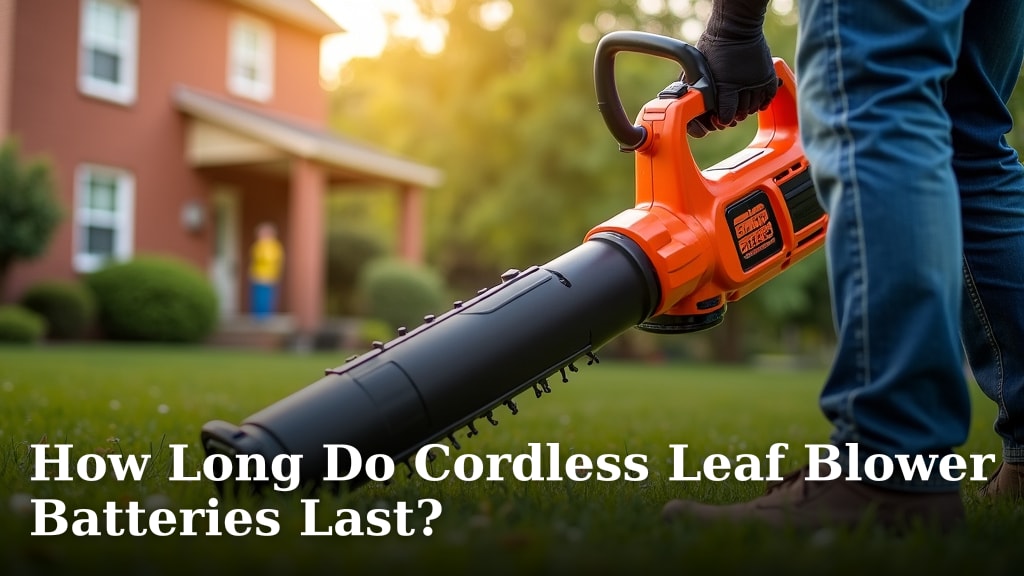
So, how long do cordless leaf blower batteries actually last? You can expect most cordless leaf blower batteries to run anywhere from 15 minutes to an hour on a single charge. This time really depends on the battery’s power (voltage) and how much you’re asking your blower to do.
It’s a common question for homeowners looking to clear leaves efficiently. A battery’s runtime is affected by several factors, including its amp-hour (Ah) rating and the blower’s power settings. Understanding these details helps you manage your yard work and avoid getting caught with a dead battery mid-chore.
- Battery power (voltage) is key.
- Amp-hour (Ah) rating affects runtime.
- Blower speed settings play a big role.
- Battery age and condition matter too.
- Expect 15-60 minutes of use typically.
Let’s dive deeper into what influences your cordless leaf blower’s battery life and how you can get the most out of it.
You’ve got your new cordless leaf blower, ready to tackle those autumn leaves. But a nagging question pops into your head: “How long will this battery actually last?” It’s a fair question! Nobody wants to get halfway through blowing leaves and have their blower suddenly sputter to a halt.
Understanding Your Cordless Leaf Blower’s Runtime
The runtime of your cordless leaf blower battery isn’t a fixed number. It’s more like a range, and where you fall within that range depends on several key factors. Generally, you can expect anywhere from 15 minutes to an hour of active use on a single charge. This might sound broad, but we’ll break down what makes the difference.
The Power Behind the Blower: Voltage and Amp-Hours
What Does Voltage Mean for Your Blower?
Think of voltage like the horsepower of your leaf blower. Higher voltage (like 40V, 60V, or even 80V) generally means a more powerful motor. A more powerful motor can move more air at higher speeds, which is great for tough jobs. However, that extra power can also drain the battery a bit faster.
Amp-Hours (Ah): The Battery’s Fuel Tank
Amp-hours (Ah) are perhaps the most direct indicator of how long a battery will last. It’s like the size of the fuel tank. A battery with a higher Ah rating holds more charge and will therefore run your leaf blower for longer.
- A 2.0Ah battery will run for a shorter time than a 4.0Ah battery, assuming all other factors are equal.
- Most manufacturers list the Ah rating on the battery itself or in the product specifications.
- It’s always a good idea to match the Ah rating to your expected usage. For small yards, a lower Ah might be fine. For larger properties, consider a higher Ah battery.
Many experts suggest that for typical home use, a battery with a rating between 3.0Ah and 5.0Ah offers a good balance of power and runtime. This is a sweet spot for most homeowners.
How You Use Your Blower Matters
Speed Settings: High vs. Low
Are you using your leaf blower on its highest setting all the time? That’s like driving your car everywhere at top speed. It gets the job done quickly, but it uses a lot more fuel. The same applies to your leaf blower. Running it on lower speed settings will conserve battery power significantly.
We found that many users often don’t need the maximum power for light tasks. Clearing a few stray leaves from a patio might only require a medium or low setting. Saving the full blast for heavy piles or wet leaves can extend your battery life considerably.
The Impact of “Turbo” or “Boost” Modes
Some advanced leaf blowers come with a “turbo” or “boost” button for maximum power when you really need it. While incredibly useful for tough spots, these modes are battery hogs. Using them sparingly will make your battery last much longer.
Think of it as a nitrous boost for your car. You wouldn’t use it constantly, right? Your leaf blower’s boost mode is similar. Save it for when you encounter a particularly stubborn pile of wet, heavy leaves.
Blowing Wet Leaves vs. Dry Leaves
Wet leaves are heavier and stickier. Clearing them requires more force from the blower. This means the motor has to work harder, drawing more power from the battery. Blowing dry, fluffy leaves is much easier on the battery.
If you find yourself regularly dealing with wet leaf piles, you might want to invest in a second battery. This way, you can swap it out and continue working without waiting for a recharge.
Battery Age and Condition: The Natural Decline
Batteries Aren’t Immortal
Like all rechargeable batteries, cordless leaf blower batteries degrade over time and with use. This is a natural process. The chemical compounds inside the battery can only handle so many charge and discharge cycles before their capacity diminishes.
Many manufacturers estimate a battery’s lifespan in terms of charge cycles. For example, a battery might be rated for 500 charge cycles. After that, its ability to hold a full charge will be noticeably reduced. We found that this usually translates to a few years of typical use.
Proper Storage for Longevity
How you store your battery when it’s not in use can make a difference. Extreme temperatures, both hot and cold, can negatively impact battery health. It’s best to store lithium-ion batteries (common in these blowers) in a cool, dry place.
Avoid leaving your battery in a hot car or freezing garage for extended periods. Many experts recommend storing them at around 50-70% charge if you plan to keep them unused for many months. This helps prevent excessive self-discharge or capacity loss (National Renewable Energy Laboratory).
Comparing Battery Performance: A Quick Guide
To give you a clearer picture, here’s a general comparison. Remember, these are estimates and can vary significantly based on the blower model and how you use it.
| Battery Voltage | Battery Capacity (Ah) | Typical Runtime (Minutes) | Use Case Examples |
|---|---|---|---|
| 20V | 2.0Ah | 15-25 | Small patios, quick cleanups, light debris |
| 40V | 3.0Ah | 20-35 | Medium yards, average leaf clearing, moderate debris |
| 40V | 5.0Ah | 30-50 | Larger yards, heavier leaf loads, extended use |
| 60V / 80V | 4.0Ah | 25-45 | Large properties, heavy-duty clearing, high-power needs |
| 60V / 80V | 6.0Ah | 40-60+ | Extensive properties, professional use, maximum runtime |
Maximizing Your Battery’s Life: Simple Tips
Want to squeeze every last minute out of your battery charge? You can! It’s all about smart usage and a little bit of maintenance. Here are a few straightforward tips we found can really help:
- Use the right power setting for the job. Don’t blast leaves on high if medium will do.
- Store batteries properly. Keep them in a cool, dry place away from extreme temperatures.
- Don’t leave batteries fully charged or fully dead for long periods. A partial charge is often best for storage.
- Clean your battery contacts occasionally. A build-up of dirt can hinder performance and charging.
- Consider a second battery. For larger properties or if you often deal with wet leaves, this is a lifesaver.
Keeping Your Battery Healthy
Regular cleaning of the battery contacts with a dry cloth can prevent issues. You’d be surprised how much dust and debris can accumulate and affect the connection. Also, if your blower has a variable speed trigger, practice using it with a gentle touch to conserve energy.
The “Second Battery” Strategy
Many users find that owning two batteries is the smartest approach. While one battery is in use, the other can be charging. This provides continuous operation, especially useful for larger yards or when time is a factor.
It’s like having an extra gas can for your lawnmower. You can just swap it out and keep going. Plus, when one battery eventually wears out, you’ll already have a working replacement.
When It’s Time for a New Battery
You’ll know it’s time for a new battery when you consistently get much less runtime than you used to, even after fully charging it. If your blower seems to be losing power even on lower settings, or if the battery no longer holds a charge for a reasonable amount of time, it’s likely reached the end of its useful life.
Don’t feel bad; batteries have a lifespan. It’s a normal part of owning any rechargeable tool. When that day comes, simply look for a replacement battery that is compatible with your specific leaf blower model.
Conclusion
You’ve learned that your cordless leaf blower’s battery life isn’t a set number but a range, typically between 15 minutes and an hour. This runtime depends heavily on the battery’s voltage and amp-hour rating, as well as how you use your blower – speed settings, boost modes, and leaf wetness all play a part. Remember that batteries age naturally, but proper storage and maintenance can extend their life. To ensure you’re always ready for leaf duty, consider investing in a second battery. This allows for continuous work and offers a backup as your current battery nears the end of its cycle.
Frequently Asked Questions
How can I tell if my leaf blower battery is dying?
You’ll notice a significant drop in runtime compared to when the battery was new. If your blower also struggles to maintain power even on lower settings, it’s likely time for a replacement.
Is a higher Ah battery always better for runtime?
Yes, generally, a higher amp-hour (Ah) rating means more capacity and longer runtime. However, higher Ah batteries are also often larger and heavier, so consider the balance that works best for you.
Can I use a battery from a different brand on my leaf blower?
It’s usually not recommended. Batteries are designed for specific voltage and connection types. Using an incompatible battery could damage your blower or the battery itself, and void warranties.
How long should a cordless leaf blower battery last before I need a new one?
With proper care, most lithium-ion batteries can last 3-5 years, offering hundreds of charge cycles before their capacity noticeably declines. With proper care, most lithium-ion batteries can last 3-5 years, offering hundreds of charge cycles before their capacity noticeably declines. Our guide to hedge trimmers discusses battery lifespan.
Does temperature affect my battery’s performance?
Yes, extreme cold or heat can temporarily reduce battery performance and permanently degrade its capacity over time. Storing and using your battery in moderate temperatures is best.
