
How To Jump Off A Lawn Mower?
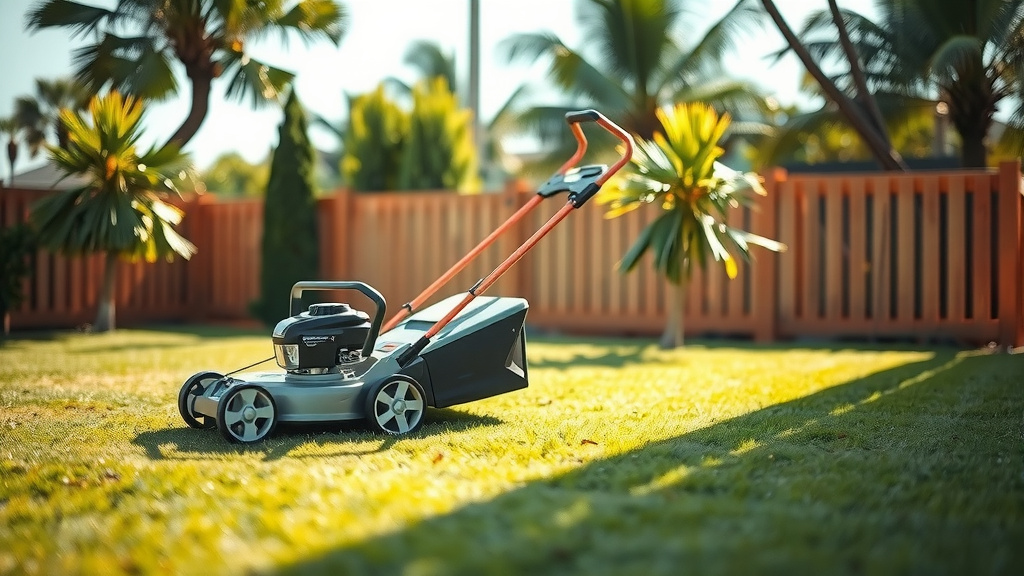
To jump off a lawn mower safely, always prioritize your safety first. This involves wearing appropriate protective gear and understanding the correct steps for connecting jumper cables.
The basic process to jump off a lawn mower requires a working 12-volt battery source, jumper cables, and careful attention to the positive and negative terminals to avoid electrical hazards.
- Always prioritize your safety with eye protection and gloves before attempting a jump.
- Identify whether your mower has a battery (riding mower) or is a pull-start model needing starting fluid.
- For battery models, connect jumper cables correctly: positive to positive, then negative to a metal ground point.
- For pull-start models, use starting fluid sparingly in the air intake, then try the pull cord.
- Troubleshoot common issues like loose connections or a completely dead battery if the jump fails.
How To Jump Off A Lawn Mower?
Learning how to jump off a lawn mower can be a real time-saver. When your mower won’t start, a quick jump can get you back to work. We’ll walk through the process, making sure you stay safe and get your engine roaring again.
Why Does Your Lawn Mower Need a Jump?
Ever wonder why your trusty mower suddenly decides to play dead? Most often, it’s a battery issue. A weak or dead battery is the usual suspect when you turn the key and get nothing but a click or silence.
Common Reasons for a Dead Battery
Batteries can lose their charge for several reasons. Leaving your mower unused for long periods is a common culprit. Cold weather can also drain battery power faster, making starting difficult.
Sometimes, forgotten headlights or accessories can slowly draw down the battery. Many experts say checking for these simple things can save you a lot of headache (Consumer Reports).
Safety First: Before You Start
Before you even think about jumper cables, let’s talk safety. Electricity and engines don’t mix well with carelessness. Your well-being is the most important thing here, so take a moment to prepare.
Essential Safety Gear You’ll Need
Always wear safety glasses or goggles to protect your eyes from sparks. Heavy-duty gloves are also a must; they shield your hands from both electricity and potential scrapes. A good pair of work gloves offers protection from battery acid too.
Ensure you are working in a well-ventilated area. Batteries can release hydrogen gas, which is flammable. Never jump a battery near open flames or sparks (OSHA guidelines).
Your Pre-Jump Safety Checklist
- Wear safety glasses.
- Put on heavy-duty gloves.
- Work in a well-ventilated space.
- Turn off the mower’s ignition.
- Engage the parking brake.
- Ensure the mower is in neutral (if applicable).
Jump-Starting a Riding Lawn Mower (Battery Model)
This is the most common type of jump-start scenario. Riding mowers usually have a 12-volt battery, much like a car. You’ll need a working vehicle or a separate 12-volt garden tractor battery to provide the boost.
Gather Your Tools
You will need reliable jumper cables. Make sure they are in good condition with no frayed wires. A wrench might be useful to clean battery terminals if they are corroded. Having a clean rag on hand is also a good idea.
Connect the Jumper Cables Correctly
This is where precision matters. Incorrect connections can cause sparks, damage batteries, or even lead to explosions. Always follow the positive-to-positive, negative-to-ground rule.
The Positive Connection
First, attach one red (positive) jumper cable clamp to the positive (+) terminal of the dead lawn mower battery. Then, connect the other end of the red cable to the positive (+) terminal of the working power source battery. Positive terminals are usually marked with a plus sign.
The Negative Connection
Next, attach one black (negative) jumper cable clamp to the negative (-) terminal of the working power source battery. Then, connect the other end of the black cable to an unpainted metal part of your lawn mower’s frame, away from the battery and fuel tank. This is your ground connection point, preventing direct sparks near the battery.
Start the Mower
With the cables securely connected, start the engine of the working power source. Let it run for a few minutes to charge the mower battery. Then, try starting your lawn mower. It should hopefully roar to life.
Once your mower starts, disconnect the cables in reverse order. Remove the black negative cable from the mower’s frame first, then from the working battery. Finally, remove the red positive cable from both batteries. Proper disconnection prevents surges.
What if Your Mower Has No Battery? (Pull Start Models)
For smaller push mowers or some older models, there’s no battery to jump. These machines rely on a pull cord and sometimes a primer bulb. If it still won’t start, a small amount of starting fluid can help. Remember, starting fluid is highly flammable.
Using Starting Fluid Safely
Remove the air filter cover to access the carburetor’s air intake. Spray a very short burst (one to two seconds) of starting fluid directly into the air intake. Immediately try to pull the starter cord. If it catches, you’re good to go. Don’t overuse starting fluid; it can damage small engines.
Common Troubleshooting Tips
Sometimes, a jump doesn’t immediately solve the problem. Don’t worry, there are a few more things you can check. We found that often the issue is simpler than you might think.
Check Your Connections
Are the jumper cables clean and tight on the terminals? Loose or corroded connections can prevent a good electrical flow. A quick wiggle or clean can make all the difference. Many problems are solved by simply re-securing the clamps.
Battery Health Assessment
Even with a jump, a really old or damaged battery might not hold a charge. If your mower starts but dies shortly after disconnecting the cables, your battery might be beyond saving. We found this often indicates a need for battery replacement.
When to Call a Professional
While DIY solutions are great, know your limits. If your mower still won’t start after a few attempts, or if you smell burning or see smoke, stop immediately. These are signs that a professional mechanic should take a look. A mechanic can diagnose complex electrical issues or engine problems safely.
Here’s a quick look at common starting issues and what they might mean:
| Issue | Possible Cause | Quick Fix |
|---|---|---|
| Engine cranks slowly or not at all | Dead battery, loose battery cables | Jump start, tighten cables |
| Engine turns over but doesn’t start | No fuel, fouled spark plug, stale gas | Add fresh fuel, clean/replace spark plug |
| Clicking sound when turning key | Severely drained battery, faulty starter solenoid | Jump start, check connections, professional help |
| Mower starts, then dies quickly | Weak battery, clogged fuel filter | Replace battery, clean/replace fuel filter |
Preventing Future Jump Starts
An ounce of prevention is worth a pound of cure, right? Taking a few simple steps can keep your mower starting reliably. You’ll avoid the frustration of a dead machine just when you need it most.
Regular Battery Maintenance
Keep your battery terminals clean and free of corrosion. A wire brush can help remove any build-up. Many manufacturers recommend disconnecting the battery during long periods of storage to prevent discharge (Briggs & Stratton). You might also consider a trickle charger to maintain battery health.
Proper Storage Tips
When winter approaches, store your mower in a dry, protected area. For riding mowers, consider removing the battery and storing it indoors. This protects it from extreme cold, which significantly reduces battery life. Also, using fuel stabilizer can prevent gas from going stale.
Conclusion
Jump-starting your lawn mower doesn’t have to be a daunting task. By following these safety guidelines and correct connection procedures, you can often get your machine running again quickly. Remember, whether it’s a battery jump or a squirt of starting fluid, safety is always your number one priority. With a little care and preparation, your lawn mower will be ready to tackle any lawn care challenge you face.
What should I do if my lawn mower battery keeps dying?
If your lawn mower battery consistently dies, even after a jump, it likely needs replacement. Old batteries lose their ability to hold a charge. Also, check your charging system; a faulty alternator or voltage regulator could be preventing the battery from recharging properly during use.
Can I jump-start my lawn mower with a car?
Yes, you can jump-start a 12-volt lawn mower battery with a car battery. However, do not start the car’s engine during the process. A running car engine can provide too much amperage, potentially damaging your smaller lawn mower’s electrical system. Only use the car battery as a static power source.
How long should I let my lawn mower run after a jump start?
After successfully jump-starting your lawn mower, let it run for at least 15-20 minutes. This allows the mower’s charging system to put some charge back into the battery. For a more complete charge, consider running it for 30 minutes or more, or using a dedicated battery charger.
What if my pull-start mower won’t start even with starting fluid?
If your pull-start mower won’t start after using starting fluid, the issue might be beyond a simple fuel delivery problem. Check the spark plug for fouling or damage, ensure there’s enough oil, and verify that the air filter isn’t completely clogged. If these don’t work, there could be a deeper engine issue requiring professional attention.
Are there different types of jump starters for lawn mowers?
Yes, you can use traditional jumper cables connected to another 12-volt battery (like a car or another lawn tractor). Portable jump-starter packs, often lithium-ion based, are also popular. These compact units are designed specifically for jump-starting vehicles and can be very convenient for lawn mowers, offering a safer and easier alternative to a second vehicle.
