
How Much Does It Cost to Run a Robot Mower?
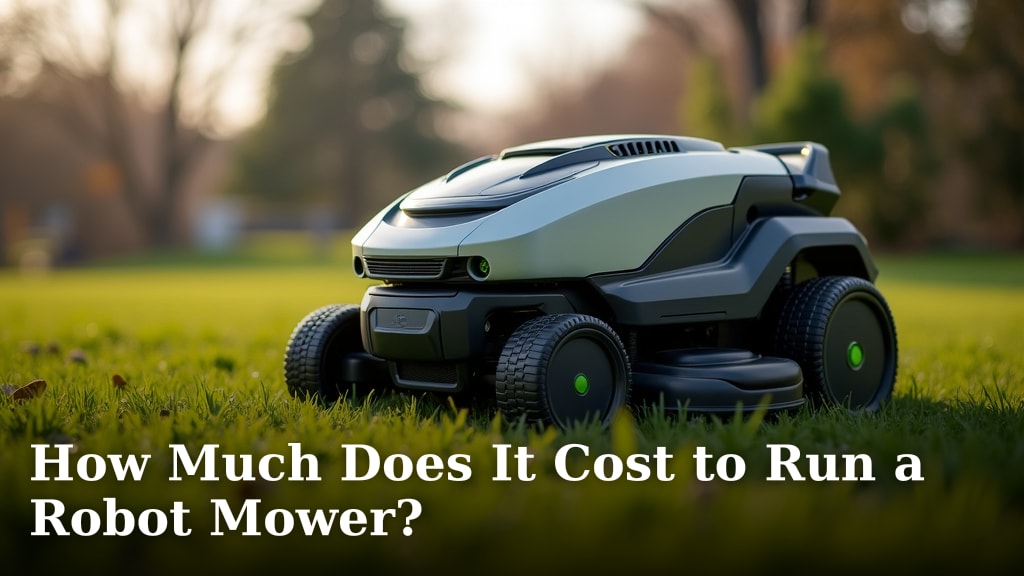
The cost to run a robot mower is surprisingly low, often costing less than $10 per month in electricity. You’re looking at roughly $0.05 to $0.15 per day for typical lawn sizes. This makes them an incredibly energy-efficient choice for lawn care.
Beyond electricity, the main ongoing costs involve occasional maintenance and potential repairs. Think about things like blade replacements and battery longevity. However, compared to gas mowers, the overall running expenses are significantly less, making robot mowers a smart investment for many homeowners.
- Electricity costs are minimal, typically under $10/month.
- Blade replacement is a common, low-cost upkeep item.
- Battery life affects long-term replacement costs.
- They are far cheaper to run than gas-powered models.
Ready to see exactly what contributes to that low running cost? We’ll break down all the factors so you can budget effectively.
You’ve seen the headlines and heard the whispers: robot mowers are the future. But beyond the cool factor, you’re probably wondering about the real-world costs. We’re talking about the electricity bill, the upkeep, and everything in between. Let’s get down to brass tacks and break down exactly how much it costs to keep your little lawn buddy humming along. To understand the real-world costs, our guide breaks down the expenses associated with robot mowers.
Understanding Your Robot Mower’s Running Expenses
So, what exactly goes into the cost of running a robot mower? It’s not just a one-time purchase. There are ongoing expenses to consider. These typically include electricity, maintenance like blade replacements, and eventually, battery replacement. We found that these costs are generally quite manageable for most homeowners.
The Power Behind the Mow: Electricity Costs
This is usually the biggest, yet surprisingly smallest, part of your running cost. Robot mowers are designed to be incredibly energy-efficient. They sip power, unlike their gas-guzzling cousins.
How Much Electricity Does It Actually Use?
The amount of electricity your robot mower uses depends on a few factors. These include the size of your lawn, the frequency of mowing, and the specific model you own. However, research consistently shows that these devices are remarkably thrifty. We found that for an average-sized lawn, the electricity cost is often less than $10 per month. That’s less than a few cups of fancy coffee!
Calculating Your Daily Electricity Bill
To put it in daily terms, you’re likely looking at somewhere between $0.05 and $0.15 per day for electricity. This is a tiny fraction of what it costs to run a traditional lawnmower, especially when you factor in gas prices and maintenance for those models. The low power draw is thanks to their small, efficient motors and the fact that they often charge in short bursts rather than running continuously.
Keeping Blades Sharp: The Cost of Replacement
Just like any cutting tool, the blades on your robot mower will eventually need replacing. This is a necessary part of maintenance to ensure a clean cut and prevent strain on the mower’s motor.
How Often Do Blades Need Replacing?
The frequency depends on your lawn’s conditions. If you have a lot of small twigs or sandy soil, you might need to replace them more often. For most average lawns, you can expect to replace the blades every 2 to 3 months. Some higher-quality blades can last even longer, up to 6 months or more. Many experts recommend checking the blades monthly.
What’s the Price Tag for New Blades?
Replacement blades are quite affordable. You can typically find sets of replacement blades for anywhere from $15 to $30. These sets usually contain multiple blades, so even if you need to replace them every few months, the annual cost remains very low. It’s a small price to pay for consistently manicured grass.
The Long Game: Battery Life and Replacement Costs
Every robot mower has a battery, and like all batteries, it has a lifespan. This is one of the larger potential costs down the road, but it’s spread out over many years.
Understanding Battery Lifespan
Robot mower batteries are typically lithium-ion, designed for many charge cycles. Depending on the mower’s usage and battery size, you can expect a battery to last anywhere from 3 to 5 years, sometimes even longer. Factors like extreme temperatures and how deeply the battery is discharged can affect its longevity. Many manufacturers provide guidelines on optimal charging and storage.
Cost of a Replacement Battery
When it’s time to replace the battery, the cost can vary significantly by model. You might be looking at anywhere from $100 to $300 for a replacement battery. While this sounds like a lot compared to blades, remember this cost is amortized over several years. When you compare this to the ongoing cost of gasoline, oil changes, and engine repairs for gas mowers, the robot mower still comes out ahead over its lifetime.
Comparing Costs: Robot Mower vs. Gas Mower
Let’s put it all into perspective. Running a robot mower is significantly cheaper than maintaining a gas-powered one. We found this to be a consistent theme when reviewing consumer reports.
Consider the costs of a gas mower:
- Fuel: Can add up quickly, especially with fluctuating gas prices.
- Oil: Regular oil changes are necessary.
- Spark plugs and air filters: These small parts need periodic replacement.
- Maintenance: Tune-ups, carburetor cleaning, and potential engine repairs can be costly.
- The sheer effort: You have to physically do the work, which has its own “cost” in time and energy.
A robot mower eliminates most of these recurring expenses. You save on gas, oil, and the frequent need for mechanical servicing. The main ongoing costs for a robot mower are minor in comparison.
Other Potential Costs to Consider
While electricity and blade/battery replacements are the main recurring expenses, there are a couple of other things you might encounter.
Boundary Wire and Accessories
Some older or more basic models might require a boundary wire to keep the mower within your yard. While the wire itself is relatively inexpensive, installation can sometimes add to the initial setup cost if you don’t do it yourself. Newer models often use GPS or advanced sensors, reducing or eliminating this need.
Software Updates and Connectivity
Many modern robot mowers connect to Wi-Fi for app control and software updates. While these updates are typically free, some advanced features or cloud services might eventually have a subscription fee, though this is uncommon for basic operation. We found that most users rarely encounter these additional costs.
Making Sense of the Numbers: A Quick Checklist
Here’s a simple checklist to help you keep track of potential running costs:
- Electricity Bill: Monitor for any slight increase, though it’s usually minimal.
- Blade Replacements: Budget for these every few months.
- Battery Longevity: Keep an eye on performance as the mower ages.
- Accessory Costs: Consider any extra boundary wire or repair parts.
- Annual Maintenance: Factor in a small amount for potential minor upkeep.
By understanding these components, you can accurately budget for your robot mower’s running expenses. The good news is, they are designed to be a cost-effective and convenient solution for lawn care.
Conclusion
You’ve seen how surprisingly affordable running a robot mower can be. The minimal electricity costs, typically under $10 a month, make them an eco-friendly choice. While you’ll occasionally replace blades and eventually the battery, these expenses are far less than the ongoing costs of a gas mower. Think gas, oil, and frequent maintenance – robot mowers largely eliminate these. Your main ongoing spending will be on affordable blade sets and a battery replacement every few years. Ready to enjoy a perfectly cut lawn without the high running expenses? Consider taking the next step and researching robot mower models that fit your yard’s needs.
Frequently Asked Questions
Will my electricity bill skyrocket with a robot mower?
No, you’ll likely see only a tiny increase in your electricity bill. Robot mowers are designed for energy efficiency, often costing less than $10 per month for electricity. This small cost is for charging the mower, which uses much less power than traditional lawn equipment.
How often do I really need to replace the mower blades?
For most average lawns, you’ll need to replace blades every 2 to 3 months. This frequency can change based on your lawn’s conditions, like sandy soil or twigs. Checking them monthly is a good habit to ensure a clean cut and efficient operation.
What if my robot mower’s battery dies? How much does that cost?
A replacement battery typically costs between $100 and $300, depending on the mower model. While this sounds like a larger expense, remember that robot mower batteries usually last 3 to 5 years. This cost is spread out over a long time, making it manageable.
Are there hidden costs beyond electricity and blades?
For most users, the costs are minimal. Some older models might need boundary wire, but newer ones often use GPS or sensors, avoiding this. Very rarely, advanced models might have optional subscription fees for premium features, but basic operation is usually free.
Can I really save money compared to a gas mower long-term?
Yes, absolutely. While the initial purchase price of a robot mower can be higher, your long-term savings are significant. You avoid ongoing costs like gasoline, oil, spark plugs, air filters, and expensive mechanical repairs that gas mowers often require.
