Can a Robot Lawn Mower Also Clear Snow?
Most robot lawn mowers cannot safely act as a robot lawn mower snow plow. They are built to cut grass, not push snow, so attachment compatibility is limited and guards, sensors, and batteries can be damaged by snow load and cold.
On this page (10 sections)
- Can a robot lawn mower work as a snow plow?
- Why is a robot mower snow plow setup risky?
- What does attachment compatibility really mean?
- Can a robot mower clear light snow like a broom?
- What are the limits of robotic snow clearing systems?
- How should you store a robot mower for winter?
- What gear helps you move winter equipment into storage?
- Which ramp kit suits a DIY board ramp?
- When is a wide shed ramp the better pick?
- How do you pick between a snow plow and winter storage?
Most robot lawn mowers cannot safely act as a robot lawn mower snow plow. They are built to cut grass, not push snow, so attachment compatibility is limited and guards, sensors, and batteries can be damaged by snow load and cold.
That short answer matters because the idea sounds simple. Both jobs happen outdoors and both need a machine to cross a yard.
The work itself is different. Grass cutting uses light contact with thin blades.
Snow clearing needs a wide blade and the power to push a heavy mass without stopping.
Can a robot lawn mower work as a snow plow?
No, not as a true snow plow for most models. A robot mower has a low deck, a small motor, and sensors that expect grass height and ground contact.
Snow adds load to every moving part.
Snow also hides the boundary wire and the obstacles the mower uses to steer. It may climb a drift, lose traction, and spin until it is stuck.
Most decks sit close to the ground to cut evenly. That close clearance leaves almost no room for a blade that must lift, angle, and carry snow to one side.
Cold is another limit, as lithium batteries lose useful capacity in freezing weather.
Why is a robot mower snow plow setup risky?
Snow load can overload the drive and steering systems. A plow blade multiplies force at the front of a small machine.
Even light snowfall can become heavy when pushed across a long path.
Wet snow is the hardest case. It packs against a blade, sticks to metal, and freezes into a solid mass overnight.
The blade also changes how sensors read the yard. Lift, bump, and tilt sensors may trigger from vibration or uneven snow.
That can stop the machine in a driveway entrance or shared walkway.
Debris is hidden under snow. Sticks, rocks, and ice chunks can strike a blade or the deck.
A rider can stop a riding mower fast. A robot mower does not have that same human control.
What does attachment compatibility really mean?
Attachment compatibility means the maker approves the mount, load, and controls. A plow needs a rigid frame point, a safe pivot, and clearance for the wheels and sensors.
Most robot mowers offer none of those points.
Check the manual first. Look for winter accessories, snow blade kits, or approved attachments.
If the maker lists no snow attachment, treat that as a clear limit.
Do not add a strap, zip tie, or bracket to the deck. The deck moves, tilts, and carries the cutting system.
Added weight can change balance and damage the shell or wheel motors.
A snow plow for a riding lawn mower is a different case. Those machines have larger frames, stronger axles, and space for a front mount.
Our guide to how to build a snow plow for lawn mower covers that larger machine class, not a small robot mower. You can also read how to make a homemade snow plow for lawn mower if you own a riding mower and want a DIY path.
Can a robot mower clear light snow like a broom?
Light, dry snow may tempt owners, but it still breaks the design rules. The mower deck may scoop snow, throw it sideways, or pack it into a hard layer.
None of those results is a clean path.
Grass clippings are light and dry. Snow is dense and can turn to ice when packed by wheels.
A path cleared badly at noon can become a sheet of ice by night.
The cutting blades are not broom bristles. They are shaped to slice grass and throw clippings into the area under the deck.
Snow can clog that space, then freeze in place.
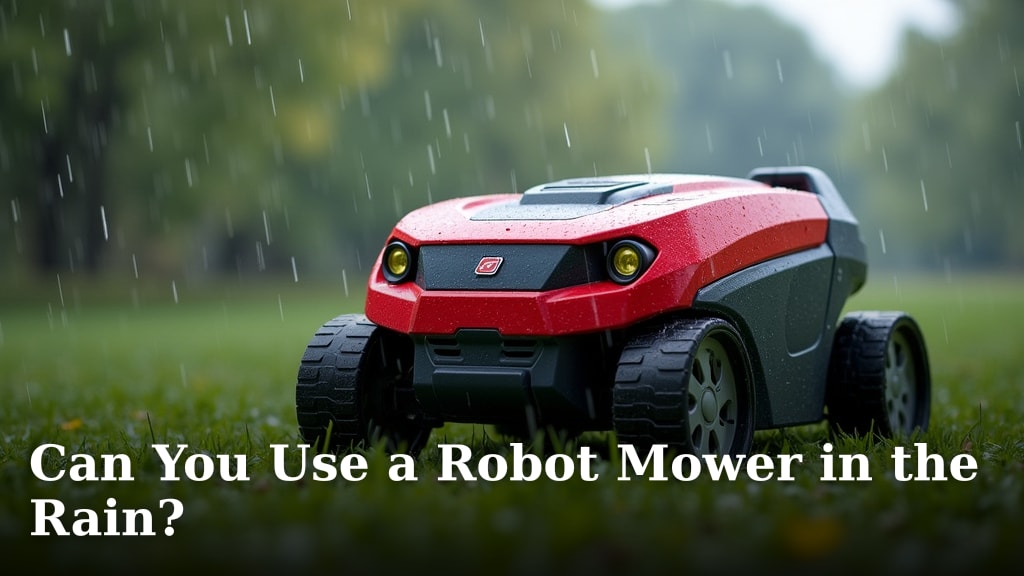
Moisture is also a concern. Meltwater can enter seams, charging contacts, and sensor windows.
For rain guidance, see can you use a robot mower in the rain. Snow adds more water, more grit, and more freeze and thaw cycles.
What are the limits of robotic snow clearing systems?
Robotic snow clearing systems need a purpose-built chassis. A true snow robot uses a wide plow, high torque, heated controls, and sensors tuned for snow depth.
A grass robot does not share those traits.
Ground speed matters. Snow clearing needs slow, steady push.
Grass mowing needs steady travel for even cuts. A plow that moves too fast will ride up over snow.
A plow that moves too slowly will bury the machine.
Battery life is a further limit. Pushing snow drains power faster than cutting grass.
A robot mower may need to return to its dock more often, then sit in the cold while it charges.
Owners in cold climates often report shorter run times and more sensor stops in winter. Those reports point to the same conclusion.
The machine is tuned for lawn care, not winter work.
How should you store a robot mower for winter?
Store it clean, dry, charged, and indoors. Winter storage protects the battery, blades, and sensors better than any snow attachment would.
Start with the underside. Remove grass clippings, soil, and moisture before they freeze into a hard crust.
A dry brush and a cloth are enough for most decks. If you want to know how clippings behave in normal use, see do robot lawn mowers collect grass.
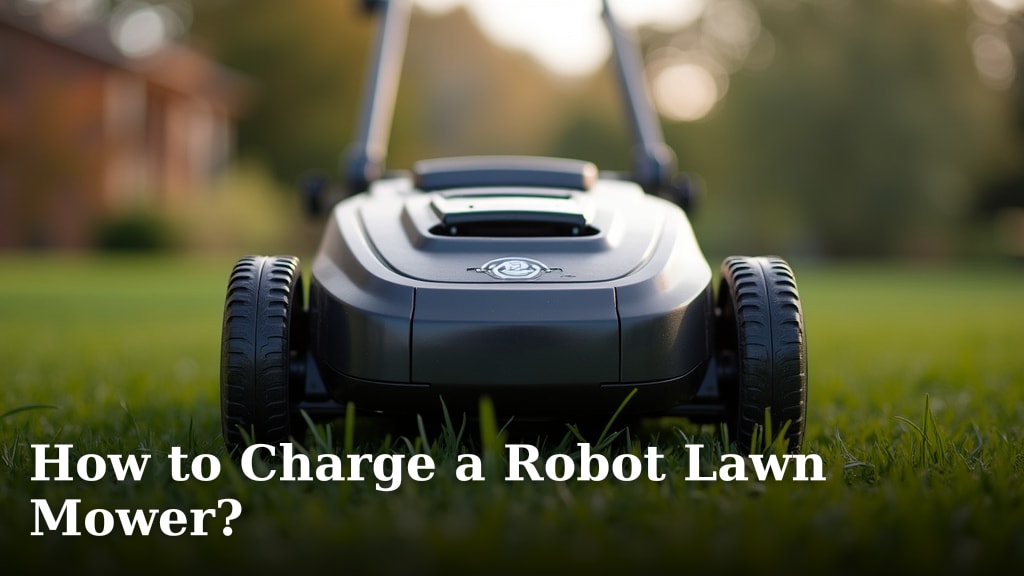
Learn how to charge a robot lawn mower before the first hard freeze. Many makers advise a partial charge for storage, not a full charge left for months.
Follow your manual for the exact range.
If you set up your mower in spring, review how to set up a robot lawn mower boundary wire. Snow and ice can heave soil, shift edging, and hide wire breaks.
What gear helps you move winter equipment into storage?
Ramps help you load a mower or snow blower into a shed. They solve storage and transport, not snow clearing.
That is still useful for a yard with a raised shed floor.
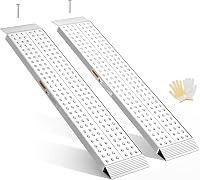
The gardhom 2PCS 55"x11" Aluminum Shed Ramps give you two 55 inch by 11 inch aluminum ramps with anti slip holes and a 3000 lb capacity per pair. Each ramp weighs 9.4 pounds, so they are easy to carry to a shed door.
The angled footrest helps create a smooth entry point at the shed edge. The package includes a pair of ramps, a pair of gloves, and a pair of pins.
Measure your shed threshold first. The ramps suit a maximum height of 16 inches as stated for this set.
A lower threshold will feel easier to load, while a steep step may still need a firm, level approach.
Which ramp kit suits a DIY board ramp?
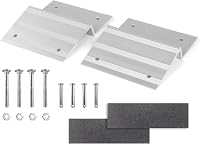
A ramp top kit suits owners who already have boards. It turns a 2 inch by 8 inch board into a ramp, which can be a low cost way to cross a small step.
The MaxxHaul 50946 Aluminum Ramp Top Kit is 8 inches wide and fits 2 inch by 8 inch boards for ramps at a shed, trailer, or driveway. It has a non skid surface and protective pads for tailgate contact.
The kit weighs 3.3 pounds and has a 1400 pound capacity in the listed specs. That makes it light enough to carry in a truck bed or store in a garage corner.
Choose this kit if you want control over board length. Check that the board is straight, dry, and free of cracks before use.
A warped board can twist under load and create a bump at the top.
When is a wide shed ramp the better pick?
A wide ramp suits riding mowers and larger winter gear. Width gives the wheels room to stay centered and reduces the chance of a tire slipping off the edge.
The VNN Shed Ramps for Lawn Mower are listed as 29 inches by 48 inches per set, with each piece at 29 inches by 24 inches. The punched hole surface helps with grip and water drainage, and the alloy iron build has a 1500 lb capacity.
The design uses a 12.7 degree tilt angle for smoother entry. It also includes a handle for portability and pre drilled holes for a quick set up with 3 screws.
Check the size before you order. The width is a plus for a riding mower, but it also needs more flat space at the shed door.
Keep the ramp pinned or braced so it cannot shift mid load.
How do you pick between a snow plow and winter storage?
Pick a plow for snow work and ramps for storage work. The two goals need different machines.
A robot mower snow plow idea mixes those goals and puts a grass cutter in a snow job.
For snow, use a snow blower, a shovel, or a plow mounted on a riding mower. Those tools have the frame, blade, and power for the load.
For storage, use ramps to move a mower or blower into a shed without lifting.
If you still want one machine for both seasons, look for a riding mower with an approved snow blade mount. That path respects the frame and steering limits.
Before spring, clean the deck, check the battery, and test the boundary wire. That routine will do more for your lawn than a winter plow experiment.
For a robot lawn mower snow plow project, the safe answer stays the same. Do not push snow with a grass robot.
Frequently asked questions
Can a robot lawn mower clear snow?
A robot lawn mower generally cannot clear snow safely because its deck, wheels, sensors, and battery are designed for grass. Snow is heavier, wetter, and colder, and pushing it can overload the drive system.
Use a snow blower or a plow made for your equipment instead.
Is there a snow plow attachment for a robot mower?
Some brands may sell seasonal accessories, but many robot mowers have no approved plow mount. Check the manual for approved attachments before adding anything to the frame.
If no approved mount exists, do not drill, strap, or weld one on.
What should I do with a robot mower in winter?
Store it dry, warm, and charged as its manual directs, with the blades and underside cleaned. Winter is a good time to inspect wheels, sensors, and charging contacts.
Bring it out again after snowmelt and a full charge check.