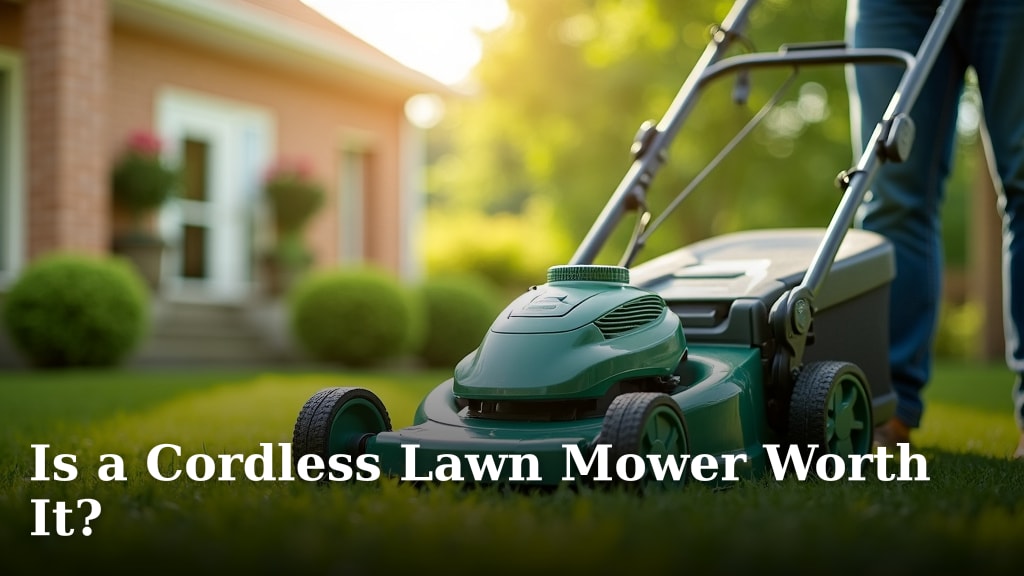
What Is a Brushless Lawn Mower Motor?
A brushless motor lawn mower uses electronic controls and permanent magnets instead of brushes to turn the blade. This design can reduce friction, improve efficiency, and limit routine motor wear.
On this page (9 sections)
- How does a brushless lawn mower motor work?
- Why can brushless motors improve efficiency?
- Do brushless motors reduce lawn mower maintenance?
- What are the trade-offs of a brushless motor lawn mower?
- Which brushless lawn mower suits a smaller yard?
- Which brushless lawn mower suits larger areas?
- How should you choose between these two mowers?
- How do you care for a brushless lawn mower?
- Is a brushless motor lawn mower worth choosing?
A brushless motor lawn mower uses electronic controls and permanent magnets instead of physical brushes to spin the motor and blade. The design can reduce friction, use battery power more efficiently, and remove brush replacement from routine maintenance.
This type of mower suits homeowners who want cordless starting without the routine care linked to gas engines. It can also suit people who prefer quieter operation for early or late mowing.
The motor is only one part of the mower. Battery voltage, battery capacity, cutting width, blade condition, grass height, and mowing speed also affect runtime and results.
In daily use, the controller manages how power reaches the motor as the blade meets changing grass. That control can help the mower use less power in light patches and draw more when growth is thicker.
A brushless design does not make every mower equal. Deck size, drive type, and height settings still shape how the mower handles your yard and how often you need to recharge or swap a battery.
For a small or medium lawn, the cutting width and battery capacity matter as much as the motor design. For a larger or sloped area, self-propelled drive and available height settings may matter just as much.
Understanding the motor helps you read product details with more care. It also helps you compare models based on the complete system rather than on one feature alone.
How does a brushless lawn mower motor work?
A brushless lawn mower motor uses permanent magnets, copper windings, and an electronic controller. The controller switches power through the windings in a timed sequence, creating a rotating magnetic field that turns the motor shaft.
That shaft drives the mower blade. As the blade meets thicker or taller grass, the controller can change the power sent to the motor.
This helps the mower respond to changing cutting resistance without using a physical brush-and-commutator contact system.
What is different about a brushed motor?
A brushed motor uses carbon brushes to transfer electrical current to the spinning part of the motor. Those brushes rub against a commutator, which creates friction and gradually wears the brushes.
A brushless motor moves the switching work into electronics. It has more control parts, but there are no carbon brushes to wear down or replace.
Why can brushless motors improve efficiency?
Brushless motors can waste less energy as friction and heat because the motor does not have brushes rubbing against a commutator. That can help a battery-powered mower use its stored energy more effectively.
Efficiency still depends on the whole mower system. A dull blade, wet grass, heavy growth, low battery, or repeated cutting at a very low height can increase the load and reduce runtime.
The motor's electronic controller also helps match power to the work. A mower may use less power in light grass and increase output when the blade meets more resistance, depending on its control system.
In practice, keeping the blade sharp is a simple way to protect that efficiency. A clean deck and a height suited to the grass also keep the motor from working harder than needed.
Do brushless motors reduce lawn mower maintenance?
Brushless motors reduce motor-specific maintenance because there are no carbon brushes to inspect or replace. You still need to keep the deck, blade, battery contacts, wheels, and controls in good condition.
Remove the battery before cleaning or inspecting the mower. Follow the mower manual for safe cleaning, blade service, storage, and charging instructions.
That simple step supports safer handling around the blade and the electrical contacts. It also gives you a clear point to check the handle, height lever, and wheel condition before the next use.
Keep grass from building up under the deck. A packed deck can restrict blade movement and make the motor work harder, even when the motor itself is operating correctly.
Cleaning after use usually takes less effort than waiting for buildup to dry and harden. A scraper recommended by the manufacturer, used with the battery removed, can help clear packed clippings without damaging the deck.
Check the blade regularly for nicks, bending, or looseness according to the manual. A blade in good condition cuts cleanly, while a damaged blade can tear grass and place extra load on the motor.
Keep battery contacts clean and dry, and store the battery as directed. Follow the charging guidance for the specific battery system rather than leaving the battery unattended or using an unmatched charger.
Inspect wheels, handles, and adjustment levers during routine checks. Small issues caught early can prevent a mower from becoming harder to push, steer, or set to the height you want.
Store the mower in a dry place where it will not be knocked or left with a damp deck. This care routine supports the brushless motor by keeping the rest of the mower clean, safe, and ready to work.
What are the trade-offs of a brushless motor lawn mower?
The main benefits are lower brush wear, electronic power control, and the potential for better battery efficiency. The trade-offs include greater dependence on electronic components and the need to match the battery system to the mower.
A brushless mower is not automatically stronger than every brushed mower. Compare the voltage, cutting width, battery capacity, drive system, height range, and grass-handling options.
For a wider look at cordless ownership, read Is a Cordless Lawn Mower Worth It?. If you are comparing mower types, our guide to the Best Cordless Lawn Mower 2026 can help you sort the main features.
Which brushless lawn mower suits a smaller yard?
A smaller push mower can suit a homeowner who wants a lighter, simpler cordless setup for routine lawn care. The Greenworks 40V 16in Push Lawn Mower has a 16 in cutting width, a 4.0 Ah battery, and a charger.
Its 5-position height adjustment covers 1.25 to 3.75 in, and its 2-in-1 system supports mulching and rear bagging. Greenworks gives it a plastic build and a listed weight of 37.5 lb.
The included battery has an average life of 35 minutes. Greenworks says the mower can cut up to 1/3 acre with a fully charged 4.0 Ah battery, though grass condition and operator technique affect that result.
Choose this style when you prefer to control the mower yourself and want a narrower 16 in cutting path. A push mower may take more effort on slopes than a self-propelled model, so consider your terrain before choosing.
Which brushless lawn mower suits larger areas?
A wider self-propelled mower can suit larger lawns and users who want rear-wheel drive assistance. The Greenworks 80V 21" Brushless Cordless (Self-Propelled) Lawn Mower has a 21 in steel deck, a 4.0 Ah battery, and a 60-minute rapid charger.
It has 7 cutting-height positions from 0.14 to 3.38 in. Its 3-in-1 design supports mulching, rear bagging, and side discharge, while variable speed control lets you adjust the self-propelled drive.
The battery has an average life of 45 minutes. Greenworks says the runtime varies with grass condition and operator technique, so dense or tall grass can change how much area you cover.
This mower weighs 64.2 lb and uses a steel deck. Choose it when the 21 in cutting width and self-propelled drive matter more than a lower listed weight or simpler push operation.
How should you choose between these two mowers?
Choose the Greenworks 40V 16in Push Lawn Mower if you want a narrower push mower with 5 height positions, a 4.0 Ah battery, and a 35-minute average battery life.
Choose the Greenworks 80V 21" Brushless Cordless if you want a wider steel deck, rear-wheel-drive self-propulsion, 7 height positions, and a 45-minute average battery life.
The 40V model includes a 4.0 Ah battery and charger. The 80V model includes a 4.0 Ah battery and a 60-minute rapid charger, so compare the charger setup as well as the mower itself.
For more product comparisons, see the Best Brushless Lawn Mowers and Best Brushless Battery Lawn Mowers guides.
How do you care for a brushless lawn mower?
Remove the battery before cleaning, keep the deck clear, and inspect the blade regularly. These steps protect the complete mower system even though the brushless motor does not need carbon-brush replacement.
Keep the blade sharp according to the manual and check for damage before mowing. A damaged or heavily worn blade can affect cutting quality and increase the work placed on the motor.
Store the mower and battery according to the manufacturer's instructions. Keep charging contacts clean and dry, and use only the charger intended for that battery system.
Before using a new mower, read its controls and height-adjustment instructions. If you use a specific model, How To Use Kobalt Brushless Lawn Mower? offers a useful example of brushless mower operation, while How To Use Lawn Mower 2.0? covers another mower-use question.
Is a brushless motor lawn mower worth choosing?
A brushless motor lawn mower is worth considering when you want cordless power, electronic load control, and less motor maintenance. It doesn't remove every maintenance task, and it doesn't guarantee that one mower will fit every lawn.
For a smaller yard, compare the push mower's width, weight, height range, and battery runtime. For a larger lawn or sloped area, compare cutting width, self-propelled drive, battery capacity, and charger time.
The best choice is the mower whose complete system matches your yard. A brushless motor is a useful feature, but the battery, deck, drive system, blade, and care routine determine how well the mower fits daily use.
Frequently asked questions
What is a brushless motor lawn mower?
A brushless motor lawn mower uses permanent magnets and an electronic controller to rotate the motor without physical brushes rubbing against a commutator. That removes one common source of friction and brush wear, while the controller adjusts power as the mower works through grass.
Are brushless lawn mowers better than brushed models?
Brushless lawn mowers can be more efficient and need less motor maintenance because they don't use replaceable carbon brushes. The benefit depends on the mower's battery, blade design, grass conditions, and control system, so brushless alone doesn't guarantee longer runtime or a better cut.
Does a brushless mower need maintenance?
A brushless mower still needs basic care, including cleaning grass from the deck, checking the blade, storing the battery as directed, and inspecting the controls. The motor itself has no brushes to replace, but the mower can still need service if the battery, controller, wiring, or other parts develop a problem.
Is a brushless mower worth it for a small lawn?
A brushless mower can suit a small lawn if you want cordless starting and less routine motor maintenance. Compare the mower's cutting width, battery capacity, height settings, included charger, and handling style with your yard.
A smaller push model may be easier to store and maneuver than a larger self-propelled mower.