
What Is the Best Mower for Hills?
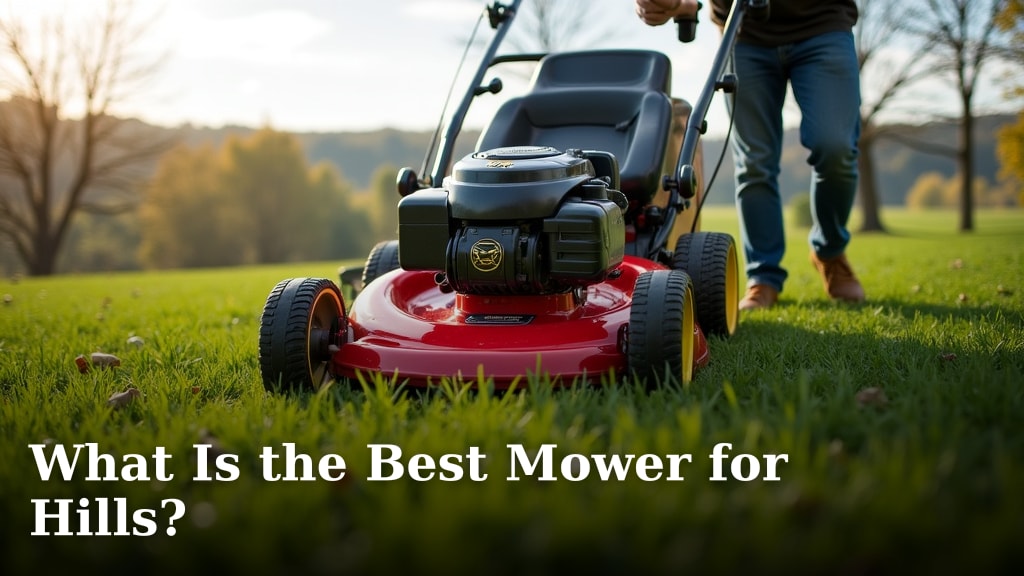
For tackling slopes, the best mower for hills is often a zero-turn mower for gentle to moderate inclines, or a robust walk-behind mower with all-wheel drive for steeper terrain. You need power and control when mowing uneven ground.
Choosing the right mower is about more than just engine size; it’s about safety and efficiency on your property. We understand your concerns about stability and ease of use, especially if you have a yard with considerable changes in elevation. Many homeowners struggle with finding a mower that feels secure and gets the job done without excessive effort.
- Zero-turn mowers are great for wide, gradual slopes.
- For steeper hills, look for all-wheel drive walk-behind mowers.
- Engine power and deck size impact performance on hills.
- Safety features like low center of gravity are very important.
- Consider your yard’s specific incline and turf conditions.
Let’s walk through how to pick the perfect mower that will make your hilly lawn maintenance much easier and safer.
Finding the Best Mower for Your Hilly Yard
You want a mower that feels stable and makes yard work easier, not harder. The best choice depends on your specific yard’s slopes, size, and your personal comfort level.
Understanding Different Mower Types for Slopes
Each type of mower has strengths and weaknesses when it comes to hills. Let’s look at what works best for you.
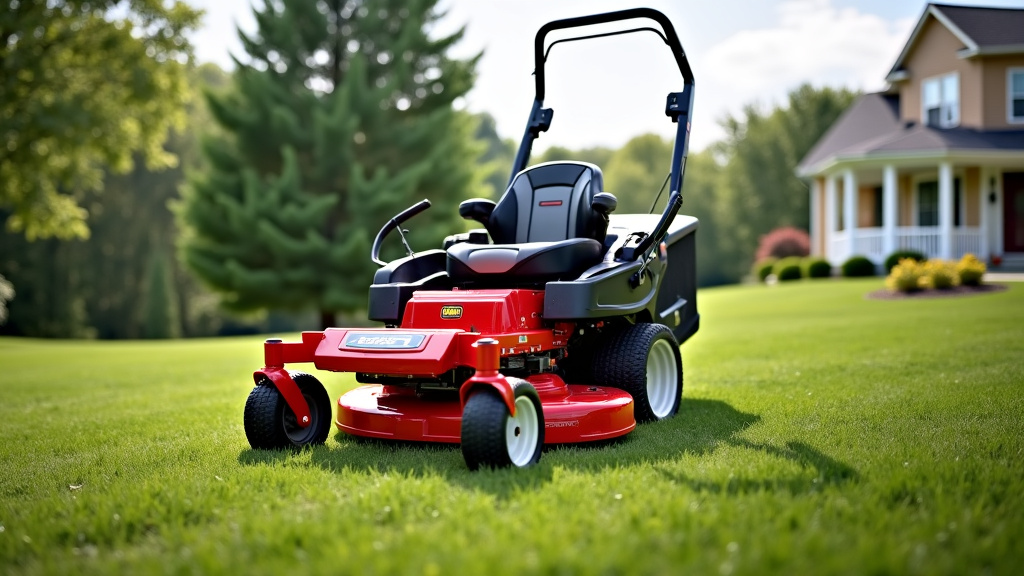
Zero-Turn Mowers on Inclines
You might love a zero-turn for its speed and maneuverability on flat ground. But what about hills? We found that zero-turns excel on gentle to moderate slopes, especially wide-open areas.
- They have a low center of gravity, which helps with stability.
- Individual wheel motors offer precise control, letting you adjust speed on each side.
- However, they can struggle on wet grass or very steep inclines. The front castor wheels can lose traction.
- Always check the manufacturer’s maximum slope rating for safety.
Tractor-Style Riding Mowers on Hills
Traditional lawn tractors are a common sight, but they have their limits on hills. Many experts agree that they are best for mild slopes.
- They generally have a higher center of gravity than zero-turns, making them less stable.
- Tractor mowers with hydrostatic transmissions offer smoother speed control, which is helpful on slopes.
- If you have four-wheel drive (4WD), that can improve traction significantly.
- Always mow up and down, not across, with a tractor-style mower to prevent rollovers (OSHA guidance).
All-Wheel Drive Walk-Behind Mowers for Steep Slopes
When hills get serious, you need a different kind of power. This is where all-wheel drive (AWD) walk-behind mowers shine. We found these to be a top choice for challenging terrain.
- AWD provides excellent traction, distributing power to all four wheels.
- You stay behind the mower, so your body weight helps with stability.
- These are ideal for very steep hills and tricky spots where a rider isn’t safe.
- Look for models with a variable speed control for better handling.
Robotic Mowers and Their Hilly Capabilities
Dreaming of a mower that does the work for you? Robotic mowers are getting smarter. Many newer models are designed to handle moderate slopes.
- They use special traction wheels and often have sensors to detect incline.
- Check the specific slope percentage a model can handle before buying. It varies widely.
- Some advanced robots can even manage up to 70% inclines, converting degrees to percentages (Husqvarna insights).
- They save you effort, but initial setup can be complex, especially on uneven ground.
Key Features to Look for in a Hilly Terrain Mower
Beyond the type of mower, certain features are essential for safe and effective hill mowing. You want something built for the job.
Engine Power and Torque Matters
A powerful engine isn’t just about speed; it’s about maintaining blade performance and traction on an incline. When you hit a slope, your engine works harder.
- Look for a mower with sufficient horsepower (HP) or cubic centimeters (cc).
- Higher torque helps prevent bogging down when climbing or cutting thick grass.
- A strong engine makes the job smoother and reduces strain on the machine.
Traction and Wheel Design for Stability
Good traction is non-negotiable on hills. You don’t want your mower sliding down the slope.
- Larger, wider tires with aggressive tread patterns offer better grip.
- All-wheel drive (AWD) or 4×4 options are excellent for riders and walk-behinds.
- Some mowers offer liquid-filled tires for added weight and stability.
- Consider models with a locking differential for increased traction on tough spots.
Safety Features are Paramount on Slopes
Your safety is the most important thing. Never compromise on features that protect you.
- A low center of gravity reduces the risk of tipping.
- Roll-Over Protective Structures (ROPS) are a must for riding mowers on significant slopes.
- Seatbelts on riding mowers keep you secure in case of an incident.
- Automatic parking brakes or easy-to-engage brakes are crucial for stopping on inclines.
- Good visibility, especially rear visibility, helps you monitor your path.
Deck Size vs. Hill Performance
A wider deck means fewer passes, but it can be a problem on hills. A smaller deck offers more control.
- For steeper or more uneven terrain, a smaller deck (e.g., 42 inches or less) can be safer and more manageable.
- A smaller deck allows you to navigate tighter areas and contours more easily.
- On wide, gentle slopes, a larger deck can still be efficient.
- Consider a mower with a floating deck that can better follow the ground’s contours.
Understanding Your Yard’s Incline
Before you buy, measure your hills. What looks steep to the eye might be less so in reality, or vice-versa. This helps you pick the safest machine.
Measuring Your Slope Percentage or Degrees
How do you know if your hill is “gentle” or “steep”? You can measure it. Many experts advise homeowners to know their slope percentage.
- Use a digital level or a simpler method with a string and a level.
- A 10-degree slope is roughly an 18% grade.
- Most residential riding mowers safely handle up to 10-15 degrees (18-27% grade).
- Walk-behind mowers can often handle steeper slopes, sometimes up to 20 degrees (36% grade) or more with AWD (National Institute for Occupational Safety and Health guidance reinforces these limits).
Terrain Conditions and Obstacles
It’s not just about the slope angle. Your unique yard has other factors you need to consider.
- Is the grass often wet or damp? This reduces traction significantly.
- Do you have rocks, roots, or uneven ground that could cause a jolt or tip?
- Are there trees or obstacles that require tight turns on a slope?
- Consider drainage patterns – standing water on a hill is a major slipping hazard.
Choosing Your Mowing Strategy for Hilly Lawns
Even with the best mower, how you mow makes a big difference in safety and effectiveness. This is where your technique comes in.
Mowing Up and Down vs. Across the Hill
This is a critical safety rule. You want to minimize the risk of rollovers.
- For riding mowers (tractors or zero-turns), ALWAYS mow up and down the hill, not across it. If you mow across and slip, you could roll.
- For walk-behind mowers, it’s generally safer to mow across the face of a slope. If you slip, the mower will likely stay downhill from you.
- This difference in strategy is due to the operator’s position relative to the machine.
Checklist for Safe Hilly Mowing
Before you start your engine, run through this quick safety list. Doing this can save you from a major headache, or worse.
- Inspect the area: Clear sticks, rocks, and debris.
- Check weather: Avoid mowing wet grass – traction is compromised.
- Wear proper gear: Sturdy shoes, long pants, eye and ear protection.
- Know your mower’s limits: Understand max slope ratings.
- Practice safe patterns: Mow up/down with riders, across with walk-behinds.
- Maintain your mower: Ensure brakes work and tires are properly inflated.
| Mower Type | Best For | Key Hilly Feature | Mowing Direction |
|---|---|---|---|
| Zero-Turn | Gentle to Moderate Slopes, Wide Open Spaces | Low Center of Gravity | Up and Down |
| Lawn Tractor | Mild Slopes, Larger Yards | Hydrostatic Transmission (if available) | Up and Down |
| AWD Walk-Behind | Steep Slopes, Tricky Areas | All-Wheel Drive Traction | Across the Slope |
| Robotic Mower | Moderate Slopes, Consistent Cuts | Slope-detecting Sensors | Varies (programmed) |
Conclusion
Choosing the best mower for your hilly yard really boils down to understanding your specific needs. You’ve seen that a zero-turn mower excels on gentle slopes, while a robust AWD walk-behind is your best bet for steeper terrain. Always prioritize safety features like a low center of gravity and proper mowing techniques.
Don’t forget to accurately measure your slope and consider your yard’s unique conditions. By matching your mower type and its features to your property’s demands, you’ll make lawn care safer and much more efficient. Take this information, assess your yard, and confidently choose the right tool for the job.
Frequently Asked Questions
Can I use a regular riding lawn mower on hills?
You can use a regular riding lawn mower on very mild slopes. However, for anything more than a slight incline, their higher center of gravity makes them less stable. Always mow up and down, and check your mower’s safety guidelines.
What is the safest way to mow a steep hill?
The safest way to mow a steep hill is often with an all-wheel drive walk-behind mower. With these, you walk across the slope, keeping the mower downhill from you. Never attempt a very steep hill with a riding mower, as the risk of rollover is too high.
How do I know if my hill is too steep for a certain mower?
You should measure your hill’s slope percentage or degrees. Most residential riding mowers can handle up to 10-15 degrees (18-27% grade). Always consult your mower’s owner’s manual for its maximum recommended slope rating for safe operation.
Are zero-turn mowers good for all types of hills?
No, zero-turn mowers are best suited for gentle to moderate slopes. While they have a low center of gravity, their front castor wheels can lose traction on very steep or wet inclines. Using them on inappropriate slopes can be unsafe.
What are ROPS on a riding mower, and do I need them for hills?
ROPS stands for Roll-Over Protective Structures. These are sturdy bars designed to protect the operator in the event of a rollover. If you’re using a riding mower on any significant slope, having ROPS is a very important safety feature that can prevent serious injury.
