
How To Mow A Curved Lawn?
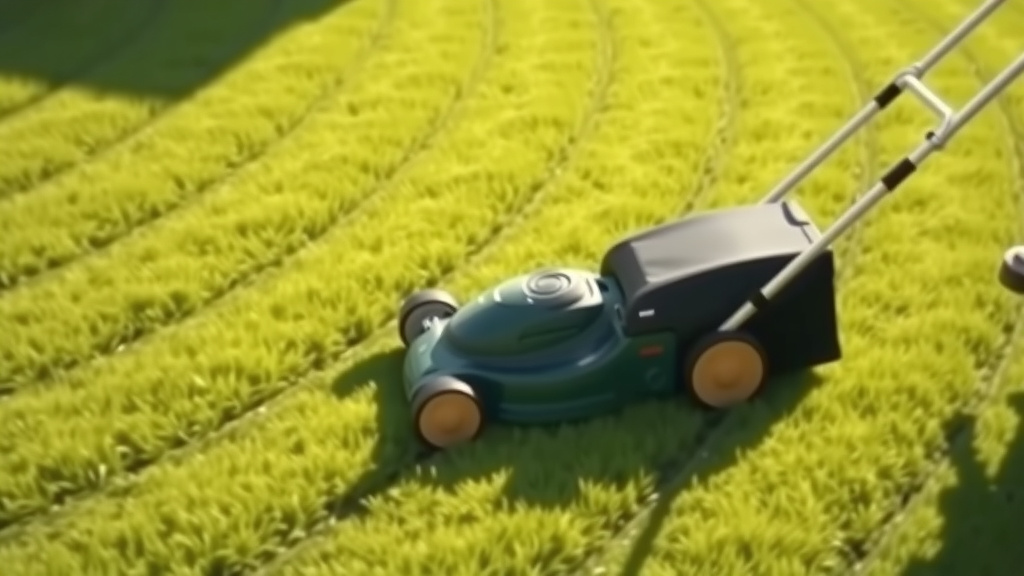
To mow a curved lawn, begin by outlining the curve with your mower, then make overlapping passes working towards the center or out from it. Use your mower’s natural turning radius and adjust your speed to match the curve’s tightness for an even finish.
Mowing a curved lawn efficiently involves careful planning of your path, maintaining consistent overlap, and choosing the right technique based on whether the curve is gentle or sharp.
- Plan your mowing route to follow the curve’s natural flow.
- Use a smaller mower or a zero-turn for tighter turns to achieve a smoother line.
- Overlap each pass by a few inches to prevent missed spots and uneven cutting.
- Start by trimming the perimeter, then work in concentric circles or arcs.
- Adjust your speed; slower for tight curves, a steady pace for gentle sweeps.
How To Mow A Curved Lawn?
Mowing a curved lawn demands a bit of strategy but creates a stunning landscape. The key lies in adapting your approach to the curve’s radius and your equipment.
Embracing the Beauty of Curves
Curved lawns add so much character to your yard, don’t they? They offer a softer, more organic look than straight lines. But we know the thought of mowing them can sometimes feel like a puzzle. No worries, you’ve got this!
Why Curves Are a Mowing Challenge
Straight lines are simple; you just drive! Curves, however, ask for more finesse. Your mower wants to go straight, so you need to guide it smoothly. Many experts say that the biggest challenge is maintaining a consistent cut without creating divots or scalping the grass.
Pre-Mow Prep: Setting the Stage
Before you even fire up the engine, a little preparation goes a long way. Think of it as stretching before a good workout. A well-prepared lawn makes the actual mowing much easier.
-
Clear the Path: Walk your curved areas. Remove any sticks, toys, or debris that could damage your mower blades or become projectiles (Consumer Product Safety Commission).
-
Check Your Mower: Ensure your blades are razor-sharp. Dull blades tear the grass, leading to frayed ends that turn brown. We found that sharp blades give a much cleaner, healthier cut.
-
Set Mowing Height: Adjust your deck to the appropriate height for your grass type. Mowing too short can stress the lawn, especially on curves where the terrain might vary slightly.
Choosing Your Mower for Curved Lawns
The type of mower you use can make a big difference when tackling curves. What’s in your shed? A walk-behind, a riding mower, or maybe a zero-turn?
| Mower Type | Best for Curves? | Tips for Use |
|---|---|---|
| Walk-Behind Mower | Good for most | Excellent control for tight and gentle curves. Allows for precise steering. |
| Riding Mower | Okay for gentle | Can handle large, sweeping curves. Tight turns are harder and may leave uncut spots. |
| Zero-Turn Mower | Excellent for all | Designed for agility. Makes navigating sharp curves and obstacles incredibly easy with its independent wheel control. |
The Outline First Strategy
For most curved lawns, we found that starting with the perimeter is your best bet. Think of it as drawing the outline before you color in the picture.
Mowing the Edges with Care
Begin by making one or two passes along the outer edge of your curved lawn. This creates a clean border and gives you a guide for subsequent passes. Take your time here; this sets the tone for the entire cut.
Mastering Gentle Curves
These are the easiest! If your curve is long and sweeping, you can use a wider turn radius.
Sweeping Arcs for Smoothness
Once your outline is done, work in long, parallel passes that gently arc to follow the curve. Keep your eyes up, looking ahead at where you want to go, not down at the blades. This helps you steer with a natural, fluid motion.
Tackling Tight Curves
Tight curves are where many folks get tripped up. Don’t worry, we have a few tricks for these tricky spots.
The “Three-Point Turn” Approach
For really sharp turns, you might need to treat it like a car turning around. Mow a small section, back up slightly, adjust your angle, then move forward again. It’s about taking smaller, controlled bites rather than trying to force one wide sweep.
Concentric Circles Outward
Some people prefer to start in the very center of a curved section and work their way outwards in concentric circles or spirals. This method can be quite effective, especially with zero-turn mowers, for achieving a uniform appearance without a lot of backing up.
The Magic of Overlap and Speed
Consistency is your best friend when mowing curves.
Maintaining Consistent Overlap
Always overlap your previous pass by a few inches, usually about a quarter to a third of your mower deck’s width. This ensures you don’t miss any strips of grass, which can look patchy and unprofessional later. We found this step is often overlooked, but it’s vital.
Adjusting Your Pace
Speed plays a role too. Many experts say to slow down slightly when you enter a curve and then pick up speed again on the straight sections. This gives you better control and helps you maintain that consistent overlap. Don’t be afraid to ease off the throttle.
Finishing Touches with Trimmers
Even the best mowers can’t get every single blade of grass right up against an obstacle.
Edging and Trimming for Perfection
After mowing, grab your string trimmer or edger. Use it to clean up the grass along the edges of your curves, around trees, or near flowerbeds. This creates a crisp, defined border that truly makes your curved lawn pop.
Common Mistakes to Avoid
We all make mistakes. But knowing what to look out for can save you a lot of frustration.
Scalping and Uneven Cuts
Trying to turn too sharply can cause the mower deck to dig into the ground, or “scalp” the turf. Remember to ease into turns. Also, inconsistent overlap leads to stripes of taller grass, which is a common complaint we hear.
Ignoring Safety First
Always wear appropriate footwear and eye protection. Be mindful of where you’re directing the discharge chute, especially when turning (Occupational Safety and Health Administration). Safety is not something to rush.
Curved Lawn Mowing Checklist
Before you know it, mowing curves will feel like second nature. Here’s a quick recap to keep handy:
- Check blade sharpness and deck height.
- Clear all debris from the lawn.
- Outline the entire curve first.
- Overlap each pass consistently.
- Adjust speed for curve tightness.
- Use a trimmer for clean edges.
- Always keep safety in mind.
Conclusion
Mowing a curved lawn doesn’t have to be a chore; it’s an art form you can master with a bit of practice and these practical tips. By preparing your area, choosing the right technique for your curves, and paying attention to overlap and speed, you’ll achieve a beautifully manicured lawn that flows seamlessly with your landscape. So go ahead, enjoy the ride, and admire your perfectly sculpted green spaces!
How do I prevent scalping when mowing tight curves?
To prevent scalping on tight curves, reduce your speed significantly and take wider, more deliberate turns. You might even lift the front wheels slightly on a push mower or use a multi-point turn on a rider to avoid the deck digging in. Many experts say slowing down is the best defense.
Is it better to mow a curved lawn clockwise or counter-clockwise?
The direction often depends on your mower’s discharge chute. Mowing so the grass is discharged onto an already-cut area is generally preferred. For curves, some people find it easier to steer in the direction that feels more natural with their dominant hand, regardless of clockwise or counter-clockwise.
What’s the ideal grass height for a curved lawn?
The ideal grass height is generally 2.5 to 3 inches for most cool-season grasses, and similar for warm-season varieties, though specific types vary. Mowing higher helps the grass stay healthier and can mask minor imperfections in a curved cut. We found cutting too short on curves can highlight uneven terrain.
Can I use a robotic mower on a curved lawn?
Yes, robotic mowers are often excellent for curved lawns. They typically use a random mowing pattern or boundary wires that handle irregular shapes with ease, often resulting in a very uniform look over time. Their smaller size and autonomous operation make them well-suited for complex layouts.
Should I bag or mulch grass clippings on a curved lawn?
Mulching is often preferred because it returns nutrients to your lawn, promoting healthier growth. However, if your grass is very tall or wet, bagging can prevent clumping and smothering the lawn, which can be more noticeable on a curved lawn’s distinct pattern.
