
What Is the Best String Trimmer for Tall Weeds?
The best string trimmer for tall weeds is usually a powerful gas-powered model with a high-displacement engine and a straight shaft. These trimmers offer the torque and durability needed to tackle thick, overgrown vegetation. We found that models designed for professional landscaping often provide the best performance against stubborn weeds.
You’re not alone if you’re battling an unruly yard. Tall weeds can be a real headache, making your property look neglected and inviting pests. Standard electric trimmers often struggle with this task, getting bogged down or breaking strings frequently. You need a tool that can handle tough jobs without constant frustration, saving you time and effort.
- Choose a powerful gas string trimmer.
- Look for a high-displacement engine.
- A straight shaft design is often best.
- Professional-grade trimmers perform well.
Ready to reclaim your yard? Below, we break down everything you need to know about picking the perfect string trimmer for those challenging tall weeds.
Selecting the Right String Trimmer for Overgrown Areas
When you’re facing down a jungle of tall weeds, your choice of string trimmer makes all the difference. We found that the best models combine raw power with durable design, built to cut through dense vegetation without bogging down. Think of it like choosing a heavy-duty pickup truck over a compact car for hauling a big load; you need the right tool for the job.
Understanding Trimmer Power Sources
Your trimmer’s power source is foundational to its performance against tall weeds. You essentially have three main choices: gas, electric (corded), and battery-powered. Each has its pros and cons, but for serious weed warriors, one type often stands out.
Gas-Powered String Trimmers
For tackling tall, thick weeds, gas-powered trimmers are typically your best bet. They offer superior power and run time compared to their electric counterparts. This means you can cut through dense patches without worrying about a dying battery or finding an outlet.
- Unmatched Power: Gas engines deliver the torque needed to slice through tough stalks.
- Extended Run Time: You can work for hours, just refilling the fuel tank as needed.
- Portability: No cords or batteries mean you can go anywhere on your property.
However, they do require more maintenance, produce emissions, and can be heavier and noisier. We found that most professional landscapers rely on gas models for their demanding daily tasks.
Battery-Powered String Trimmers
Battery-powered trimmers have made huge strides in recent years, offering a compelling alternative for many homeowners. They are quieter, lighter, and require less maintenance than gas models.
- Convenient: Just charge the battery and go. No mixing fuel.
- Lower Noise & Emissions: A more pleasant experience for you and your neighbors.
- Decent Power for Medium Weeds: Many modern battery trimmers can handle moderately tall weeds.
The main drawback for tall, thick weeds is typically run time and sustained power. While powerful, they can still bog down or drain quickly during heavy use. We recommend looking for models with higher voltage (40V or 80V) and amp-hour (Ah) ratings for better performance and battery life.
Corded Electric String Trimmers
Corded electric trimmers are the least suitable option for tall weeds. They are lightweight and maintenance-free, but their dependence on an electrical outlet severely limits your range. More importantly, they generally lack the raw power required for dense, overgrown areas. You’ll find yourself constantly battling the cord and struggling to cut effectively.
Key Features for Battling Tall Weeds
Beyond the power source, specific features make a string trimmer more effective against tall, stubborn weeds. Paying attention to these details can save you a lot of frustration and effort.
Engine Displacement and Power
For gas trimmers, engine displacement (measured in cubic centimeters, or cc) is a direct indicator of power. We found that for tall weeds, you’ll want to look for models in the 25cc to 35cc range. Higher displacement means more torque, allowing the trimmer to maintain speed and cut cleanly through thicker material without stalling.
Shaft Design: Straight vs. Curved
This is a critical distinction for tall weeds. Straight shaft trimmers are overwhelmingly preferred for heavy-duty tasks. Why? They typically have a longer reach, making it easier to get under bushes or into tight spots without bending over. More importantly, the power transfer from the engine to the cutting head is more direct, leading to fewer vibrations and greater durability.
Curved shaft trimmers are generally lighter and more maneuverable for light trimming around flower beds. However, for tall weeds, their shorter reach and less robust design can be a hindrance.
Cutting Head and Line Type
The part that actually does the cutting is vital. A good cutting head paired with the right line can make a huge difference.
Cutting Swath
The cutting swath is the diameter of the area your trimmer cuts with each pass. For large areas with tall weeds, a wider cutting swath (15 inches or more) allows you to clear more ground faster. This means fewer passes and less time spent battling your yard.
Line Diameter and Shape
Don’t underestimate the string itself! For tall, thick weeds, you’ll need a heavier duty line. We found that line diameters of 0.095 inches or more are essential. Thinner lines will snap constantly, interrupting your work and causing major frustration.
- Round Line: Good for general use, but can fray on tough stalks.
- Twisted Line: Offers more cutting edges and can be quieter.
- Multi-Sided (Star, Square, Serrated) Line: These are often the best choice for tall weeds. Their sharp edges act more like a saw, cleanly cutting through thick stems.
Many experts emphasize that the right line can significantly improve your trimmer’s effectiveness (University of California Cooperative Extension).
Bump Feed vs. Automatic Feed
The mechanism for advancing new trimmer line can impact your workflow. A bump feed head requires you to tap the head on the ground to release more line. While simple, it can be annoying if you’re constantly breaking line on thick weeds. Automatic feed systems advance line as it wears, which can be convenient but sometimes less reliable or harder to repair. For tough jobs, a robust bump feed head is often preferred by pros due to its simplicity and durability.
Considering Ergonomics and Durability
Even the most powerful trimmer is useless if it’s uncomfortable to use or breaks down easily. You’re going to be putting in some serious work, so comfort and reliability matter.
Weight and Balance
Gas trimmers can be heavy. Look for models that are well-balanced to reduce fatigue. A comfortable harness or shoulder strap can also greatly distribute the weight, making long jobs much more manageable. You don’t want to feel like you’ve had a full-body workout just from holding the tool.
Vibration Reduction
Excessive vibration can lead to hand fatigue and even numbness over time. Many higher-end trimmers feature anti-vibration technology built into the handles. This makes a noticeable difference during extended use, keeping your hands more comfortable and reducing strain.
Construction and Materials
For a tool designed to tackle tough jobs, durability is key. Look for trimmers with metal components where it counts, like the shaft and cutting head assembly. Avoid models with excessive plastic in high-stress areas. A professional-grade trimmer is built to withstand impact and constant vibration.
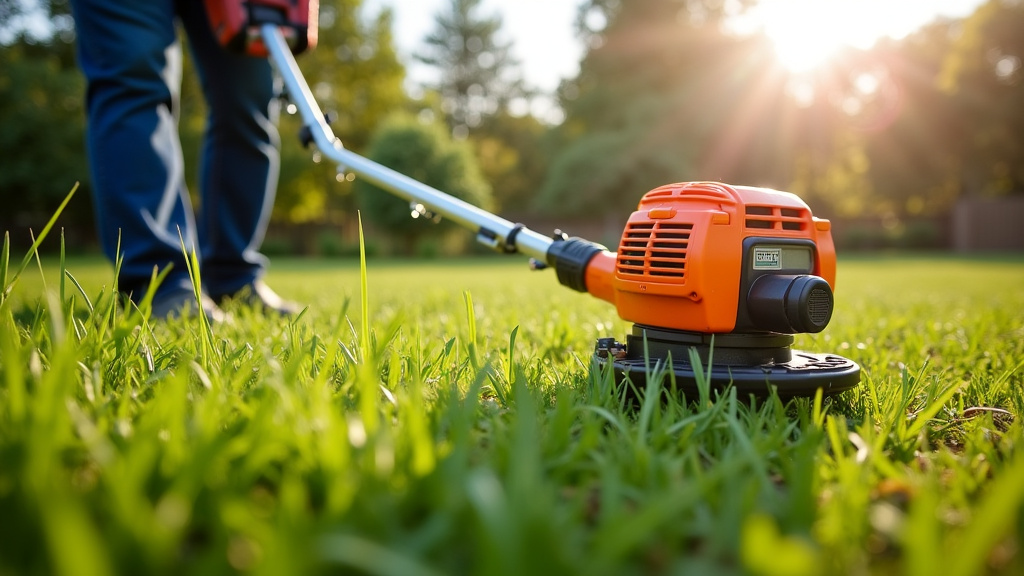
Checklist: Choosing Your Tall Weed Slayer
To help you narrow down your choices, here’s a quick checklist of what to prioritize when shopping for a string trimmer for tall weeds:
- Gas-powered engine for maximum power and run time.
- High displacement (25cc+) for cutting power.
- Straight shaft design for better reach and durability.
- Heavy-duty cutting line (0.095″ or thicker), ideally multi-sided.
- Wide cutting swath (15″+) to cover more ground efficiently.
- Ergonomic design with anti-vibration features and good balance.
Understanding Trimmer Attachments and Versatility
Some string trimmers are designed to be multi-tools, allowing you to swap out the cutting head for other attachments. This versatility can be a huge bonus if you have other yard tasks.
Attachment-Capable Systems
Many professional and prosumer gas trimmers (and some powerful battery models) offer a detachable shaft that accepts various attachments. Think about what else you might need to do around your property. Could you benefit from a hedge trimmer, pole saw, or even a tiller attachment?
While the primary goal is tall weed removal, a versatile system can save you money and storage space by consolidating multiple tools into one powerhead. Just be sure the core trimmer unit is still robust enough for your weed-trimming needs.
| Feature | Best for Tall Weeds | Less Suitable for Tall Weeds |
|---|---|---|
| Power Source | Gas-powered (25-35cc) | Corded Electric, Low-Voltage Battery |
| Shaft Type | Straight Shaft | Curved Shaft |
| Line Diameter | 0.095 inches or thicker | 0.065-0.080 inches |
| Line Shape | Multi-sided (star, square, serrated) | Round |
| Cutting Swath | 15 inches or more | Under 13 inches |
| Weight | Heavier, but well-balanced with harness | Lightweight (can lack power) |
Conclusion
Conquering tall weeds doesn’t have to be a constant battle. By choosing a powerful gas-powered string trimmer with a straight shaft and a high-displacement engine, you equip yourself for success. Prioritizing durable components and a robust cutting line will save you frustration and effort. Remember, the right tool makes all the difference in reclaiming your yard. Invest wisely, and you’ll transform your overgrown areas into a well-maintained landscape with ease.
Frequently Asked Questions
What’s the biggest mistake people make when buying a trimmer for tall weeds?
The biggest mistake is usually underestimating the power needed. Many choose electric or low-powered gas trimmers, which quickly bog down and make the job much harder. Always prioritize engine displacement and torque for thick vegetation.
Can I use a brush cutter blade on my string trimmer for really tough weeds?
Some string trimmers, especially those with higher power and straight shafts, are “attachment-capable” and can accept brush cutter blades. This is an excellent option for extremely thick, woody weeds or small saplings, but always check your trimmer’s manual for compatibility.
How often should I replace my trimmer line when battling tall weeds?
For tall, thick weeds, you’ll likely go through line faster than usual. It’s a good idea to inspect your line frequently and replace it whenever it starts to fray or shorten significantly. Keeping fresh, sharp line ensures efficient cutting and reduces strain on your trimmer.
Is it worth buying a more expensive, professional-grade trimmer for a home yard with lots of weeds?
If you consistently deal with large areas of tall, stubborn weeds, a professional-grade trimmer is often a worthwhile investment. They offer superior durability, power, and comfort, which translates to less frustration and a longer-lasting tool, saving you money in the long run.
What safety precautions should I take when using a powerful string trimmer on tall weeds?
Always wear safety glasses or a face shield, long pants, sturdy closed-toe shoes, and hearing protection. Tall weeds can hide debris that might be thrown, and powerful trimmers are noisy. Keep bystanders and pets at a safe distance.
