
What Is a Good Chainsaw Bar Length for Firewood?
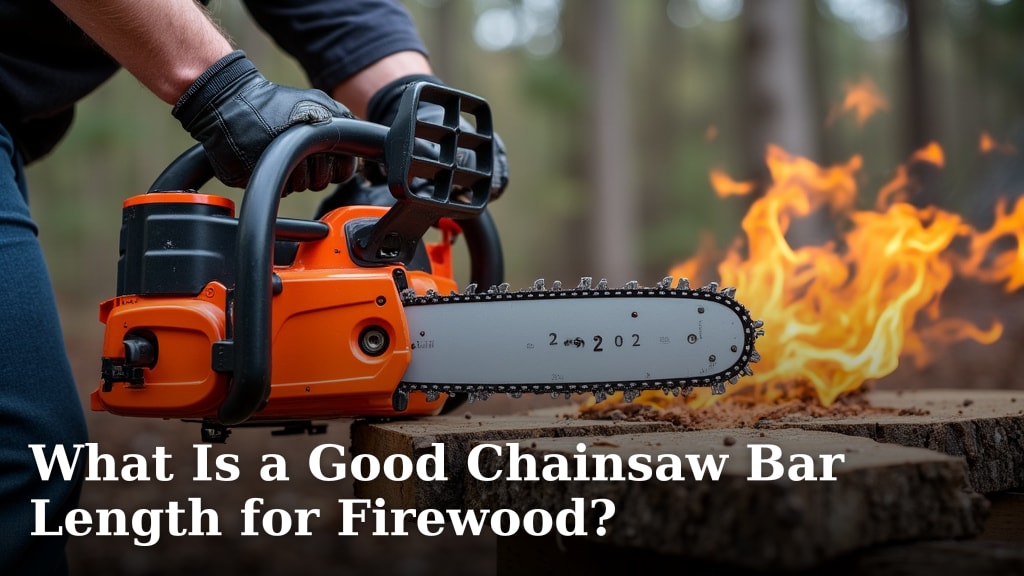
For cutting firewood, a good chainsaw bar length typically falls between 16 and 20 inches. This range offers a great balance of cutting power and maneuverability for most homeowners. You get the efficiency to tackle decent-sized logs without wrestling a massive saw. It’s often the sweet spot for versatility.
Choosing the right bar length impacts how quickly and safely you can process your wood. A shorter bar is lighter and easier to control, which is great for smaller branches or tight spaces. A longer bar can chew through thicker logs faster, but it can also be more tiring and potentially dangerous if you’re not experienced. We found that matching the bar to your saw’s power is key.
- The best chainsaw bar length for firewood is usually 16-20 inches.
- This range provides good cutting ability and control.
- Shorter bars are easier to handle for light work.
- Longer bars cut thicker wood faster but are heavier.
- Always match the bar to your chainsaw’s power.
Let’s break down what makes a chainsaw bar length “good” for your firewood needs and how to pick the perfect one.
Choosing the Right Chainsaw Bar for Your Firewood Needs
Finding the perfect chainsaw bar length for firewood processing is like picking the right tool for any job. You want something that feels comfortable and gets the task done efficiently. For most homeowners cutting firewood, a bar between 16 and 20 inches tends to be the sweet spot. This range offers a fantastic balance of cutting power and maneuverability. You can handle decent-sized logs without feeling overwhelmed by a massive saw.
Think of it this way: if you were building a birdhouse, you wouldn’t use a giant framing hammer, right? You’d pick something smaller and more precise. Similarly, for firewood, you don’t necessarily need the longest bar available. A shorter bar is lighter, easier to control, and generally safer, especially if you’re relatively new to chainsaws. It’s easier to manage in tighter spaces too, like around brush or smaller logs.
On the flip side, a longer bar can chew through thicker logs much faster. But, more length means more weight. It also requires more power from your chainsaw’s engine to push the chain through the wood. Pushing too hard with a bar that’s too long for your saw can lead to kickback, which is a dangerous situation. We’ve found that matching the bar length to your saw’s horsepower is really key to safe and effective cutting.
How Bar Length Affects Your Firewood Cutting
The length of your chainsaw’s bar is measured from the tip of the drive sprocket to the tip of the bar. This measurement directly influences your chainsaw’s performance. It’s not just about how much wood you can cut at once, but also about how safely and comfortably you can do it. Let’s break down what different lengths generally mean for your firewood chores.
Shorter Bars: Agility and Ease
Chainsaw bars under 16 inches are usually considered short. These bars are incredibly lightweight and agile. They are fantastic for pruning branches, clearing brush, or cutting up smaller trees. If you’re dealing with a lot of smaller diameter wood, a shorter bar can be a real joy to use. They are also much less demanding on the chainsaw’s engine and the operator.
One of the biggest advantages of a shorter bar is the reduced risk of kickback. Kickback happens when the tip of the chainsaw bar hits an object, or when the wood closes in and pinches the chain. This sudden, violent reaction can send the saw flying back towards you. Shorter bars have a smaller “kickback zone” at the tip, making them inherently safer for less experienced users. Many experts recommend shorter bars for beginners (National Safety Council). Many experts recommend shorter bars for beginners, and our guide to the best chainsaw for beginners can help.
However, trying to cut a large log with a very short bar can be slow and frustrating. You’ll find yourself making multiple passes, which isn’t efficient. It’s like trying to chop down a big tree with a small hatchet – possible, but not ideal. So, while great for light tasks, they might not be your primary choice for serious firewood processing.
Medium Bars: The Versatile Workhorse
This is where the 16 to 20-inch range truly shines for firewood. These bar lengths offer a fantastic compromise. They’re long enough to take down reasonably sized trees and cut through thicker logs in a single pass, but not so long that they become unwieldy or require a professional-grade saw.
A 16-inch bar on a homeowner-grade saw is extremely popular. It’s maneuverable enough for most tasks and provides good cutting speed. You can comfortably cut logs that are, say, 10-12 inches in diameter. We found this length to be very forgiving and easy to handle, even after a long day of cutting.
Stepping up to an 18 or 20-inch bar gives you a bit more reach and cutting power. This is ideal if you often encounter logs that are 12 to 16 inches in diameter. You’ll be able to make deeper cuts, meaning fewer passes. Many experts suggest that a 20-inch bar is the maximum for many gas-powered homeowner chainsaws to maintain optimal performance and safety (Oregon Saw Chain).
The trade-off, of course, is weight and handling. A 20-inch bar is noticeably heavier than a 16-inch bar. This extra weight can lead to fatigue faster. It also requires a bit more physical strength to control the saw, especially during longer cutting sessions or when maneuvering around awkward pieces of wood.
Longer Bars: Power and Productivity (with Caveats)
Bars 20 inches and longer are generally considered for heavy-duty use. While a 24-inch bar can slice through a 20-inch thick log like butter, it comes with significant considerations. First, your chainsaw needs enough engine power to drive the longer chain effectively. A small saw trying to push a big bar will bog down, overheat, and perform poorly.
The weight and balance shift dramatically with longer bars. They are more tiring to hold and operate for extended periods. The risk of kickback also increases substantially with longer bars due to the larger kickback zone at the tip. This means you need to be extra vigilant about proper technique, maintaining a secure grip, and avoiding cutting with the bar tip.
For firewood, unless you’re regularly dealing with very large diameter logs (over 20 inches) and have a powerful saw with a strong engine, a bar much longer than 20 inches is often overkill. It’s more suited for professional loggers or those felling large trees. For typical backyard firewood needs, longer bars can be more of a hindrance than a help.
Matching Bar Length to Your Chainsaw’s Power
This is arguably the most important factor. You can’t just slap any bar length onto your saw and expect it to work well. Chainsaws are designed with a specific range of bar lengths in mind. Exceeding this range can be dangerous and inefficient.
Think of your chainsaw’s engine like your own heart. A small heart can pump blood efficiently for normal activity. But if you ask it to sprint a marathon, it will struggle, get tired quickly, and could potentially get damaged. Your chainsaw engine works similarly. A smaller engine (e.g., 40cc) is designed to perform best with shorter bars (around 14-16 inches).
Larger engines (e.g., 60cc and up) have the power to handle longer bars (20-24 inches). They can push the chain through wood more forcefully and manage the extra weight and friction. Many manufacturers will specify the recommended bar lengths for each of their chainsaw models. Always check your owner’s manual!
We found that running a bar that’s too long for your saw leads to a few problems: the chain bogs down, you have to force the saw, it slows down your cutting, and the engine can overheat. This puts unnecessary strain on the saw, leading to premature wear and tear. It’s much better to use the bar length that your saw is designed for. You’ll have a safer, more enjoyable experience.
Factors Beyond Just Length
While length is a major consideration, don’t forget about other aspects of your chainsaw bar and chain. The pitch and gauge of your chain, for instance, play a role in how efficiently your saw cuts. Pitch refers to the distance between drive links, and gauge is the thickness of the drive link that fits into the bar’s groove.
Most homeowner saws use a 3/8 inch pitch chain with a 0.050 inch gauge. Professional saws might use a lower profile 3/8 inch or a .325 inch pitch. Sticking to the pitch and gauge recommended by your saw manufacturer for your chosen bar length is usually the best bet for compatibility and performance.
Also, consider the type of wood you’ll be cutting. Some hardwoods are denser than softwoods. If you’re consistently cutting tough, dense hardwoods, you might lean towards the shorter end of your saw’s recommended bar length range. This is because dense wood offers more resistance.
| Bar Length (Inches) | Ideal For | Pros | Cons |
|---|---|---|---|
| 10-14 | Pruning, small branches, light brush clearing | Lightweight, very maneuverable, low kickback risk | Slow for larger logs, limited cutting capacity |
| 16-18 | General firewood processing, small to medium logs | Good balance of power and control, versatile | Can be tiring on very large logs, requires moderate saw power |
| 20-24 | Larger logs, occasional felling of medium trees | Faster cutting on thick wood, increased capacity | Heavy, requires more saw power, higher kickback risk, can cause fatigue |
Your Chainsaw Bar Length Checklist
To make sure you’re making the best choice for your firewood needs, run through this quick checklist:
- What’s your saw’s recommended bar range? Check the manual!
- What’s the typical log size you cut? Bigger logs need longer bars (within limits).
- How much experience do you have? Beginners often benefit from shorter, lighter bars.
- What’s your physical strength? Heavier bars mean more fatigue.
- What kind of wood are you cutting? Dense hardwoods can be tougher.
- Do you need maximum efficiency or maximum control? Find your personal balance.
By considering these points, you’ll be well on your way to selecting a chainsaw bar that makes your firewood cutting safer, easier, and more effective. Remember, the goal is to have a tool that works *with* you, not against you.
Conclusion
Finding the right chainsaw bar length for firewood is about finding your personal balance. We’ve seen that for most homeowners, the 16 to 20-inch range offers the best mix of cutting power and easy handling. Always remember to match your bar to your saw’s engine power – a well-matched system is safer and more efficient. Don’t forget to consider your experience level and the typical size of the logs you cut. Take a moment to review your owner’s manual and make an informed choice.
Your next step is simple: check your chainsaw’s manual and consider the typical log size you’ll be cutting. This small bit of research will ensure you pick a bar that makes your firewood chores safer and more enjoyable for years to come.
Frequently Asked Questions
What is the absolute minimum bar length for cutting firewood?
For general firewood cutting, a bar shorter than 14 inches can be very slow. While useful for small branches, it’s not efficient for processing logs. We found that 16 inches is a more practical minimum for tackling most common firewood sizes.
Can I put a longer bar on my saw if I have a powerful engine?
Even with a powerful engine, there’s a limit. Chainsaws are designed for a specific bar range. Going too long can still be unsafe and put extra strain on components. Always check your saw’s recommended maximum bar length to avoid issues.
Is a 20-inch bar too long for a beginner cutting firewood?
A 20-inch bar is manageable for many beginners, but it is heavier and has a higher kickback risk than shorter bars. We suggest starting with a 16 or 18-inch bar if you’re new to chainsaws for an easier learning curve.
How does the type of wood affect the ideal bar length?
Harder, denser woods offer more resistance. If you frequently cut tough hardwoods, you might find a slightly shorter bar within your saw’s recommended range cuts more cleanly. Softer woods are more forgiving with longer bars.
What’s the difference between pitch and gauge and why does it matter for bar length?
Pitch is the chain’s size measurement, and gauge is its thickness. These affect how the chain fits the bar groove and the saw’s performance. Generally, stick to the pitch and gauge your saw manufacturer recommends for its intended bar lengths.
