
How To Build A Lawn Mower Trailer?
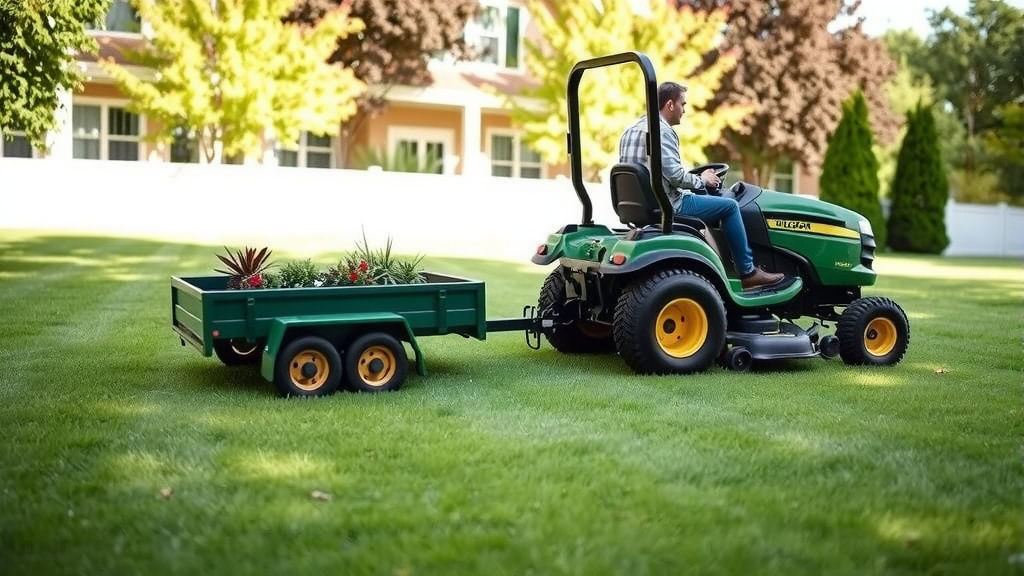
To build a lawn mower trailer, you’ll need a sturdy frame, a durable deck, wheels, an axle, and a reliable hitch mechanism.
Start by meticulously planning your design, gathering all necessary materials, and ensuring every component is safely and securely attached for hauling your lawn care equipment.
- Planning is key before starting any construction project.
- Gather all necessary tools and materials in advance to avoid delays.
- Focus intently on safety and stability throughout the assembly process.
- Regular maintenance will significantly extend your trailer’s lifespan.
- Customize your trailer specifically to fit your unique lawn care needs.
How To Build A Lawn Mower Trailer?
Building your own lawn mower trailer involves assembling a robust base, attaching appropriate wheels, and creating a secure hitch system. It’s a project many DIY enthusiasts find both rewarding and practical for their lawn care tasks.
Why Build Your Own Mower Trailer?
Thinking about hauling your gear around your property? A custom lawn mower trailer offers some distinct advantages. You get to control every aspect, from size to features, making it perfectly suited for your specific needs.
Saving Your Wallet
Let’s be honest, store-bought trailers can get pricey. By building your own, you often save a considerable amount on materials and labor. It’s a smart way to get the functionality you need without breaking the bank.
We found that purchasing raw materials and assembling them yourself typically costs less than a comparable pre-fabricated unit. This allows you to allocate your budget to higher-quality components where it truly matters.
Tailored to Your Needs
Ever wish a trailer was just a bit wider, or had a specific hook for your trimmer? When you build it, you’re the boss. You can design it with the exact dimensions and features to carry your specific lawn care equipment.
This customization ensures your trailer isn’t just a generic hauler, but a perfect extension of your tools. Many experts suggest this bespoke approach for optimal efficiency on the job (Utility Builders’ Journal).
Essential Materials and Tools You’ll Need
Before you even think about cutting metal or wood, make sure your workshop is ready. Having the right materials and tools on hand saves time and frustration. It also ensures a safer and sturdier final product.
Key Materials for Your Trailer
The foundation of your trailer’s strength lies in its materials. Choosing durable options ensures longevity and safety. Consider where and how you’ll use the trailer when selecting components.
- Frame Material: Square steel tubing (1.5-2 inch) or treated lumber (2x4s, 2x6s)
- Decking: Pressure-treated plywood (3/4 inch) or steel mesh/plate
- Axle: A solid axle rated for your desired load capacity
- Wheels and Tires: Appropriate size and load rating, often 8-12 inches
- Hitch: A coupler that matches your mower’s hitch ball or pin type
- Hardware: Bolts, nuts, washers, self-tapping screws, cotter pins
- Safety Chains: Crucial for secure towing
Tools to Get the Job Done
Having the right tools is half the battle. From measuring accurately to making strong connections, these tools are essential. You might need to borrow a few, but having them ready prevents delays.
You’ll likely need a measuring tape, marker, safety glasses, and hearing protection. For cutting and shaping, a metal chop saw or circular saw (for wood), an angle grinder, and a drill with appropriate bits are vital. If you’re using steel, a welder and welding gear will be necessary. Don’t forget wrenches, sockets, and clamps for assembly.
| Feature | Steel Frame (Welded) | Wood Frame (Bolted) |
|---|---|---|
| Durability | High; resistant to rot and pests. | Moderate; susceptible to rot, requires treatment. |
| Weight | Heavier; offers more stability for heavy loads. | Lighter; easier to maneuver by hand. |
| Construction Skill | Requires welding skills and equipment. | Easier for DIY with basic carpentry tools. |
| Cost | Can be higher due to specialized materials. | Generally lower material cost. |
Step-by-Step Guide to Construction
Building a trailer isn’t just about assembling parts; it’s a sequence of careful steps. Each phase builds upon the last, so taking your time and being precise is incredibly important. Let’s walk through it.
Designing Your Trailer’s Blueprint
Before cutting anything, grab a pen and paper. Sketch out your trailer. What size do you need? What will you carry? Consider the dimensions of your mower and other tools. This blueprint guides your entire project.
Measure everything twice, as the old saying goes. We found that a well-detailed plan prevents costly mistakes later on (Engineering Design Principles).
Framing the Foundation
The frame is the backbone of your trailer. Whether you choose steel or wood, make sure it’s square and level. Cut your chosen material to length, then assemble the main rectangular frame.
If welding steel, ensure strong, consistent beads. For wood, use heavy-duty carriage bolts and wood glue for maximum strength. Don’t skimp on structural integrity here; it supports everything.
Installing the Axle and Wheels
Proper axle placement is critical for balance. Typically, the axle sits slightly behind the trailer’s center point. This helps distribute weight evenly and prevents excessive tongue weight.
Mount the axle securely to the frame using U-bolts or welded brackets. Then, attach your wheels and tires, ensuring bearings are greased and lug nuts are tightened to specification. Wheel alignment impacts towing stability.
Building the Deck
The deck is where your equipment will rest. Cut your chosen decking material to fit precisely within your frame. Secure it firmly to the frame using self-tapping screws (for metal frames) or deck screws (for wood).
A good deck should be flush with the frame and provide a stable, non-slip surface for your mower and tools. Consider adding a protective coating if using wood.
Crafting the Hitch Mechanism
The hitch connects your trailer to your lawn mower. This component must be extremely strong and reliable. Typically, this involves a tongue extending from the front of the frame to a coupler.
Ensure the coupler you choose is compatible with your mower’s hitch. Bolt or weld it securely to the tongue. Always include safety chains that cross beneath the coupler, providing a backup connection in case of hitch failure.
Safety First: Important Considerations
Building a trailer is serious business, and safety should always be your top concern. A well-built trailer is a safe trailer. Skipping safety checks can lead to accidents and damage.
Load Capacity and Balance
Never overload your trailer beyond its designed capacity. Overloading can strain the frame, axle, and hitch, leading to dangerous failures. Always distribute your load evenly over the axle.
An unbalanced load can cause the trailer to sway violently while towing, potentially causing you to lose control of your mower. Many safety guidelines emphasize understanding your trailer’s limits (Transportation Safety Board).
Braking and Lighting Options
For smaller lawn mower trailers used solely on private property, elaborate braking and lighting systems might not be required. However, if your trailer will ever venture onto public roads, even briefly, these become legal necessities.
Consider adding basic reflectors for visibility in low light. For heavier loads or faster speeds, a simple hand brake or even surge brakes could be a wise addition. Safety is paramount, even for short distances.
Customization Ideas for Your Trailer
Once the basic build is done, the fun really begins. You can personalize your trailer to make it even more functional and efficient. Think about what would make your lawn care tasks easier.
Adding Practical Accessories
From tool racks to secure tie-down points, the possibilities are vast. How about a small ramp for easier loading? Or perhaps some side rails to prevent items from falling off? A simple storage box for small tools could also be incredibly useful.
Many users find that adding a few well-placed hooks or a small toolbox makes a world of difference in their daily operations. We found that even simple additions can significantly improve utility.
Post-Build Safety Checklist:
- Inspect all welds or bolted connections for tightness.
- Check tire pressure and wheel bearing grease.
- Verify the hitch coupler engages and locks properly.
- Ensure safety chains are present and correctly attached.
- Test the trailer’s balance with a typical load.
- Confirm all edges are smooth, free from sharp burrs.
Conclusion
Building your own lawn mower trailer is a rewarding project that provides immense practical value. From initial design to the final custom touches, you create a tool perfectly suited for your lawn care needs. Remember, a focus on sturdy materials, precise construction, and unwavering safety protocols will ensure your trailer serves you well for many seasons to come. Enjoy the satisfaction of pulling your own custom-built solution around your property!
How long does it take to build a lawn mower trailer?
The time it takes varies widely based on your skill level, the complexity of your design, and the tools you have available. A basic wooden trailer might take a weekend, while a more robust welded steel version could span several weekends of dedicated work.
What kind of wheels should I use for my trailer?
For most lawn mower trailers, small utility tires (8-12 inches in diameter) with a suitable load rating are ideal. Ensure they are designed for the weight you intend to carry and the terrain you’ll be traversing. Off-road tires might be better for uneven yards.
Can I use an old utility trailer chassis?
Absolutely! Repurposing an old utility trailer chassis can be a great way to save time and money. Inspect it thoroughly for rust, bent frames, or worn-out components before you start. You might only need to replace the deck or modify the hitch.
Is welding absolutely necessary, or can I bolt it together?
Welding provides the strongest and most durable connections for a steel frame. However, you can certainly build a sturdy trailer using heavy-duty bolts and brackets, especially with a wood frame or a carefully designed steel frame that uses bolted plates. Bolting requires careful measurement and strong fasteners.
What’s the best way to maintain my new trailer?
Regular maintenance includes checking tire pressure, inspecting wheel bearings for grease, tightening all bolts and fasteners, and looking for any signs of rust or material fatigue. For wooden decks, reapply sealant annually. Keeping it clean and stored under cover will also extend its life significantly.
