
How To Build A LEGO Lawn Mower?
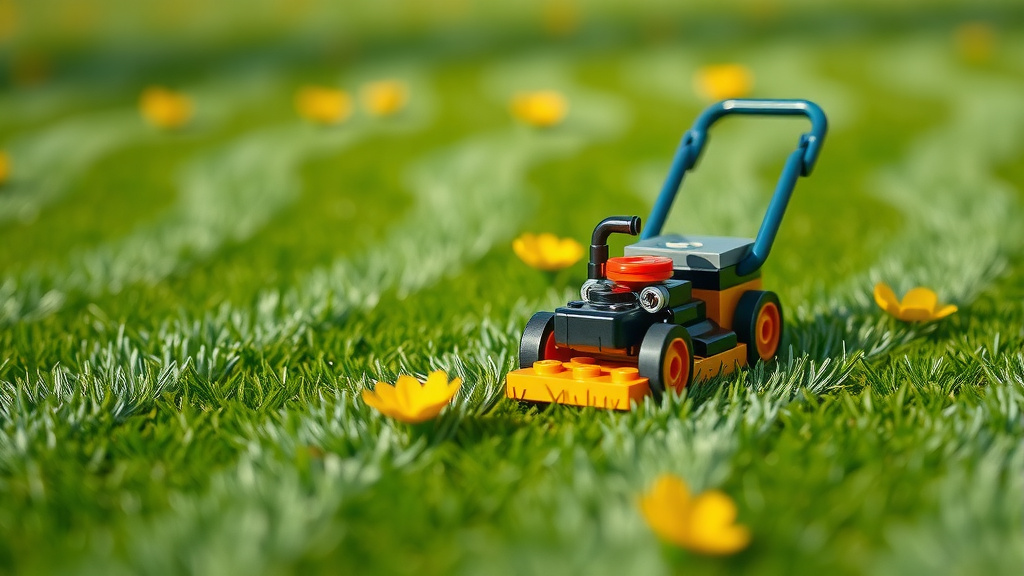
To build a LEGO lawn mower, begin by gathering essential bricks like plates for the base, wheels, axles, and various colored bricks for the body and handle. Focus on creating a stable chassis first, then add the mower deck, simulated blade, and finally, the handle and engine block for a complete design.
You will need to think about the basic structure and function of a real lawn mower to guide your LEGO creation, focusing on sturdy connections and proportionate elements to make your model look authentic and hold together well.
- Get started by sorting through your LEGO collection for basic plates, wheels, and common bricks.
- Plan a simple design: a base, four wheels, a deck, a handle, and an engine block.
- Build the chassis first, ensuring it is robust enough to support the rest of the model.
- Connect the wheels securely to axles so your mower can ‘roll’ smoothly.
- Add creative details like a mock blade, exhaust pipe, or a fuel cap using smaller bricks.
How To Build A LEGO Lawn Mower?
Building a LEGO lawn mower can be a fun project that lets you explore creativity and basic engineering. You will start with a sturdy base, attach wheels, and then add details like the cutting deck and handle.
Why Build a LEGO Lawn Mower?
Creating a LEGO model is more than just stacking bricks; it’s a journey of imagination. Building a lawn mower, in particular, offers a chance to explore a common household tool in a playful way.
Sparks Imagination
A LEGO project like this can really ignite your creativity. You get to decide every detail, from the color scheme to the type of engine. It is like designing a miniature machine from scratch.
Understanding Mechanisms
As you build, you will start to grasp simple mechanical concepts. How do wheels attach? What makes the handle stand up? It is a hands-on way to learn about structure and balance.
Gathering Your LEGO Bricks
Before you begin, a quick brick hunt will save you time. You do not need a specific set; just a general collection of common LEGO pieces works well.
Essential Parts Checklist
Here are some pieces we found are very useful for a basic LEGO lawn mower build. You can adapt this list based on your own brick collection.
| Part Type | Description | Quantity (Estimate) |
|---|---|---|
| Plates | Flat pieces for bases and decks | 10-15 assorted |
| Bricks | Standard stacking blocks for structure | 20-30 assorted |
| Wheels & Axles | Essential for mobility | 4 wheels, 2 axles |
| Slopes | For angled details, engine cover | 4-6 assorted |
| Tiles | Smooth pieces for finishing | 5-10 assorted |
Brick Types for Structure
Focus on getting a good mix of 2xX and 4xX bricks for the main body. These provide strong connections. Smaller 1xX bricks are great for adding finer details.
Planning Your Mower Design
Think about the kind of lawn mower you want to build. Will it be a push mower or a ride-on? A simple push mower is usually best for a first-time LEGO build (Many experts say).
Basic Lawn Mower Anatomy
A typical push lawn mower has a few key parts: a main body (chassis), wheels, a cutting deck, a handle, and an engine. Keeping these in mind helps your design.
Wheels and Axles First
Start with the wheels. You will need four wheels and two axles. Connect these to a sturdy base plate. This foundation will support everything else you build.
The Mower Deck Idea
The cutting deck is the part that covers the blade. Use flat plates to create this section. You can make it as wide or narrow as you like, just make sure it looks proportionate to your wheels.
Step-by-Step Assembly Guide
Now that you have your bricks and a plan, let us start building. Remember, there is no single “right” way; these are just helpful suggestions.
Building the Base Frame
Choose a large base plate, perhaps a 6×10 or 8×12. This will be the main platform. Build up the sides a few bricks high to create a solid and enclosed base.
Attaching the Wheels
Carefully connect your axles to the underside of your base frame. Ensure they are secure and the wheels can spin freely. Sometimes using specific axle bricks or technic pins makes this easier (we found).
Constructing the Mower Deck
On top of your base, add another layer of plates. This creates the flat top of the mower deck. You can use different colored plates to add visual interest here.
Adding a ‘Blade’ Feature
While it will not actually cut, you can simulate a blade. Use a thin plate or a propeller piece attached to the underside of the deck. This small detail really makes it look like a mower.
Creating the Handle and Engine
These parts give your LEGO lawn mower its character and make it recognizable. They also add to the overall height and balance of your model.
Designing the Handlebar
Build a tall, sturdy column for the handle. Use regular bricks for height, then add a few bent pieces or a larger plate at the top to form the handlebar shape. Make sure it is firmly attached to the main body.
The ‘Engine’ Block Details
The engine block usually sits on top of the main deck. Use a cluster of bricks, maybe with some grille tiles or slopes, to represent the engine. This is where you can add many small details.
Adding Creative Details
This is where your mower truly becomes unique. Think about the little things that make a lawn mower stand out.
Color Schemes and Accessories
Do you want a bright red mower or a classic green? The colors you choose can change the whole feel. Consider adding a small ‘gas can’ brick or a ‘bag’ on the back.
Making It Unique
Here are some ideas to personalize your LEGO lawn mower:
- Add small headlight bricks for working lights.
- Use clear pieces for a gauge panel or windshield (if a ride-on).
- Create a tiny exhaust pipe with a round brick.
- Incorporate a grass collection bag at the rear using larger, hollow bricks.
- Build a small driver’s seat if you are making a ride-on model.
Common Challenges and Fixes
Building with LEGO is fun, but sometimes pieces do not quite fit or stay together. Do not worry; these are common experiences.
Stability Issues
If your mower feels wobbly, it often means your connections are not strong enough. Go back and check where bricks join. Use longer plates that connect multiple studs for better structural integrity (we found that).
Wheels Not Turning Smoothly
Sometimes axles can be too tight, or wheels rub against the body. Make sure there is a small gap between the wheel and the frame. You might need to use spacer pieces to create this room.
Conclusion
Building a LEGO lawn mower is a rewarding project, blending creative design with practical construction. You can start with simple bricks and gradually add more detail, customizing it to reflect your own style. Remember, the goal is to have fun and explore what you can create with your LEGO collection. Enjoy the process of bringing your miniature mower to life, brick by brick!
How many LEGO pieces do I need for a basic lawn mower?
For a basic LEGO lawn mower, you generally need around 50-100 assorted pieces, including plates, standard bricks, four wheels, and two axles. The exact number depends on the level of detail you wish to include.
Can I make a LEGO lawn mower that moves?
Yes, you can certainly make a LEGO lawn mower that moves. By ensuring your axles and wheels are freely spinning and not obstructed, you can push it along. For motorized movement, you would need to integrate LEGO Technic motors and battery boxes, which adds a new layer of complexity.
What is the best type of base plate for a LEGO lawn mower?
A rectangular base plate, such as a 6×10 or 8×12 stud plate, works best for a LEGO lawn mower. It provides a stable and broad foundation for attaching the wheels and building the main body without it becoming top-heavy.
How do I make the handle sturdy on my LEGO lawn mower?
To make the handle sturdy, connect it to the main body using multiple connection points, perhaps two or three studs wide. Building it up with stacked bricks rather than just thin plates will also give it more strength and prevent it from bending or breaking easily.
What are some creative additions for a LEGO lawn mower?
Creative additions could include a small grass collection bag made from larger bricks, a mini control panel with printed tiles, simulated headlights using clear bricks, or even a tiny seat if you are building a ride-on version. You could also experiment with different color patterns or two-tone designs.
