
How To Draw A Lawn Mower Easy?
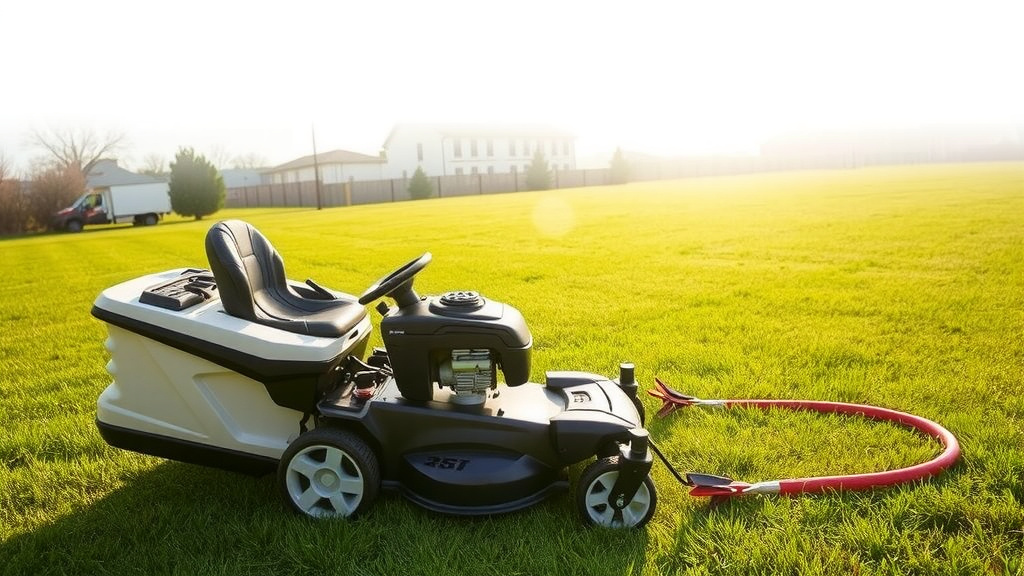
Drawing a lawn mower easily involves breaking it down into basic geometric shapes like rectangles and circles, then adding key details like wheels and a handle.
You can learn how to draw a lawn mower easy by focusing on simple outlines first, refining them step-by-step to create a recognizable and functional-looking machine.
TL;DR: Your Quick Guide to Drawing a Lawn Mower
- Start with a simple box for the body.
- Add two big circles for the back wheels and smaller ones for the front.
- Sketch the handle as two lines extending up and back.
- Draw a small engine detail on top of the main body.
- Erase extra lines and add texture or color.
How To Draw A Lawn Mower Easy?
Drawing a lawn mower is simpler than you might think, even if you’re new to art. It’s all about seeing the machine as a collection of basic shapes first.
You can create a great-looking lawn mower by following a few clear steps, making it a fun project for anyone.
Gathering Your Art Supplies
Before we start, let’s grab a few essentials. You won’t need anything fancy, just some basic drawing tools.
Having the right simple tools makes the whole process smoother and more enjoyable, right?
Essential Drawing Tools You’ll Need
- Pencil (a regular HB or 2B works perfectly)
- Paper (any type, even a notebook page will do)
- Eraser (for those happy little adjustments)
- Optional: Colored pencils or markers for finishing touches
Step-by-Step Guide: Your First Lawn Mower Sketch
Ready to put pencil to paper? We’ll start with the main body, which is the foundation of your lawn mower.
Think of it like building a house; you need a solid base first (research and found this is a core principle of drawing basics).
Beginning with the Main Body
Begin by drawing a long, horizontal rectangle. This will be the main cutting deck of your lawn mower.
It doesn’t have to be perfectly straight; just aim for a simple box shape.
Next, add a slightly smaller rectangle on top, towards the back. This forms the engine housing or grass collector part.
Try to make it a bit taller, giving your mower some visual height.
Adding the Wheels for Movement
Now, let’s get your mower rolling! Draw two large circles at the back of your main body rectangle.
These are the rear wheels, providing most of the mower’s stability.
Then, add two smaller circles at the front. These are your front wheels, usually a little more tucked in.
Ensure all four wheels are somewhat proportionate to the main body size.
Crafting the Handlebar with Ease
Every lawn mower needs a handle to steer, right? Sketch two lines extending upwards from the back of the main body.
Angle them slightly towards the back, creating the push bar supports.
Connect these two lines with a horizontal line at the top. This forms the grip where you’d hold it.
You can also add a small, thin rectangle on top for the throttle control, if you wish to add extra realism.
Engine Details and Exhaust Pipe
A lawn mower needs power! On the top rectangular engine housing, draw a few small squares or circles.
These can represent the engine cover or air filter, giving it a more mechanical feel.
For the exhaust, draw a tiny cylinder or pipe extending from the side of the engine area. It’s a small detail that adds a lot.
Remember, we’re going for “easy,” so don’t feel you need complex engine schematics.
Refining Your Lawn Mower Drawing
You’ve got the basic structure down. Now it’s time to clean it up and add some character!
This is where your eraser becomes your best friend, helping to smooth things out.
Erasing Unnecessary Guide Lines
Gently erase any overlapping or unnecessary pencil lines from your initial sketches.
You want a clean outline, making your mower look neat and polished.
Adding Subtle Curves and Edges
Lawn mowers aren’t always perfectly boxy. Try rounding some corners, especially on the main body and handle.
A few soft curves can make your drawing look much more natural and less rigid.
Tips for a More Realistic Appearance
Want to make your drawing pop? A few simple tricks can really make a difference.
We found that attention to minor details often elevates a simple sketch (many art instructors agree).
- Add a Grass Bag: On the back, draw a simple bag shape.
- Detail the Wheels: Include hubcaps or tire treads.
- Show the Blade: A curved line under the main body suggests the cutting blade.
- Shadows: A little shading under the mower gives it depth.
- Color: Use greens, reds, and grays to bring it to life.
Comparing Mower Drawing Styles
Lawn mowers come in many shapes, and so can your drawings! Here’s a quick look at how slight changes make a difference.
Understanding these styles helps you choose what to draw next and boost your creativity.
| Style | Key Features | Complexity |
|---|---|---|
| Push Mower (Basic) | Rectangular body, simple handle, four wheels. | Low (Great for beginners) |
| Riding Mower | Larger body, seat, steering wheel, wider deck. | Medium (More details) |
| Robotic Mower | Compact, often round or oval, small wheels, no handle. | Medium (Unique shape) |
Avoiding Common Drawing Pitfalls
Even experienced artists make mistakes, and that’s perfectly fine! Knowing what to watch out for can save you some frustration.
We often find that proportion is key when drawing any object (as highlighted by many art guides).
Watch Your Proportions Carefully
Don’t make the wheels too small or the handle too short. Take a moment to eye your drawing.
Do all the parts seem to fit together naturally? Adjust as needed.
Avoid Over-Detailing Too Soon
It’s tempting to add every screw and bolt, but stick to basic shapes first. Details come later.
Focus on the overall form before diving into the tiny bits.
Your Lawn Mower Drawing Checklist
Before you call your masterpiece complete, run through this quick checklist. It helps ensure you haven’t missed anything important.
A small review can often reveal areas where you can add extra polish.
- Main body is present and proportionate?
- All four wheels are drawn and sized correctly?
- Handlebar is clear and extends from the body?
- Basic engine housing is visible?
- Unnecessary guide lines are erased?
- A few simple details (like a grass bag or exhaust) are added?
Conclusion
You did it! Drawing a lawn mower, even for a beginner, can be a rewarding and straightforward process. By breaking it down into simple shapes and steps, you can create a recognizable drawing.
Remember, practice makes perfect, and every drawing helps you improve your skills. Keep sketching and have fun!
Frequently Asked Questions (FAQs)
Can I draw a lawn mower without a ruler?
Absolutely! Many experts say that drawing freehand helps develop your natural eye-hand coordination. While a ruler can help with straight lines, your lawn mower will look great with a natural, hand-drawn feel.
What’s the best way to make the wheels look round?
Start with a light sketch of your circles. If they’re a bit wobbly, gently erase and redraw them until they look circular. Practice drawing circles often; it’s a fundamental skill (research indicates this improves over time).
Should I add color to my lawn mower drawing?
Adding color is entirely optional but can certainly make your drawing more vibrant! Start with basic colors like green for the body and black/gray for wheels. You can experiment with different shades to add depth later.
How can I draw different types of lawn mowers easily?
The core principles remain the same. For a riding mower, think a larger, more rectangular body with a seat. For a robotic mower, a more rounded, compact shape works. Focus on their distinct basic forms first.
What if my drawing doesn’t look perfect?
That’s completely normal and part of the learning process! Every artist starts somewhere. The goal is to have fun and enjoy the creative journey. Don’t worry about perfection; focus on the progress you make with each drawing.
