
How To Increase Lawn Mower Height?
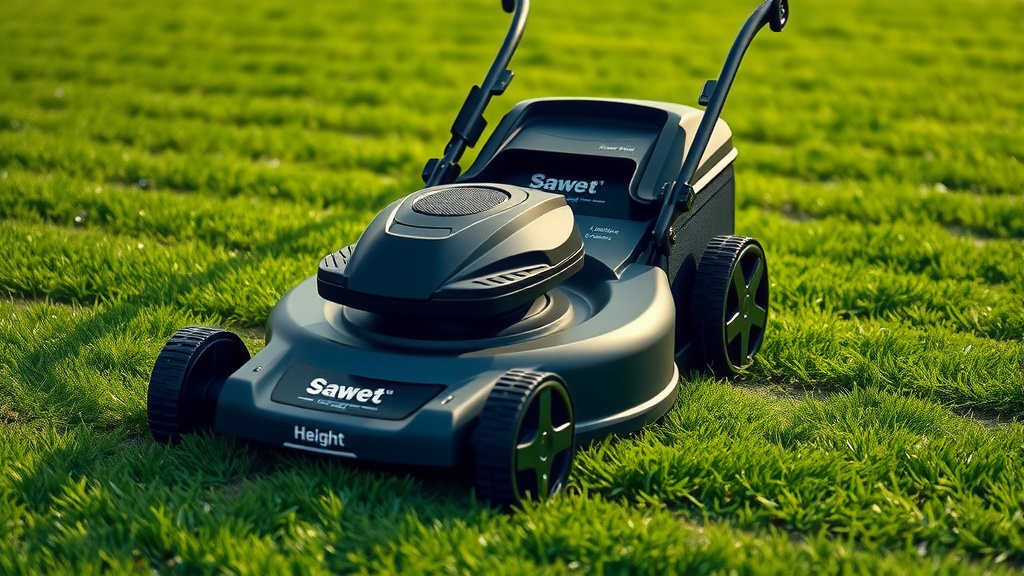
To increase lawn mower height, you typically adjust levers on each wheel, a single lever for all wheels, or a spring-loaded pin on the deck. Always ensure the mower is off and cool before making any adjustments.
You can raise your lawn mower’s cutting deck by finding the height adjustment mechanism, which might be a lever, pin, or crank system, and setting it to a higher numbered notch. This keeps your grass healthier and helps prevent common lawn issues.
Here’s a quick summary of what you’ll learn about increasing your lawn mower height:
- Discover the main methods for adjusting your mower’s cutting height.
- Understand why a taller cut promotes a healthier, greener lawn.
- Learn how to choose the best cutting height for your specific grass type.
- Get tips for safely changing your mower’s settings.
- Find out common mistakes to avoid for a perfect lawn.
How To Increase Lawn Mower Height?
Increasing your lawn mower’s height generally involves moving the cutting deck further from the ground. This adjustment is vital for promoting healthier grass growth and preventing scalp marks on your lawn.
Why Bother Raising Your Mower Height?
You might wonder why this simple adjustment matters so much. A higher cut leaves more leaf blade on your grass. This extra blade area means more photosynthesis, which is how grass makes its food.
More food leads to a stronger, deeper root system. Think of it like a stronger foundation for your house. Deep roots help your lawn withstand dry spells and resist pests, as many experts agree (Cornell University).
Benefits Beyond Deeper Roots
Beyond root strength, a taller lawn shades the soil more effectively. This shading helps to keep moisture locked in, reducing how often you need to water. It also helps to suppress weed growth. Weeds struggle to sprout when less sunlight reaches the soil surface.
Types of Height Adjustment Mechanisms
Mowers come in many shapes and sizes, and so do their height adjustment systems. Understanding your specific mower’s design is the first step. You’ll find a few common types, each with its own quirks.
Individual Wheel Levers
Many push mowers, especially smaller models, use individual levers at each wheel. You’ll see a lever near each wheel. To adjust, you pull the lever outward and then move the wheel up or down into a new notch. This system offers precise control but requires four separate actions.
Always ensure all four wheels are set to the same notch. Otherwise, your cut will be uneven, and you might scalp parts of your lawn.
Single Point Adjustment Lever
Some mowers offer a convenient single-point adjustment. This means one main lever, usually located near a rear wheel or on the side of the deck, controls the height for all four wheels simultaneously. It’s a real time-saver. You simply pull the lever and move the entire deck up or down to your desired setting.
This is often found on larger push mowers or self-propelled models. Many homeowners love its simplicity.
Spring-Loaded Pin or Knob
For some walk-behind mowers and zero-turns, you might find a spring-loaded pin or knob. You press or pull this pin, then physically lift or lower the deck into a new position. It often requires a bit of strength but is very reliable.
We found this method is common on heavier-duty mowers. It gives a very secure setting once locked into place.
Crank System (Riding Mowers)
Riding mowers often use a crank or pedal system. You might turn a crank handle to raise or lower the deck. Other models use a foot pedal and a lever to set the cutting height. This is designed for easy adjustment from the driver’s seat.
Always consult your owner’s manual for specific instructions on your riding mower. They can vary greatly between brands and models.
Step-by-Step Guide to Raising Your Mower Height
Ready to give your lawn a bit more breathing room? Here’s how to do it safely and effectively. You’ll find it’s a straightforward task.
Your Checklist for Mower Height Adjustment:
- Turn off the mower and remove the spark plug.
- Let the engine cool down completely.
- Park on a flat, stable surface.
- Locate your mower’s adjustment mechanism.
- Consult your owner’s manual if unsure.
- Set all wheels or the entire deck to the same height.
Safety First: Prepare Your Mower
Before you touch anything, always prioritize safety. Turn your mower off and let it cool. If it’s a gas mower, remove the spark plug wire. For electric models, unplug it. This prevents accidental starts. Many experts say this is a non-negotiable step (OSHA).
Locate and Identify the Mechanism
Take a moment to look at your mower. Do you see individual levers by each wheel? Or a single large lever on the side? Perhaps a pin and hole system? Knowing what you have will guide your actions.
Adjusting the Height
Once you’ve found the mechanism, follow these steps:
- **For individual wheel levers:** Pull each lever outward, then move the wheel up to a higher notch. Make sure all four wheels are set identically.
- **For a single point lever:** Pull the main lever away from the mower deck, then lift the entire deck to a higher setting. Release the lever to lock it in place.
- **For spring-loaded pins:** Press or pull the pin, then carefully lift the mower deck into a higher hole. Release the pin to secure it.
- **For crank systems (riding mowers):** Turn the crank or use the foot pedal/lever to raise the deck to the desired position.
Always try to choose a setting that leaves your grass at least 2-3 inches tall after cutting. This is a good general rule for most grass types, we found.
Choosing the Right Cutting Height for Your Grass
The “perfect” height isn’t one-size-fits-all. It depends heavily on your grass type and the time of year. Think of it like tailoring a suit – it needs to fit your specific needs.
Grass Type Matters
Warm-season grasses like Bermuda or Zoysia often prefer a slightly shorter cut (1-2 inches) once they’re actively growing. Cool-season grasses such as Fescue or Ryegrass usually thrive at taller heights (2.5-3.5 inches). Research often connects proper cutting height with turf health (Purdue University Extension).
Seasonal Adjustments
You might want to cut your lawn a bit taller during hot, dry summer months. This extra height provides more shade to the roots and conserves moisture. In cooler, wetter spring or fall, you can sometimes go a touch shorter, but never remove more than a third of the grass blade at once.
Here’s a quick guide:
| Grass Type | Typical Height Range (Inches) | When to Cut Taller |
|---|---|---|
| Kentucky Bluegrass | 2.0 – 3.0 | Summer heat, drought |
| Tall Fescue | 2.5 – 3.5 | Summer heat, shade |
| Perennial Ryegrass | 2.0 – 3.0 | Early summer, stress periods |
| Bermuda Grass | 1.0 – 2.0 | Very hot, high traffic |
| Zoysia Grass | 1.0 – 2.0 | Very hot, high traffic |
Common Mistakes to Avoid
Even simple tasks have pitfalls. Knowing what not to do can save you headaches and help your lawn look its best. Don’t worry, we’ve all been there!
Adjusting on Uneven Ground
If your mower is on a slope or uneven ground, you won’t get an accurate height reading. Always adjust on a flat, stable surface. This ensures your cutting deck is level and you achieve the height you intend.
Forgetting the Spark Plug (or Power Cord)
We mentioned safety, but it’s worth repeating. Forgetting to disconnect the power source is a common oversight that can lead to serious injury. Think of it as a small “pre-flight check” every time you work on your mower.
Cutting Too Much at Once
The “one-third rule” is golden. Never remove more than one-third of the grass blade’s total length in a single cut. If your grass is 6 inches tall, don’t cut it shorter than 4 inches. Cutting too much at once stresses the grass, making it weak and vulnerable.
Conclusion
Increasing your lawn mower’s height is a simple yet incredibly effective way to promote a healthier, more resilient lawn. By understanding your mower’s adjustment mechanisms and prioritizing safety, you can easily make this change. Remember to consider your grass type and seasonal conditions to find that sweet spot for optimal growth. A taller cut equals a happier lawn, ready to withstand whatever nature throws its way!
Can I cut my grass higher even if my mower only has low settings?
If your mower’s lowest setting is still too short, you might need to adjust your expectations or consider a different mower. However, some homeowners find success by adding larger wheels, though this isn’t a factory-recommended modification and could affect mower balance or performance.
How often should I adjust my lawn mower height?
You should adjust your lawn mower height as needed, often with the seasons. During hot, dry summer months, raising the height protects your lawn. You might lower it slightly during cooler, active growth periods in spring and fall, but never cut more than one-third of the blade at once.
What if my lawn mower height adjustment lever is stuck?
If your height adjustment lever is stuck, it’s often due to rust, dirt, or debris. Try cleaning the mechanism thoroughly with a wire brush and apply a penetrating lubricant. Sometimes, gently wiggling the wheels or deck while attempting to adjust can help free it. Always ensure the mower is off and cool.
Does cutting grass higher save money on watering?
Yes, cutting grass higher can absolutely help save money on watering. Taller grass blades shade the soil, reducing evaporation and keeping moisture locked in longer. This means your lawn needs less frequent watering, conserving water and reducing your utility bills, especially during dry spells.
Is there an ideal height for all types of grass?
No, there isn’t one ideal height for all types of grass. Different grass varieties have different growth habits and preferences. Warm-season grasses generally tolerate shorter cuts, while cool-season grasses thrive at taller heights. Always research your specific grass type for the best results.
