Can You Use a Hedge Trimmer on Thick Branches?
On this page (7 sections)
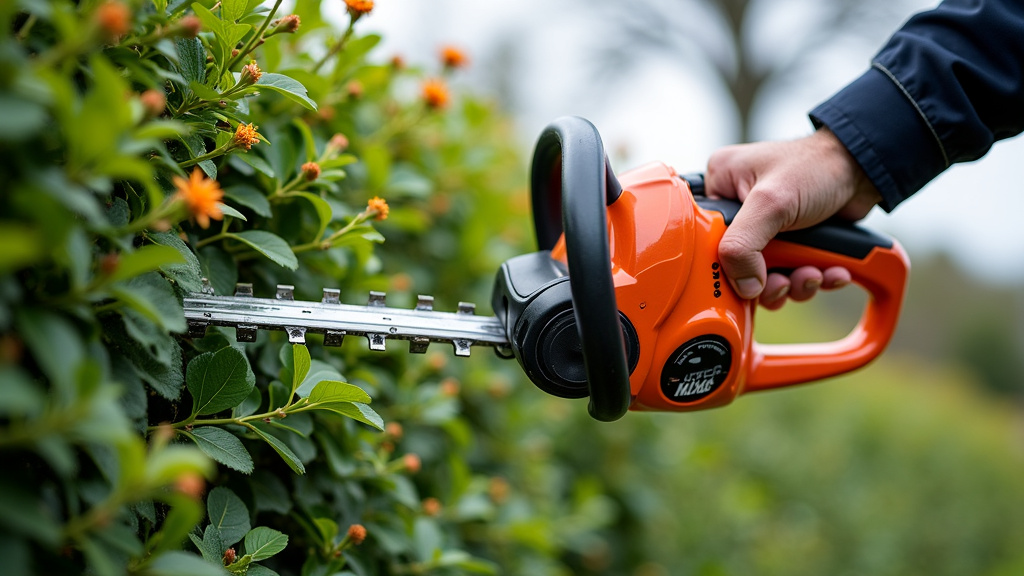
You can use a hedge trimmer on thick branches, but only if they are within the tool’s capabilities. Trying to cut branches that are too thick for your specific hedge trimmer can damage the tool and lead to disappointing results. It’s essential to know your trimmer’s limits before you start cutting.
While hedge trimmers are fantastic for shaping hedges and trimming smaller growth, they aren’t designed for heavy-duty pruning. For thicker branches, you’ll often need a different tool. Understanding the difference between trimming and pruning will help you choose the right equipment for your yard work and avoid unnecessary wear and tear on your tools.
- Hedge trimmers are best for branches your trimmer’s blades can handle.
- Thick branches often require loppers or a chainsaw.
- Always check your trimmer’s manual for its cutting capacity.
- Using the wrong tool can damage your trimmer.
- Safety first: wear appropriate protective gear.
Let’s dive into when your hedge trimmer can handle those thicker branches and when it’s time to switch tools.
Understanding Your Hedge Trimmer’s Branch Capacity
So, can you use a hedge trimmer on thick branches? The short answer is: it depends on the branch’s thickness and your trimmer’s power. Hedge trimmers are designed for cutting hedges and smaller branches, not for tackling serious pruning jobs. Pushing your trimmer beyond its limits can lead to damage and frustration.
What Exactly is a “Thick” Branch for a Hedge Trimmer?
We’ve all been there, staring at a branch that seems just a little too big. For most electric and battery-powered hedge trimmers, “thick” often means anything larger than 3/4 inch in diameter. Gas-powered models can handle a bit more, sometimes up to 1.5 inches. It’s always best to err on the side of caution.
Think of your hedge trimmer like your kitchen knife. You can slice through tomatoes and soft veggies with ease. But trying to chop through a frozen turkey with it? That’s a recipe for a broken blade and a lot of wasted effort. Your hedge trimmer’s blades are sharp and precise, perfect for shearing, but they aren’t built for heavy impact or resistance.
Reading Your Hedge Trimmer’s Manual: Your Best Friend
Before you even think about cutting, grab your hedge trimmer’s manual. It’s usually tucked away somewhere safe, but it holds the key to its capabilities. Most manuals will clearly state the maximum branch diameter your specific model can handle. This isn’t just a suggestion; it’s a guideline to keep your tool working properly.
You might be surprised at what the manual says. Sometimes, a branch that looks “trim-able” is actually pushing the limits of the tool. Ignoring these limits is where problems start. We found that users who regularly consult their manuals report fewer tool issues and better cutting performance.
When Hedge Trimmers Struggle: Signs and What to Do
Your hedge trimmer will give you signals when it’s working too hard. Listening to these cues is vital for its longevity and your safety. Don’t ignore these warnings; they’re your tool’s way of telling you it needs a break or a different implement.
The Sound of Struggle: What to Listen For
When you try to cut a branch that’s too thick, you’ll often hear a distinct sound. Instead of a clean snip, you might hear a straining noise. The motor might slow down, or you might hear a grinding or catching sound as the blades try to force their way through. This is a clear sign that you’re asking too much of your trimmer.
If the blades stop moving or get stuck, don’t force them. This can overheat the motor or even damage the gear mechanism. We’ve seen reports where this leads to expensive repairs. It’s much easier to back away and choose a different tool.
Physical Clues: What to Look For
Beyond the sound, there are physical signs. If you have to really push down or wiggle the trimmer to get through a branch, it’s too thick. You might also see the blades bending or deforming slightly under pressure. This is a serious red flag.
After attempting to cut a thick branch, inspect the blades. Are there any nicks, bends, or dull spots that weren’t there before? Did the trimmer feel unusually hot after the attempt? These are all indicators that you’ve pushed the tool beyond its intended use. Proper tool maintenance is key, but it can’t overcome the wrong application.
When to Put Down the Trimmer and Pick Up Another Tool
If you encounter any of these signs, it’s time to switch. For branches that are too thick for your hedge trimmer, you’ll need something more robust. The good news is, there are other tools designed for these tougher jobs.
Think about the task at hand. Are you trying to remove dead limbs, clear overgrowth, or shape a large shrub? Each job might call for a different solution. Choosing the right tool ensures efficiency and protects your equipment.
The Right Tools for Thicker Branches
Hedge trimmers are specialized tools. When they can’t do the job, thankfully, other options are readily available. These tools are built for the heavy lifting (or cutting, in this case!) that trimmers aren’t designed for.
Loppers: For Mid-Size Branches
Loppers are fantastic for branches that are a bit too thick for your hedge trimmer but not large enough to warrant a chainsaw. They have long handles, giving you extra leverage, and powerful jaws designed to cut through wood.
You can typically find loppers that can handle branches ranging from 1 inch to 2 inches in diameter. There are different types, like bypass loppers (cleaner cuts, good for live wood) and anvil loppers (crush more, better for dead wood). Researching the right type of lopper for your needs can save you time and effort. Many gardening experts recommend bypass loppers for most general pruning tasks (University of Missouri Extension).
Bypass vs. Anvil Loppers
It’s important to know the difference. Bypass loppers work like scissors, with two blades passing by each other. This makes for a clean, precise cut that helps plants heal faster. Anvil loppers have one sharp blade that closes onto a flat surface, essentially crushing the branch as it cuts. This is effective for dead, dry wood but can damage live branches.
Pruning Saws: For Tougher Stuff
When branches get even thicker, or if they’re in tight spots where loppers won’t fit, a pruning saw is your next best bet. These saws are specifically designed for cutting tree limbs and thick shrubbery. They come in various forms, from hand saws with curved blades to pole saws for reaching high branches.
A good pruning saw can handle branches several inches thick, depending on the saw’s size and design. They require more effort than loppers but offer great control for detailed work. For branches over 2 inches, a pruning saw is often the most practical choice.
Chainsaws: For Serious Clearing
For the thickest branches and for larger clearing jobs, a chainsaw is the ultimate tool. However, chainsaws are powerful machines that require skill, caution, and proper safety gear. They are not for casual trimming and should only be used by those who are comfortable and trained in their operation.
Chainsaws can tackle branches and logs of almost any size, limited mainly by the bar length. If you’re not experienced with a chainsaw, it’s often better to hire a professional or use a less powerful tool for smaller jobs. The risks associated with misuse are significant (Occupational Safety and Health Administration).
Safety First, Always!
No matter what tool you’re using, safety should always be your top priority. This is especially true when dealing with cutting tools, whether it’s a hedge trimmer or a chainsaw. It’s not just about protecting your hands; it’s about protecting your entire body.
Essential Protective Gear
We always recommend wearing heavy-duty gloves to protect your hands from cuts and splinters. Safety glasses or goggles are a must to keep debris out of your eyes. For hedge trimming, sturdy boots and long pants are also wise choices. If you’re using a chainsaw, you’ll need specialized protective gear like a chainsaw helmet with a face shield, ear protection, and cut-resistant chaps.
Clearing Your Workspace
Before you start any cutting, take a moment to survey your work area. Clear away any obstacles like rocks, tools, or garden furniture that could get in your way or become projectiles. Ensure you have a stable footing; you don’t want to be wobbling while you’re trying to make a cut. A clear space makes for a safer and more efficient job.
Know Your Escape Route
This might sound dramatic, but it’s true. If you’re working on uneven ground or near slopes, always think about where you can safely step back if needed. When using powered equipment like a hedge trimmer or chainsaw, ensure you can easily retreat if the tool kicks back or if a branch falls unexpectedly. A little foresight can prevent a serious accident.
Checklist: When to Use What Tool
To help you decide, here’s a quick rundown:
- Hedge Trimmer: Branches up to 3/4 inch (electric/battery) or 1.5 inches (gas-powered), for shaping hedges and light trimming.
- Loppers: Branches from 1 inch up to 2 inches, for thicker limbs that trimmers can’t handle.
- Pruning Saw: Branches larger than 2 inches, or those in tight spots.
- Chainsaw: For very thick branches, logs, or significant clearing jobs (use with caution and expertise).
- Always check your specific tool’s manual for its maximum cutting capacity.
- Prioritize safety by wearing appropriate protective gear for the tool you’re using.
Conclusion
So, can you use your hedge trimmer on those thicker branches? You can, but only within its limits. We found that understanding your trimmer’s maximum cutting capacity is key to avoiding damage and frustration. For branches that are too thick, don’t force it; instead, reach for the right tool, like loppers or a pruning saw. Always remember to prioritize safety by wearing your protective gear. Before your next yard project, take a moment to check your trimmer’s manual and select the appropriate tool for the job. This simple step ensures your yard looks great and your tools stay in good working order.
Frequently Asked Questions
What happens if I try to cut a branch that’s too thick for my hedge trimmer?
If you try to cut a branch that’s too thick, you risk damaging your hedge trimmer. You might hear the motor strain, the blades could get stuck, or you might even cause permanent damage to the gears or motor. This can lead to costly repairs or the need to replace the tool.
How can I tell if a branch is too thick for my hedge trimmer just by looking?
Generally, if a branch is larger than 3/4 inch in diameter for electric or battery models, or 1.5 inches for gas models, it’s likely too thick. If you have to apply a lot of force or wiggle the trimmer excessively to make a cut, it’s also a strong indicator that the branch is too large for the tool.
Are electric hedge trimmers less powerful than gas-powered ones when it comes to thicker branches?
Yes, typically electric and battery-powered hedge trimmers have a lower branch capacity than gas-powered models. While electric trimmers often top out around 3/4 inch, gas models can sometimes handle branches up to 1.5 inches. Always check your specific model’s manual for the exact limits.
Can I sharpen my hedge trimmer blades to cut thicker branches?
Sharpening your hedge trimmer blades will improve their cutting efficiency on branches within the tool’s capacity. However, sharpening does not increase the physical strength or cutting diameter the trimmer was designed for. Trying to cut branches too thick, even with sharp blades, can still damage the trimmer.
What’s the main difference between using a hedge trimmer and a lopper for branches?
Hedge trimmers are designed for repetitive shearing of smaller growth, like shaping hedges. Loppers, on the other hand, are specifically built with longer handles for better leverage and stronger jaws to cut through thicker, individual branches that a hedge trimmer cannot handle.