Choose a Leaf Blower Attachment for a Riding Mower
Choose a riding lawn mower leaf blower attachment by matching its mount or hitch to your tractor, then checking airflow, controls, and where the leaves need to go. A mounted blower suits compact, frequent cleanup, while a tow-behind unit can work for larger areas if your mower can pull it safely.
On this page (9 sections)
- How do mounted and tow-behind blowers differ?
- How do you check the hitch or mount fit?
- What airflow do you need for the leaves?
- What else should you compare before choosing?
- Which products can help with leaf cleanup?
- Is a blower or sweeper the better choice?
- How do you use a mower blower safely?
- How much does a riding mower blower attachment cost?
- Which riding mower leaf blower should you choose?
A leaf blower for a riding lawn mower should match the tractor's mounting points or hitch, the airflow needed for your leaves, and the space you have to maneuver. Mounted blowers keep the attachment close to the mower, while tow-behind blowers trail behind and need a compatible hitch.
First, decide whether you need to move leaves into a pile or collect them. Then check the mower manual and attachment instructions before comparing airflow, controls, and storage.
How do mounted and tow-behind blowers differ?
Mounted blowers attach to the mower itself; tow-behind blowers connect at a hitch and follow behind. The right style depends on your mower's compatibility and the cleanup area's shape.
A mounted unit can be convenient when you need to steer airflow along a driveway, fence line, or planting bed. Check how the mount fits and whether the blower can point where you need without blocking your view or interfering with mower controls.
A tow-behind design can suit broad, open lawns where you can make wide passes. The hitch, turning clearance, and towing limits matter because the attachment follows a different path from the mower on turns.
| Feature | Mounted blower | Tow-behind blower |
|---|---|---|
| Connection | Bracket or mower-specific mount | Hitch connection |
| Maneuvering | Stays close to the tractor | Trails behind during turns |
| Best fit | Frequent or more targeted cleanup | Larger, open areas |
| Main checks | Mount fit, controls, visibility | Hitch fit, towing limits, turning room |
Don't assume a universal fit based on the mower brand alone. Compare the attachment's specified model range and hardware with your tractor's manual or ask the makers to confirm compatibility.
How do you check the hitch or mount fit?
Check the attachment connection against your mower manual before buying. Measure only the dimensions the attachment maker requests, such as hitch-pin size or mounting-hole spacing, and confirm any required bracket is included.
For a mounted unit, look for the exact mower series or frame compatibility. A mount that appears close can still sit at the wrong height or interfere with the mower deck, steering, or operator controls.
For a tow-behind blower, confirm the hitch type, pin size, and allowable tongue or towing load if the makers specify them. Leave room for the unit to pivot, and consider how its width will track around trees, gates, and corners.
A hitch accessory for hauling is not automatically suitable for a powered blower. If you also move leaves or yard waste in a cart, the best dump cart for a lawn tractor guide can help you compare a separate hauling setup.
What airflow do you need for the leaves?
Choose airflow based on the debris and route, not a single headline number. Dry leaves on pavement move more easily than wet or matted leaves in grass, and airflow direction matters when you need to avoid beds or neighboring areas.
Compare the blower's stated air volume and air speed, if available, with the area you need to clear. These figures describe different things: air volume relates to how much air moves, while air speed describes how fast it exits.
Consider where the leaves will end up. A blower can move debris into a windrow, but you still need to collect or haul that pile.
For narrow strips or small areas, you may prefer a separate handheld option; our Best Leaf Blower Cordless guide covers that type.
What else should you compare before choosing?
Compare controls, discharge direction, storage, and service needs alongside airflow. These details affect whether you can use the attachment comfortably and keep it ready between cleanups.
Check whether the operator can adjust the blower direction from the seat or must stop and reposition it. Confirm that controls are reachable without leaning outside the mower's safe operating position.
Look at the attachment's overall width and height, plus any storage or transport restrictions. If you need to park in a shed, measure the entry and storage space with the attachment installed or detached.
Use the same checks you would for other tractor attachments: fit, working width, turning room, and debris handling. Our guide to a power rake for a gravel driveway explains how those factors change for a different cleanup tool.
Which products can help with leaf cleanup?
Choose a collection tool when you want to gather leaves rather than blow them into a pile. These options support hauling or sweeping, but they are not riding mower blower attachments.
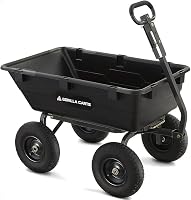
The Gorilla Carts 1200 lb Poly Garden Dump has a 6 cu ft bed and a quick-release dump mechanism. Its 2-in-1 handle can be used by hand or hitched behind a lawn tractor or ATV.
The Gorilla Carts Dump Garden Cart has a 7 cu ft poly bed and a quick-release dump design. Its 13-inch no-flat tires are intended for varied terrain, according to Gorilla Carts.
The iToolMax 22-Inch Push Lawn Sweeper is pushed by hand, so it does not attach to a riding mower. Its adjustable brush height and collection bag make it an alternative when you want to sweep debris into a hopper.
Is a blower or sweeper the better choice?
Choose a blower to move leaves into a pile and a sweeper to collect them directly. The better option depends on whether you have a practical place to gather debris and how much of the lawn needs cleanup.
A blower can be useful for clearing long edges or directing leaves toward one pickup area. It may take extra passes when leaves are wet, packed into grass, or scattered among obstacles.
A sweeper gathers debris into a hopper, which you empty as needed. It works differently from a powered blower, and a push sweeper requires you to walk behind it rather than operate it from the tractor.
If you choose a blower, plan how you will collect the piles. A cart that can be towed behind a lawn tractor may help move gathered leaves to a compost area or disposal point.
How do you use a mower blower safely?
Follow the mower and attachment manuals, and keep people clear of the discharge path. Direct airflow away from roads, windows, vehicles, pets, and people, since leaves and small debris can be thrown outward.
Before starting, check that the attachment is secure and that controls, visibility, and steering remain clear. Stop the engine before inspecting, adjusting, or clearing debris from the blower.
Wear eye and hearing protection if the manuals recommend it or the conditions call for it. Avoid operating near loose gravel or objects that airflow could send toward people or property.
Check local rules about blowing leaves into streets or storm drains. Gather the debris in a suitable place and remove it rather than leaving it where wind or runoff can carry it away.
How much does a riding mower blower attachment cost?
Cost varies by attachment style, capacity, and included mounting hardware. Compare the complete setup, including any required bracket, hitch parts, maintenance items, and storage needs.
A mounted attachment may require a mower-specific mount, while a tow-behind unit may need compatible hitch hardware. Make sure the quoted setup includes what your tractor requires before comparing options.
For a broader look at what affects blower prices, see How Much Does a Good Leaf Blower Cost?. The price of a handheld blower does not directly predict the cost of a riding mower attachment.
Which riding mower leaf blower should you choose?
Pick a mounted blower if its specified mount fits your mower and you need close steering control. Choose a tow-behind blower for open areas only when the hitch, towing limits, and turning space work for your tractor.
If your main goal is collecting leaves, choose a sweeper or a cart to haul the piles rather than expecting a blower to gather them. Check fit and operating instructions before you buy any riding lawn mower leaf blower attachment.
Frequently asked questions
Can you attach a leaf blower to a riding lawn mower?
Yes, some leaf blowers are designed to mount on a riding mower, while other powered units are tow-behind machines. Confirm that the attachment's mounting hardware or hitch matches your mower, and check the maker's instructions for operating limits and safe clearance.
Is a mounted or tow-behind mower leaf blower better?
A mounted blower is often easier to maneuver around beds and tight areas if its mount fits your tractor. A tow-behind blower may suit larger, open spaces, but it needs a compatible hitch, adequate towing capacity, and room to turn without striking trees or structures.
What should I check before buying a riding mower blower attachment?
Check the attachment type, mounting or hitch dimensions, airflow direction, control access, storage needs, and the debris you plan to move. Compare the blower maker's requirements with your mower manual, and confirm that the setup preserves safe visibility and clearance.
Can a lawn sweeper replace a leaf blower attachment?
A lawn sweeper collects leaves and clippings into a hopper instead of pushing them into piles. It can suit lawns where you want to gather debris, but it is a different tool from a powered blower and may need repeated passes as the hopper fills.