Lawn Edger vs Trimmer: Which Should You Choose? (November 2026)
Choose a dedicated edger for clean trenches along sidewalks and driveways, and choose a trimmer for grass around posts, beds and fences. In this edger vs trimmer comparison, the cutting depth, blade or line, power source and weight decide which tool fits your yard.
On this page (9 sections)
Choose a dedicated edger for clean trenches along sidewalks and driveways, and choose a trimmer for grass around posts, beds and fences. In this edger vs trimmer comparison, the cutting depth, blade or line, power source and weight decide which tool fits your yard.
A lawn edger cuts a trench below the turf surface. A lawn trimmer, also called a string trimmer or weed trimmer, cuts grass and weeds with nylon line at or above the surface.
That one difference shapes every other choice. Blade depth suits pavement borders.
Line width suits obstacles. Weight and power decide how long you can work in comfort.

 Best for trimming and light edging
WORX 20V 12" 2-in-1 Cordless String Trimmer
Edger vs trimmer: the quick verdict
Pick the blade edger for definition and the string trimmer for flexibility. The WORX Electric Lawn Edger cuts 1 to 1-1/2 inches deep.
The WORX 20V 2-in-1 cuts a 12 inch diameter with string line and converts to edger mode.
If your main problem is grass creeping over concrete, the blade wins. If your main problem is grass around trees, posts and garden beds, the trimmer wins.
Our score weighs specs, features and buyer feedback against what you are shopping for. Both tools here score 9.7 because each fits its core job well, but they solve different problems.
A 2-in-1 tool can cover both jobs at a lighter level. A dedicated edger covers one job at a deeper level.
Your border type should make the call.
The two side by side
The table shows the real gap in this lawn edger vs trimmer choice. One tool digs a trench.
The other trims a wide path.
| Feature | WORX Electric Lawn Edger | WORX 20V 12 in 2-in-1 Trimmer |
|---|---|---|
| Main job | Edging and trenching | Trimming and light edging |
| Cutting tool | 7.5 in blade | 0.065 in string line |
| Cutting size | 7.5 in blade, 1 to 1-1/2 in depth | 12 in diameter, 10 in line length |
| Power | 12 Amp corded | 20V battery, 2 batteries included |
| Speed | 4700 rpm | 7600 rpm no-load |
| Weight | 14 lb | 5.5 lb |
| Best surface | Sidewalk, driveway, bed edge | Around posts, fences, beds, slopes |
Use this table when you compare a lawn edger and trimmer for the same yard. Depth is the headline difference.
Weight is the second difference.
How to read the specs
Blade width and line diameter are not the same measure. The 7.5 inch blade defines a trench width.
The 12 inch diameter defines the sweep of the trimmer head.
Depth matters more than width for borders. A 1-1/2 inch trench reads as a clean line.
A surface cut can look clean on day one and then grow back fast.
Weight matters over a full yard. At 14 lb, the edger is a push tool.
At 5.5 lb, the trimmer is a carry tool.
What a blade edger actually does
A blade edger cuts soil and turf into a trench, so the edge stays defined. It suits hard borders where grass needs a hard stop.
The WORX Electric Lawn Edger runs a 12 Amp motor at 4700 rpm. It offers 3 depth adjustments at 1 inch, 1-1/4 inches and 1-1/2 inches.
That depth range helps you match the task. Use 1 inch for a light refresh.
Use 1-1/2 inches for a deeper cut through thick turf.
The cutting line guide helps you track straight. The adjustable shaft and D-grip handle let users of different heights find a comfortable position.
When a trench beats a surface cut
A trench holds its line after rain and mowing. Grass at the edge has soil cut away, so it looks sharp for longer.
A blade also suits trenching for landscape work. The maker describes dual use for lawn edging and trenching, including burying wire.
Our guide to a lawn edger and trencher helps you match depth to that kind of work. A shallow cut will not suit every trenching job.
The trade-offs of a blade
A blade is less flexible around curves and obstacles. You push it along a line rather than swinging it around a post.
A corded tool also limits your range. This model has a built-in 1 ft power cord and needs an extension cord for operation.
Plan your cord path before you start. That one step prevents most frustration with a corded edger.
What a string trimmer actually does
A string trimmer cuts grass and weeds with line, so it reaches places a blade cannot. It suits the odd corners that a mower leaves behind.
The WORX 20V 12 inch model runs at 7600 rpm with a 12 inch cutting diameter. It uses 0.065 inch line with a 10 inch line length.
It converts from a string trimmer to an edger in seconds. That makes it a true lawn edger and trimmer combo for light border work.
The head tilts 90 degrees. That helps on sloped terrain and in tough-to-reach spots.
Line feed and control
Command Feed gives line at the press of a button. That helps you keep the head cutting instead of stopping to bump the spool.
An adjustable spacer guard helps you avoid plants and ornaments. That guard matters in beds where a blade would be too blunt.
Rubberized wheels support the tool in edger mode. They help guide straighter lines and cleaner cuts along pavement.
If you want to know what is a weed trimmer in plain terms, think of it as a mower for edges. It cuts what the mower cannot reach.
The trade-offs of line
Line does not dig a trench. It cuts the top growth, so the border can soften as new growth returns.
Battery power also sets a limit. The kit includes 2 20V Power Share batteries and a charger, so you can rotate packs.
That setup suits small and mid-size yards well. Very large border runs may need a corded blade for steady power.
Cut quality: trench, line and overgrowth
Blade edgers win on definition. String trimmers win on reach and tall growth.
This is the core of the edger vs trimmer choice for most yards.
A blade at 1-1/2 inches deep removes turf and soil. The result is a visible groove that reads as a line from the street.
A string line at 12 inches wide removes stems across a broad sweep. The result is tidy growth, not a dug groove.
For overgrowth, the trimmer is the safer first tool. Tall grass and weeds can bog a blade that is meant to cut a trench.
Straight lines on pavement
Straight lines come from guidance and depth. The WORX edger has a cutting line guide.
The trimmer has support wheels in edger mode.
Both help, but they help in different ways. The blade cuts the groove you follow.
The wheels steady a line that cuts the surface.
Walk the line first and mark it with paint or string. That simple step improves both tools.
Curved beds and planting edges
Curves favor the trimmer. You can tap and guide the head around a curve without digging soil.
A blade can follow a curve if you move slowly. The trench will still be deeper and more defined.
Choose depth before you start. A deep trench in a planting bed can cut roots near the edge.
Power, weight and how long you can work
Corded power gives steady force. Battery power gives freedom and lightness.
Your yard size and outlet access decide which matters more.
The edger weighs 14 lb and needs an extension cord. You push it along, so the weight is partly supported by the ground.
The trimmer weighs 5.5 lb and runs cordless. You carry and guide it, so the lighter weight matters more.
Our picks for the best lawn edger on wheels show another path for users who want ground support. Wheels change how weight feels during a long border run.
Corded use in practice
A 12 Amp corded motor holds power without a battery sag. That helps in thick turf at the deeper settings.
The cost is cord management. Keep the cord behind you and off the blade path.
Use an outdoor-rated extension cord that meets the tool manual. Check the cord for damage before each use.
Cordless use in practice
Two batteries change the work pattern. You can swap packs instead of stopping for a full charge.
WORX Power Share batteries also fit other 20V and 40V tools in that family. That can help if you already own WORX tools.
Light weight helps on slopes and around beds. It also helps users who want less strain during trimming.
Who should buy which
Buy the blade edger for pavement borders and the trimmer for around-object work. Many yards will use a trimmer more often, but the edger will matter more for curb appeal.
Choose the WORX Electric Lawn Edger if you have long sidewalks, driveways or bed edges that need a trench. Choose it if you also want trenching for wire or landscape work.
Choose the WORX 20V 2-in-1 if you need one tool for posts, fences, trees and light edging. Choose it if cordless use and 5.5 lb weight matter most.
Our guide to the Best Lawn Edger For Small Yards helps when space is tight. A small yard may favor one light combo tool over two separate tools.
A simple decision rule
Walk your yard and count the border types. Long pavement edges point to a blade.
Many posts and beds point to a trimmer.
If you have both, add the trimmer first. You will use it every mow, while the edger may run every few weeks.
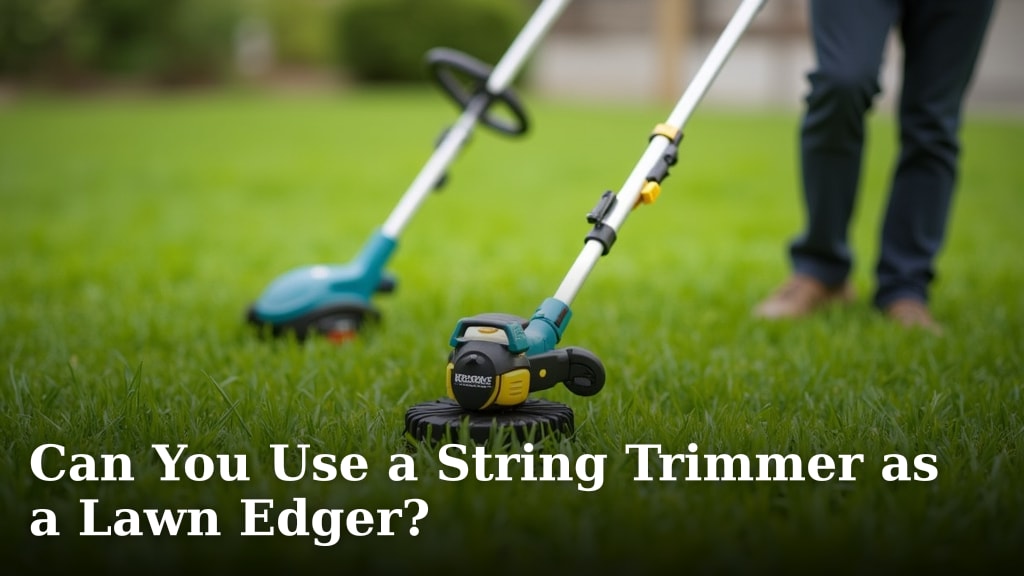
Our post on Can You Use a String Trimmer as a Lawn Edger? explains the limits of that swap. It works for light edging, not for deep trenching.
Set up, safety and care for both tools
Set up each tool for its cutting system, and keep blades and line in good shape. Clean care helps both tools cut cleanly and last longer.
For the blade edger, check the 7.5 inch blade before use. The maker notes a wear indicator on the blade, and cleaning clogs is easier when the tool is unplugged.
For the trimmer, load 0.065 inch line correctly and check the spool. Command Feed helps you extend line without removing the head.
Wear eye protection and closed footwear for either tool. Keep bystanders back from the cutting area.
General care that matters
Clear grass and soil from the head and guard after use. A clean guard helps the tool track as designed.
Store the edger with the blade protected. Store the trimmer with line dry and the spool seated.
Follow the manual for blade replacement and line loading. Check with the seller if a spec you need is not clear before you order.
The verdict for edger vs trimmer
Choose the WORX Electric Lawn Edger for deep borders and the WORX 20V 2-in-1 for trimming plus light edging. That rule covers most yards without overspending.
If you asked for a lawn edger vs trimmer pick today, start with your border count. Pavement lines need a blade.
Around-object grass needs line.
For mower fit, our guide on How To Choose A Good Lawn Mower? helps you plan the whole cutting system. Edgers and trimmers finish what a mower starts.
You can also compare mower basics in How To Choose Lawn Mower? before you buy a second tool. A good mower plus the right edge tool beats two tools that overlap.
Pick the tool that matches your most common edge. Add the second tool only when the first one reaches its limit.
Frequently asked questions
Is an edger better than a trimmer?
An edger is better for a deep, defined trench along pavement, while a trimmer is better for grass around posts, fences and beds. A blade edger cuts below the surface, and a string trimmer cuts the tops of grass and weeds.
Can a trimmer edge a lawn?
A trimmer can edge a lawn when it converts to edger mode, but the line cuts the surface rather than digging a trench. You can get a clean line along pavement, yet depth and repeatability will differ from a blade.
Which is easier for a small yard?
A light cordless trimmer is often easier for a small yard because it trims and edges with one tool at 5.5 lb. A corded blade edger can still suit a small yard when the main goal is a crisp border.
Do I need both a lawn edger and trimmer?
Many yards need a trimmer first because grass grows around every post and bed. Add a dedicated edger when sidewalks and driveways need a deep trench that a string line cannot cut cleanly.
Which tool handles overgrowth better?
A trimmer handles tall grass and weeds around objects more flexibly because its line cuts across a 12 in diameter. A blade edger handles soil and turf at the border, but it is not built for tall overgrowth.