How to Choose a Lawn Edger and Trencher
Choose a lawn edger and trencher by the depth and type of cut you need: use a blade edger for defined borders and shallow trenches, or choose a 2-in-1 string trimmer when light edging and trimming matter more.
On this page (6 sections)
The best lawn edger and trencher depends on the cut you need. Choose a dedicated blade edger with adjustable depth for straight borders and shallow trenches, or choose a 2-in-1 trimmer and edger when you want one lighter tool for grass trimming and occasional edging.
Start by measuring the depth your project needs and by checking what the edge is meant to do. A tool that reaches 1 in may be enough for a maintained lawn border, while deeper settings help when you need to reopen an overgrown edge or make a shallow channel.
Think about where the work will happen in your yard. Straight runs beside a sidewalk or driveway reward a blade that follows a firm line, while curved beds and planted areas often need a tool that can change position more easily.
Also consider the soil and the condition of the turf at the edge. Loose or damp soil cuts differently from dry, compact soil, and a tool setting that looks right on paper may need a different approach in practice.
Power is another early decision because it shapes how you move around the yard. A corded tool can keep going near an outlet, while a battery tool is easier to carry from one scattered bed to another without dragging a cord across the lawn.
Before you compare models, note how often you will use the tool and how long each job takes. A border you refresh often needs repeatable depth and easy alignment, while a seasonal clean up may put more value on light weight and simple set up.
Also think about storage and the other lawn tasks you already handle. If trimming around posts and beds is part of the same session, a combination tool may save space, even if its edge is less defined than a blade cut.
For basic terms and tool types, see our guide to what is a weed trimmer. It explains how trimming and edging tasks differ before you compare combination tools.
Once you know the cut, the depth, the power reach and the layout of your yard, the choice becomes clearer. You can then judge each tool by the jobs it will do most often rather than by the longest list of features.
What should you look for in a lawn edger and trencher?
Look first at cutting depth, blade or line type, power source and control features. These details tell you whether the tool suits neat borders, shallow trenching, grass trimming or a mix of jobs.
How much edging depth do you need?
A lawn edger and trencher should offer enough depth for the border you plan to maintain. A shallow cut can refresh the visible line beside pavement, while a deeper setting can help separate turf from a garden bed.
Depth adjustments are useful when one yard has several surfaces. You may want a light pass beside a walkway, then a deeper pass where grass runners have crossed into a bed.
Depth does not make a tool a full-size trenching machine. For cable, irrigation or drainage work, confirm the required channel size and use equipment designed for that job.
Do you need a blade or a string line?
A blade creates a defined physical edge, so it fits buyers who care about a crisp border between grass and hard surfaces. A string head is more flexible for trimming around posts, beds and uneven patches.
Blade edgers can remove more soil and turf from the cut line. If you mean a Stihl trimmer, check which Stihl weed eaters can use a blade before fitting one.
That means you should check the edge position before starting and keep the tool away from roots, irrigation lines and landscape features.
String-based tools are often easier to use for mixed trimming and edging. Their result depends more on head position, line control and the operator keeping a steady path.
Should you choose corded electric or battery power?
Corded electric power suits a yard where an extension cord can reach the work area. It avoids charging breaks, but you need to manage the cord so it stays behind the cutting path.
Battery power suits scattered beds, gates and lawn sections where a cord would get in the way. Check the number of batteries included and whether the battery system matches tools you already use.
For a smaller property, compare our guide to the Best Lawn Edger For Small Yards. For cordless options, see Best Lawn Edger Cordless.
Which controls make edging easier?
Look for a visible cutting guide, a support wheel, an adjustable shaft or handle, and a head position that lets you keep the tool steady. These features reduce guesswork when you follow a pavement edge.
A wheel can help hold a consistent line, especially with a light cordless tool. An adjustable shaft or handle can make the working position more comfortable for different users.
A spacer or flower guard is useful beside plants and ornaments. It creates a physical reminder to keep the cutting path away from delicate features.
Which lawn edger and trencher fits your work?
The right product depends on whether you want a dedicated blade cut, a lightweight trimmer that also edges, or one compact tool for mowing, trimming and edging.
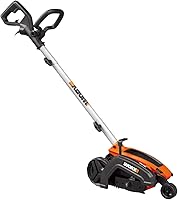
WORX Electric Lawn Edger
The WORX Electric Lawn Edger suits buyers who want a dedicated corded blade tool for defined borders and shallow trenching. For current options, compare lawn edger deals.
Its 7.5 in blade and 12 Amp motor fit jobs where a visible cut line matters more than trimming versatility. Compare replacement lawn edger blades when a blade needs replacing.
The three depth settings let you choose 1, 1-1/4 or 1-1/2 in, which covers routine edging and light trenching.
The cutting line guide helps you keep the blade aligned with the border. The adjustable shaft and D-grip handle let you change the working position, while the 14 lb weight gives the tool a more substantial feel than a small string trimmer.
This is a corded electric tool with a built-in 1 ft power cord, so you need an extension cord during use. Choose it when continuous power and dedicated blade control matter.
If you need a cordless tool for scattered areas, compare the battery option below.
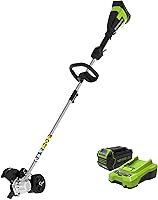
WORX 20V 12" 2-in-1 Cordless String Trimmer
The WORX 20V 12" 2-in-1 Cordless String Trimmer suits buyers who want trimming and edging in one 5.5 lb tool.
Its 12 in cutting diameter and 7,600 rpm no-load speed support routine grass trimming and light edge maintenance. The head tilts 90 degrees, which helps when you work on sloped terrain or reach awkward patches.
Rubberized wheels support the edging position and help guide the tool along a border. The adjustable spacer guard helps keep the line away from plants and lawn ornaments.
This model uses a 0.065 in line and a push-button Command Feed spool system. If you need another compatible head, compare replacement string trimmer heads.
It includes 2 20V batteries, a 20V charger, trimmer spool, support wheels and safety guard.
Choose it when low weight, cordless movement and two-in-one use matter more than a dedicated blade trench.
BLACK+DECKER Electric Lawn Mower
The BLACK+DECKER Electric Lawn Mower suits small lawns where mowing, trimming and edging need to come from one corded tool.
Its 6.5 Amp motor and 12 in cutting width are aimed at compact lawn work. The detachable mower deck lets you switch from mowing to string trimming, then rotate the trimmer head for edging.
The automatic feed spool helps provide line without bumping or manual adjustments. An adjustable handle, cord retention system and 9.9 lb weight support basic control during small-yard maintenance.
This tool is less focused on trenching than the dedicated WORX blade edger. For a compact option that combines tasks, compare trimmer and edger combos.
Choose it when saving storage space and covering several lawn tasks matter more than making deeper, blade-cut channels.
If you are comparing the mowing side of this tool, read How To Choose A Good Lawn Mower? and How To Choose Lawn Mower?.
How do you choose between an edger and a trimmer?
Choose a dedicated edger for crisp borders and repeatable depth, then choose a string trimmer when you also need to cut grass around obstacles. A combination tool makes sense when storage space and task flexibility matter more than a dedicated trenching cut.
A blade edger usually gives you a clearer reference point beside a sidewalk or driveway. It also makes more sense when you plan to refresh the same border several times during the season.
For hand-powered choices, compare manual lawn edgers.
A trimmer and edger can be easier around curved beds, posts and uneven lawn sections. The trade-off is that string line edging may require more attention to head angle and path control.
That care matters most where the line meets hard surfaces. Small changes in angle can widen or narrow the cut, so a steady pace and a guide wheel or spacer guard help keep the border looking even.
Our edger vs trimmer comparison covers the decision in more detail. If you prefer a wheeled design, see best lawn edger on wheels.
How should you use a lawn edger and trencher?
Use the shallowest effective setting, mark the path first and make a controlled pass. A neat border usually comes from steady alignment rather than forcing the tool into the ground.
Before starting, remove loose stones, sticks and other debris from the edge. Check for irrigation lines, low-voltage wire, roots and landscape lighting before making a deeper cut.
Set the blade or line beside the edge you want to create. Keep both hands in the intended control position, move at a steady pace and avoid twisting the tool into the soil.
For trenching, make sure the planned depth matches the tool's adjustment range. If the soil is compacted or the channel must be deep, stop and choose equipment made for excavation rather than forcing a lawn edger.
When working beside plants, use the spacer or flower guard if the tool has one. Leave extra room around stems and shallow roots because a clean border is not worth damaging a plant.
How do you care for an edger and trencher?
Unplug a corded tool or remove the battery before clearing grass, inspecting the blade or changing parts. This is especially important when clippings collect around the cutting area.
Make that check part of your routine after every job. Grass packed around a blade or line head can affect the cut, make the next start harder and hide wear that should be dealt with early.
Brush away grass and soil after each use, using gloves and the tool instructions as your guide. Keep the blade, line head, wheel and guard clear so the tool is ready for the next edge.
Wipe down the shaft, handle and housing as well, because soil left on controls can make grips slippery. A quick clean also lets you spot a bent guard, a loose fitting or a worn guide while the fix is still simple.
Check the cutting line, blade condition and guide before starting another job. For a blade tool, look for dull or damaged edges and confirm the blade is secure before you reconnect power.
For a string tool, check whether the line is present, seated correctly and long enough for the task. Replace worn cutting parts according to the tool instructions, and keep spare line or blades stored clean and dry.
Store the tool in a dry place where the cutting parts are protected from knocks and damp. Hanging or standing it safely also keeps the edge away from paths where it could be bumped or tripped over.
For corded tools, inspect the extension cord and built-in cord before use. Look for cuts, kinks or exposed wiring, and replace a damaged cord rather than trying to work around it.
Keep the cord behind you and away from the blade or line path while working. That habit protects the cord, keeps your footing clearer and helps you focus on the line you are cutting.
After each session, give the tool a short final check before putting it away. Confirm it is clean, dry, disconnected from power and ready for the next border or shallow trench.
What is the best lawn edger and trencher for your yard?
Choose the WORX Electric Lawn Edger if your priority is a defined blade edge with adjustable 1 to 1-1/2 in depth. Choose the WORX 20V 12" 2-in-1 Cordless String Trimmer for lighter cordless trimming and edging across several areas.
Choose the BLACK+DECKER Electric Lawn Mower when a compact lawn needs mowing, trimming and edging from one corded tool. The main decision is whether you need a true shallow trenching cut or a flexible tool for several routine lawn tasks.
- A dedicated edger fits straight borders and repeatable depth.
- A cordless trimmer and edger fits scattered lawn sections and mixed trimming.
- A 3-in-1 mower fits compact yards where storage space matters.
For the WORX blade model, the depth settings suit a yard where borders need definition and occasional shallow channels. Its corded power fits work near an outlet, but you will need to manage the extension cord as you move along the edge.
For the WORX 20V model, the value is movement and variety in one light tool. It suits trimming around obstacles and light edging in the same session, though the cut will follow string line control rather than a fixed blade depth.
For the BLACK+DECKER combo, the appeal is covering mowing, trimming and edging without separate machines. That suits a small lawn where storage is tight, while a larger or trench focused project may call for the dedicated blade tool.
Measure the border, identify the deepest cut you need and check how power will reach the work area before choosing your lawn edger and trencher.
Also match the tool to the shape of your yard. Long straight edges favor a blade or wheeled guide, while beds, posts and curves favor a trimmer head that can tilt and reach in close.
Set up matters too, so check handle adjustment, guard position and cord or battery access before the first pass. A comfortable working position and a clear path help the tool follow the line you marked.
Care is part of the choice as well, because blades, line and guards need cleaning and inspection over time. The tool you will maintain easily is more likely to give a clean border each time you use it.
If your main goal is a crisp, repeatable edge, start with the dedicated blade edger. If your main goal is flexible upkeep across a small or scattered yard, start with one of the combination tools.
Either way, the right pick is the one that fits your deepest required cut, your power access and the tasks you do most often. That match will matter more than any single feature when the tool is in your hands.
Frequently asked questions
What is the difference between a lawn edger and trencher?
A lawn edger cuts a clean border between grass and a sidewalk, driveway or garden bed. A trencher makes a narrow, deeper cut for shallow landscaping work, such as defining a bed or creating a channel.
Some combination tools perform both jobs, but their depth range determines how useful they are for trenching.
How deep should a lawn edger and trencher cut?
Choose the shallowest depth that completes your job. About 1 in is enough for routine border definition, while 1-1/4 to 1-1/2 in gives more room for deeper edging and light trenching.
Confirm the tool's available settings before buying because a lawn edger is not a substitute for a full digging trencher.
Is a cordless edger better than a corded edger?
A cordless edger gives you more freedom around trees, beds and distant parts of the yard, while a corded edger can run continuously near an outlet. Compare battery runtime and included batteries for cordless tools, then compare extension-cord access and cord management for corded models.
Can a string trimmer edge a lawn?
A string trimmer can edge a lawn when it has an edging mode, guide wheel or suitable head position. It is useful for light border work and trimming in one tool, but a dedicated blade edger usually gives a more defined cut and clearer depth control.