
How To Build A Loading Ramp For Lawn Mower?
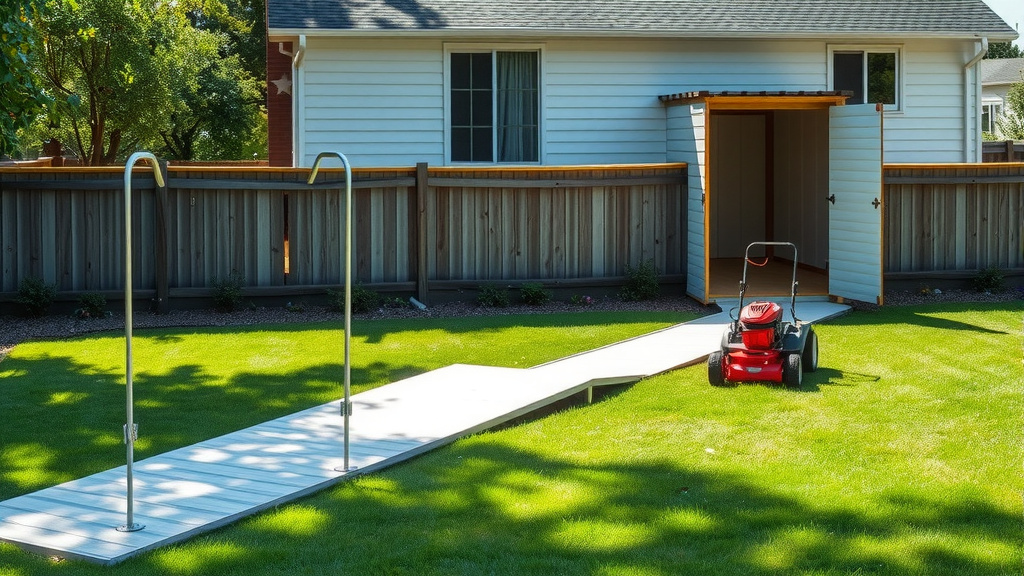
To build a loading ramp for your lawn mower, you generally need strong lumber or metal, accurate measurements, and critical safety features like non-slip surfaces.
Always ensure the ramp’s design safely supports the total weight of your mower and yourself for smooth loading and unloading onto a trailer or truck bed.
- Gather sturdy materials like wood or aluminum to construct a durable ramp.
- Measure your vehicle’s height and your mower’s wheelbase for optimal ramp length and angle.
- Focus on safety first, including secure ramp attachments and effective non-slip treatments.
- Follow practical, step-by-step instructions for cutting, assembling, and reinforcing your ramp.
- Regularly check your completed ramp for any signs of damage or instability before each use.
Do you often find yourself lifting a heavy lawn mower or struggling to get it onto a trailer? It’s a common challenge for many homeowners and landscaping pros. Building your own loading ramp can be a real game-changer.
Not only does it make transport easier, but it also helps keep you safer. Let’s walk through how you can create a reliable ramp right at home.
How To Build A Loading Ramp For Lawn Mower?
Building a loading ramp for your lawn mower involves careful planning and selecting the right materials for a safe, sturdy structure.
You’ll need to measure your vehicle and mower, then follow clear steps for assembly.
Why Build Your Own Ramp?
Using a homemade ramp offers significant advantages over manual lifting or expensive store-bought options. You can tailor it perfectly to your specific mower and vehicle, ensuring a custom fit.
This customization often means better stability and reduced risk of accidents. It’s also a rewarding DIY project.
Safety First: Understanding the Risks
Working with heavy machinery like lawn mowers always carries risks. Improper loading techniques can lead to injury or property damage.
A well-built ramp minimizes these dangers by providing a stable incline. We found that most loading accidents happen due to inadequate ramps or rushed actions (Occupational Safety and Health Administration).
Gathering Your Tools and Materials
Before starting, collect everything you’ll need. This preparation saves time and prevents interruptions later on.
Having the right tools makes the job much smoother and safer for you.
- Measuring tape
- Circular saw or miter saw
- Drill with appropriate bits
- Safety glasses and gloves
- Clamps
- Heavy-duty bolts, nuts, and washers
- Wood screws (deck screws are good)
- Non-slip grip tape or sand mix paint
- Sawhorses
Choosing the Right Materials
The strength of your ramp depends heavily on the materials you choose. Pressure-treated lumber is a popular choice for its durability and weather resistance.
Alternatively, aluminum planks offer a lighter yet strong option. Consider the weight of your mower and your budget when deciding.
| Material Type | Pros | Cons |
|---|---|---|
| Pressure-Treated Wood | Cost-effective, easy to work with, durable | Heavier, requires sealing, may warp over time |
| Aluminum Planks | Lightweight, rust-proof, very strong | More expensive, specialized tools might be needed |
| Steel Angle Iron | Extremely strong, long-lasting | Very heavy, prone to rust, difficult to cut/weld |
Essential Measurements for Success
Accuracy here is not just good practice; it’s critical for safety. Incorrect measurements can lead to a ramp that’s too steep or too short.
A proper ramp angle prevents your mower from tipping or getting stuck. Many experts say a gentle slope is best.
Measuring Your Mower and Vehicle
First, measure your truck bed or trailer height from the ground. Then, measure your lawn mower’s wheelbase and ground clearance.
These figures will help you calculate the ideal ramp length and width. A ramp that is too narrow creates instability.
Calculating Ramp Length and Angle
A general rule for a safe incline is a 3:1 or 4:1 ratio. This means for every foot of height, your ramp needs to be three or four feet long.
For example, a 2-foot high truck bed would need a 6 to 8-foot long ramp. A longer ramp means a shallower, safer angle.
Step-by-Step Construction Guide
Now that you have your materials and measurements, it’s time to start building. Take your time with each step for a solid result.
Remember, patience helps prevent mistakes and ensures a sturdy ramp.
Cutting Your Ramp Pieces
Using your saw, carefully cut the main planks to your determined ramp length. You will typically need two main planks for the ramp surface.
Also, cut smaller support pieces for cross-bracing and a connecting plate for the vehicle end. Always wear your safety glasses.
Assembling the Ramp Structure
Lay your main planks parallel on a flat surface, spaced correctly for your mower’s wheels. Attach cross-braces underneath for stability.
Use bolts or screws to secure these pieces firmly. We found that staggered fasteners provide better strength (Engineering Standards).
Creating a Secure Connection Point
The ramp needs a strong way to connect to your trailer or truck. An aluminum angle or a sturdy wooden cleat bolted across the top end works well.
This cleat should rest on the tailgate, preventing the ramp from slipping during use. Some people also drill holes for pins.
Adding Safety Features
A ramp isn’t truly complete without features that prevent slips and falls. This is where you make it truly practical and safe for everyday use.
Don’t skip these steps; they could save you from an accident.
Non-Slip Surfaces
Apply grip tape or mix sand into paint and apply it to the ramp’s surface. This provides crucial traction, especially in wet conditions.
A good non-slip surface prevents your mower’s tires from spinning or sliding. Think about walking on ice; you need that grip!
Edge Guards and Handles
Consider adding small wooden strips along the edges of the ramp. These act as guides for your mower wheels, preventing them from driving off the side.
Handles on the side can also make it easier to position and move the ramp safely.
Testing Your New Ramp
Before you ever roll your mower up, perform a thorough test. Safety is paramount, and a proper test identifies potential weaknesses.
It’s better to find a flaw now than when you’re halfway up with your mower.
Checklist Before First Use
- Are all bolts and screws tightened securely?
- Does the ramp sit firmly on the tailgate/trailer?
- Is the angle appropriate and not too steep?
- Is the non-slip surface effective?
- Are there any wobbles or creaks under weight?
Trial Run Without the Mower
First, test the ramp by walking up and down it yourself. Feel for any weak spots or instability.
Then, push some heavy, non-living objects up and down the ramp. This simulates the mower’s weight without the added risk of operation.
Conclusion
Building your own lawn mower loading ramp is a practical project that significantly boosts safety and convenience. By following these steps, you create a customized tool perfectly suited to your needs.
Remember to prioritize safety at every stage, from material selection to the final test. A well-built ramp truly simplifies your lawn care routine, making transport a breeze.
How much weight can a DIY wooden ramp hold?
A properly constructed wooden ramp using pressure-treated 2x8s or 2x10s, with adequate cross-bracing, can often hold several hundred pounds. The exact capacity depends on wood type, plank thickness, and design. Always use a safety factor, like designing for 1.5 to 2 times your mower’s actual weight.
What is the ideal angle for a lawn mower loading ramp?
The ideal angle for a lawn mower loading ramp is generally between 15 and 20 degrees. This provides a gentle slope that prevents tipping and allows for smooth ascent. A common guideline is a 3:1 or 4:1 length-to-height ratio, meaning for every 1 foot of height, the ramp should be 3 to 4 feet long.
Can I use plywood for a loading ramp?
While plywood can be used, it’s generally not recommended as the sole structural material for a loading ramp due to its lower strength compared to solid lumber. If used, ensure it is marine-grade or exterior-grade plywood, at least 3/4 inch thick, and heavily reinforced with sturdy framing underneath to prevent sagging or breaking.
How do I prevent my homemade ramp from slipping off the tailgate?
To prevent your ramp from slipping, install a sturdy cleat or angle iron bracket on the top end of the ramp. This piece should hook over the edge of your tailgate or trailer. Additionally, securing the ramp with safety straps or chains to the vehicle’s tie-down points provides extra security.
What are common mistakes to avoid when building a ramp?
Common mistakes include using weak or untreated wood, making the ramp too steep or too short, neglecting cross-bracing for stability, and failing to add non-slip surfaces. Not properly securing the ramp to the vehicle is another major hazard. Always double-check your measurements and construction quality.
