
How To Build A Racing Lawn Mower Frame?
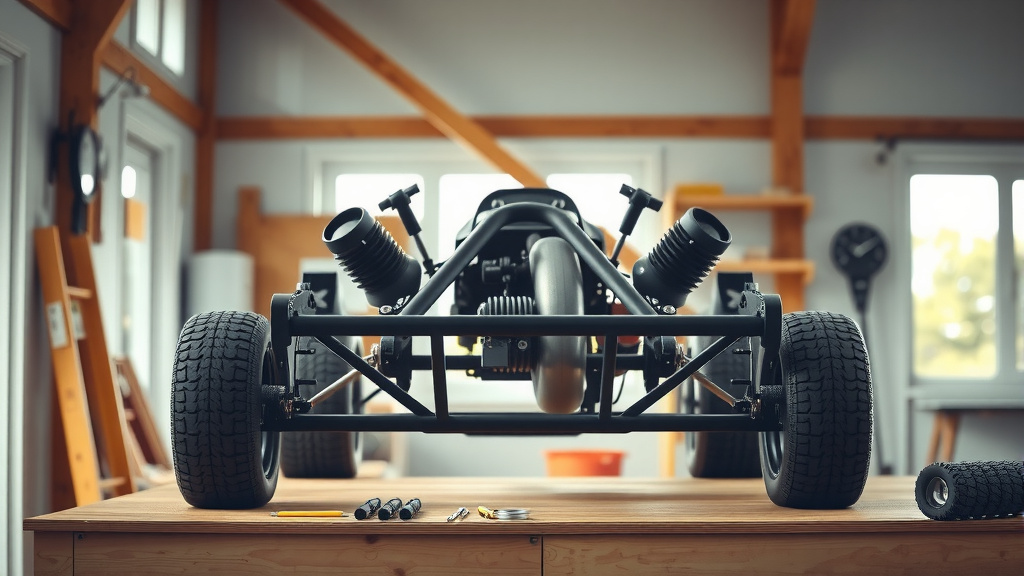
Building a racing lawn mower frame primarily involves designing a sturdy chassis, selecting appropriate steel, and then cutting, bending, and welding the components together for a rigid, performance-oriented structure.
You’ll need a blueprint, metal fabrication tools, and welding equipment to construct a safe and functional racing lawn mower frame, ensuring precise measurements and strong welds for competitive use.
- Start with a clear design blueprint tailored for speed and safety.
- Choose robust materials like mild steel or chromoly for durability.
- Gather essential tools for cutting, bending, and welding metal.
- Focus on precision in fabrication and secure, strong welds.
- Always prioritize safety, performing thorough checks and testing your frame.
How To Build A Racing Lawn Mower Frame?
Building a racing lawn mower frame involves turning raw metal into a specialized chassis. You’re creating the very backbone of your racing machine. This process demands careful planning, the right materials, and a commitment to precision. It’s a rewarding project, but it also asks for your full attention to detail and safety. We’re here to guide you through each step.
Why Build a Racing Mower Frame?
Ever felt that urge for speed, but on a smaller, more accessible scale? That’s the heart of racing lawn mowers. Building your own frame isn’t just about winning races. It’s about the satisfaction of creation, understanding engineering principles, and tailoring a machine exactly to your specifications. You get to control the handling, the weight, and the overall feel of your custom racer. It’s a fantastic way to blend mechanical skill with a passion for competition, and many enthusiasts find it deeply engaging.
Choosing Your Frame Material
The material you pick for your racing lawn mower frame is crucial. It impacts strength, weight, and ease of fabrication. Many builders lean towards steel, but even within steel, choices differ. We found that mild steel is a popular starting point for many amateur builders due to its workability and cost (SAE International). More experienced builders often opt for stronger, lighter alloys. Let’s look at some common options.
| Material Type | Key Advantages | Considerations |
|---|---|---|
| Mild Steel (1018/A36) | Easy to cut and weld, cost-effective, good for beginners. | Heavier than other options, less strong per pound. |
| Chromoly Steel (4130) | High strength-to-weight ratio, very durable, can be lighter. | More expensive, harder to cut and weld, requires TIG welding. |
| DOM Tubing (Drawn Over Mandrel) | Excellent consistency, good strength, smooth finish. | Typically more expensive than standard mild steel. |
Essential Tools for Frame Construction
Before you even think about cutting, you need the right workshop setup. Think of it like a chef needing good knives. Having the right tools makes the job safer, more precise, and frankly, more enjoyable. You don’t need a professional fabrication shop, but a few key pieces are non-negotiable. Many experts agree that quality tools prevent frustration and rework down the line (Popular Mechanics).
- Metal Saw: A horizontal band saw or chop saw for precise cuts.
- Grinder: Angle grinder with cutting and grinding wheels for shaping and clean-up.
- Welder: MIG welder is common for steel; TIG for chromoly offers cleaner welds.
- Clamps: Various C-clamps, vice grips, and specialized welding clamps to hold pieces.
- Measuring Tools: Steel ruler, tape measure, protractor, and a good square.
- Safety Gear: Welding helmet, gloves, safety glasses, ear protection, fire extinguisher.
Designing Your Racing Frame Blueprint
Your racing lawn mower frame begins as an idea, then a sketch, and finally a detailed blueprint. This isn’t just drawing; it’s engineering your machine’s performance. A solid design will dictate how your mower handles, its speed potential, and most importantly, your safety. Think of it as the architectural plan for your dream home, but for a speedy lawn mower. Take your time here. It pays off hugely later.
Considering Weight Distribution and Balance
Where you place components like the engine, fuel tank, and even yourself significantly affects handling. You want a low center of gravity for stability and good weight distribution between the front and rear wheels. Many builders aim for a near 50/50 front-to-rear balance, or slightly rear-biased for traction. This impacts how the mower turns and accelerates. Research often points to balanced designs offering superior control (SAE Motorsports Engineering).
Understanding Wheelbase and Track Width
The wheelbase is the distance between your front and rear axles. Track width is the distance between the wheels on the same axle. These measurements directly influence stability and turning radius. A shorter wheelbase might make for quicker turns, but can reduce stability at high speeds. A wider track offers stability but might make the mower less agile. It’s a trade-off based on your racing style and track conditions.
Fabricating the Frame: Cutting and Bending
With your design locked in and materials ready, it’s time to bring the frame to life. This stage requires patience and careful execution. Each cut and bend impacts the overall integrity of your racing lawn mower frame. Remember, even a small error here can snowball into bigger problems later. We found that double-checking measurements before any cut is a common practice among experienced fabricators.
Achieving Precision Cuts
Accuracy here is paramount. Your frame pieces need to fit together perfectly for strong welds and a straight chassis. Use a sharp blade on your saw and mark your cuts clearly. A steady hand and a good vise are your best friends. Many guidelines point to minimizing material waste by planning cuts efficiently (Metal Fabrication Institute). Clean cuts also lead to better, stronger welds.
Mastering Metal Bending
Not all frame designs are straight lines. You might need to bend tubing for curves or angles. A tubing bender is the tool for this job. Avoid simply heating and bending, as this can weaken the metal. Cold bending with the right equipment ensures the material retains its strength. Practicing on scrap pieces helps you get a feel for how the metal reacts before working on your actual frame components. Gradual, controlled bends are key.
Welding the Frame Components Securely
Welding is where your individual metal pieces truly become a unified racing lawn mower frame. This step is critical for safety and performance. Weak or improper welds can lead to catastrophic failure during a race, which no one wants. Take your time, focus on learning proper techniques, and always prioritize safety. Many experts say that practice makes perfect when it comes to welding beads. Don’t rush this vital stage.
Selecting the Right Welding Process
For mild steel, a MIG welder is often the go-to. It’s relatively easy to learn and produces strong welds. For chromoly steel, TIG welding is usually preferred as it offers more control and creates cleaner, stronger welds without adding filler material that could compromise the alloy’s properties. Make sure your welder is properly set up for your chosen material and thickness. Knowing your machine is a big part of the process.
Tips for Strong, Clean Welds
Preparation is everything. Ensure your metal surfaces are clean and free of rust or grease. Use proper joint fit-up – no big gaps! Start with tack welds to hold pieces in place, then follow with continuous, strong welds. Overlapping your welds slightly ensures full penetration. Always inspect your welds for cracks, porosity, or undercut. A good weld looks consistent and penetrates both pieces of metal. Your life, or at least your race, depends on it.
Critical Mounting Points: Engine, Axles, Steering
Once your basic frame takes shape, you need to add all the mounting points for the crucial components. This is where your chassis truly becomes functional. Every bracket and plate needs to be securely welded and correctly positioned according to your design. These points need to withstand significant stress during racing, so their integrity is non-negotiable.
Testing Your Frame’s Structural Integrity
Before you ever put an engine on or sit in your frame, you must test its strength. This isn’t about taking it for a spin. It’s about static checks. Look for any flex, weak points, or questionable welds. You can apply pressure to different parts of the frame to simulate racing forces. Some builders even use sandbags to stress-test their chassis. A rigorous test ensures your frame is ready for the track’s demands.
Common Mistakes to Avoid When Building Your Frame
Everyone makes mistakes, but some are more common (and more easily avoidable) than others when building a racing lawn mower frame. Learning from others’ experiences can save you headaches, time, and even money. We found that attention to detail early on prevents big issues. Here are some pitfalls to watch out for:
- Ignoring the blueprint: Straying from your design without careful re-evaluation.
- Poor weld quality: Weak, inconsistent, or improperly prepared welds.
- Incorrect material choice: Using steel that’s too heavy or too weak for the application.
- Neglecting safety gear: Always wear appropriate protection during fabrication.
- Rushing the process: Skipping steps or speeding through critical stages.
- Inadequate bracing: Not adding enough structural support in high-stress areas.
Final Preparations and Finishing Touches
With the frame welded and tested, it’s time for the finishing touches. This involves grinding down any sharp edges, sanding rough spots, and preparing the metal for paint. A good coat of paint not only makes your frame look sharp but also protects it from rust and corrosion. This stage is like polishing a gem – it reveals the beauty of your hard work. Think about adding any necessary reinforcements or accessories, too. You’re almost there!
Conclusion
Building a racing lawn mower frame is a challenging yet deeply rewarding project. It demands precision, patience, and a solid understanding of fabrication principles. By carefully planning your design, selecting the right materials, and executing each step—from cutting to welding—with attention to detail, you can create a sturdy, high-performance chassis. Remember to always prioritize safety throughout the entire process. The thrill of racing a machine you built with your own hands is truly unmatched. You’ve crafted the foundation for speed and excitement!
How important is proper alignment when building a racing lawn mower frame?
Proper alignment is critically important because it directly affects how your racing lawn mower handles, steers, and tracks on the racecourse. Misalignment can lead to uneven tire wear, difficult steering, and an unpredictable ride, compromising both performance and safety during competition.
Can I modify an existing lawn mower frame for racing purposes?
While some people do modify existing lawn mower frames, building a dedicated racing frame from scratch is generally recommended for optimal performance and safety. Stock frames are not designed for the stresses of racing, and significant modifications can sometimes weaken them rather than strengthen them effectively.
What kind of suspension should I consider for a racing lawn mower frame?
The type of suspension depends on the specific racing class and track conditions. Many racing lawn mowers use a simple rigid axle setup for maximum power transfer and simplicity. However, some advanced builds incorporate independent suspension or coil-over shocks to improve handling over rougher tracks, offering more tuning options.
How can I ensure my racing lawn mower frame meets safety regulations?
To ensure your racing lawn mower frame meets safety regulations, you should consult the rulebook of the specific racing association or club you plan to compete with. These organizations typically have detailed guidelines regarding frame construction, materials, and safety features like roll bars and kill switches. Always design and build with these rules in mind.
Is it better to build a lighter or heavier racing lawn mower frame?
Generally, a lighter racing lawn mower frame is preferred for competitive racing as it allows for quicker acceleration, better braking, and more agile handling. However, the frame must still be strong enough to withstand racing stresses and protect the driver. The goal is to achieve the best strength-to-weight ratio possible without compromising safety or structural integrity.
