
How To Change Lawn Mower Height?
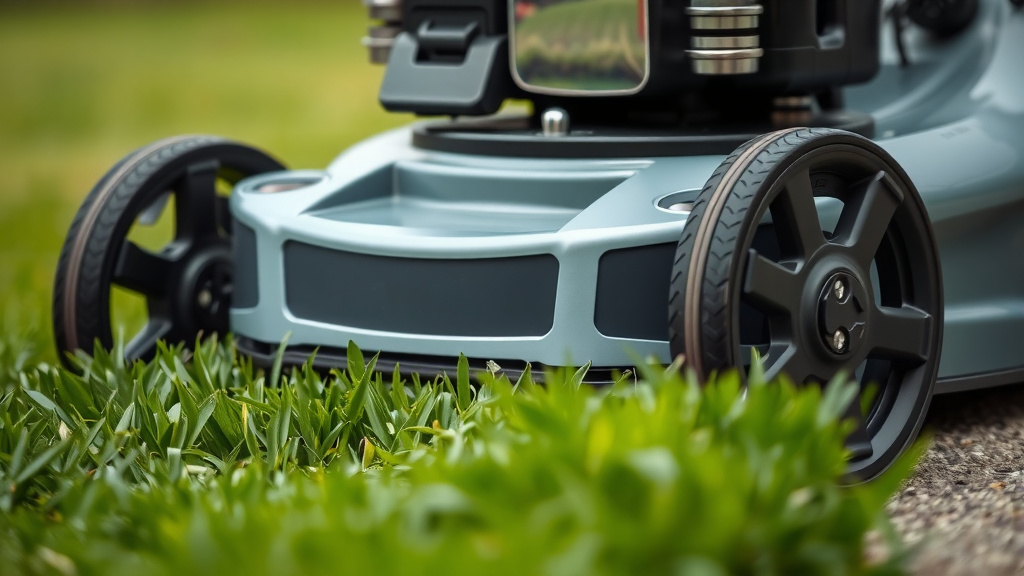
To change lawn mower height, you typically adjust levers or a single lever connected to the wheels or deck, raising or lowering the cutting blades.
Most lawn mowers offer multiple settings, allowing you to quickly select your desired cutting height for healthier grass and a better-looking lawn.
Here’s the rundown on adjusting your mower’s height:
- Always turn off your mower and disconnect the spark plug before making any adjustments for safety.
- Locate the height adjustment mechanism, which can be individual wheel levers, a single lever, or a deck adjustment.
- Choose a suitable cutting height based on your grass type and the season – never remove more than one-third of the blade.
- Regularly checking and adjusting your mower’s height keeps your lawn healthy and prevents common issues.
How To Change Lawn Mower Height?
You change lawn mower height by manipulating a lever or levers on the wheels or directly on the mower deck itself.
This simple adjustment raises or lowers the cutting blades, letting you control how short your grass gets.
Why Adjust Your Mower Height? It Matters!
Adjusting your mower’s height is more than just about aesthetics; it’s about lawn health and resilience. Think of it like a haircut for your grass.
Cutting too short can stress your lawn, making it susceptible to weeds, pests, and drought (University of Maryland Extension).
A taller cut encourages deeper root growth, which creates a more vibrant and drought-tolerant lawn.
Safety First: Before You Begin
Before touching anything on your mower, safety is paramount. You are working with sharp blades and a powerful engine.
Always ensure the engine is off and cool. For gas mowers, disconnect the spark plug wire to prevent accidental startups.
If you use an electric mower, unplug it. Battery-powered models require battery removal. Your safety is our top concern.
Locating Your Mower’s Height Adjustment Mechanism
Mowers come in various designs, but most have a similar approach to height adjustment. You’ll find one of three common methods.
Knowing your mower type helps you quickly identify the correct adjustment points.
Individual Wheel Levers: Common on Push Mowers
Many push mowers feature a small lever or knob near each wheel. To adjust, you usually pull the lever outward and move it up or down to your desired slot.
Remember to adjust all four wheels to the same setting. This ensures an even cut across your entire lawn.
Forgetting one wheel can lead to a very crooked mowing job. Has that ever happened to you?
Single Point Lever: Often on Walk-Behind Mowers
Some walk-behind mowers offer a convenient single lever, often located near a rear wheel or on the side of the mower deck.
This lever controls the height of all four wheels simultaneously. You simply move this lever to the numbered slot that matches your chosen height.
It’s a quick and efficient way to make adjustments, saving you time and effort.
Deck Adjustment: Found on Riding Mowers and Zero-Turns
Riding mowers and zero-turn models often use a deck adjustment system. This typically involves a foot pedal or a manual lever near the seat.
You might need to reference your mower’s manual for the specific steps, but it usually involves a simple lever movement.
These systems are built for larger machines, making height changes practical for bigger yards.
Checking Your Mower Manual
When in doubt, your mower’s owner’s manual is your best friend. It provides specific, detailed instructions for your model.
It can clarify unique features or quirks of your particular machine. Don’t hesitate to consult it.
Choosing the Right Mowing Height for Your Lawn
The “perfect” mowing height isn’t a one-size-fits-all answer. It depends on your grass type, the season, and even how often you mow.
A good rule of thumb: never cut off more than one-third of the grass blade at any single mowing session.
Grass Type Considerations
Different grass types thrive at different heights. Cool-season grasses like Fescue and Ryegrass often prefer a taller cut.
Warm-season grasses such as Bermuda and Zoysia can usually handle a shorter trim (Ohio State University Extension).
We found that understanding your grass type is the first step to a healthy lawn.
Seasonal Adjustments: Spring, Summer, Fall
Your lawn’s needs change with the seasons. In spring, when grass grows quickly, you might mow more frequently but still aim for a healthy height.
During hot summer months, raising your mower height offers shade to the soil, helping it retain moisture and fend off weeds.
In the fall, before dormancy, you might gradually lower the height over several mowings. This helps prepare it for winter.
| Season | Recommended Height (Inches) | Why Adjust? |
|---|---|---|
| Spring | 2.5 – 3.5 | Promotes strong root growth during active growth. |
| Summer (Hot) | 3.0 – 4.0 | Shades soil, retains moisture, reduces weed competition. |
| Fall | 2.0 – 3.0 | Prepares grass for winter, reduces risk of snow mold. |
Step-by-Step Guide to Changing Mower Height
Ready to make the change? Here’s a general checklist to guide you through the process.
Remember, always refer to your specific mower’s manual if anything feels unclear.
Mower Height Checklist:
- Turn off the mower and disconnect the spark plug (or remove battery/unplug).
- Clear any debris from around the wheels or deck for better access.
- Locate the adjustment levers or single point adjustment.
- Pull or slide the lever(s) to the desired height setting.
- Ensure all wheels (if applicable) are at the same height.
- Reconnect the spark plug (or reinsert battery/plug in).
- Perform a test run to check the cut.
Troubleshooting Common Height Adjustment Issues
Sometimes, things don’t go exactly as planned. Don’t worry, many common issues have simple fixes.
For example, if the lever is stiff, a little lubrication can often help it move freely again.
Uneven Cut? Check All Wheels
If your lawn looks like a patchwork quilt after mowing, chances are your mower height isn’t uniform across all wheels.
Double-check each wheel’s setting. Sometimes a lever can slip or not be fully engaged.
Ensuring consistency is key to a professionally striped lawn.
Lever Stuck? Lubrication Might Help
Over time, dirt, rust, or dried grass can cause adjustment levers to stick. We found that a quick clean and a spray of WD-40 can free up stubborn mechanisms.
Always apply lubricants sparingly and wipe away excess to prevent attracting more grime.
My Mower Doesn’t Cut Short Enough!
Every mower has its limits. If you’ve set your mower to its lowest setting and it’s still not short enough, you might have reached its mechanical limit.
Many experts say that cutting too short consistently is detrimental to lawn health anyway.
Consider if a slightly taller cut might be better for your grass’s long-term well-being. A healthy lawn looks better than a scalped one.
Conclusion
Adjusting your lawn mower’s height is a simple yet impactful task that directly affects the health and beauty of your lawn.
By understanding your mower’s mechanism, choosing the right height for the season and grass type, and prioritizing safety, you’re well on your way to a thriving yard.
Remember, a little attention to detail now can save you a lot of trouble later. Happy mowing!
Frequently Asked Questions About Mower Height
How often should I change my lawn mower height?
You should consider changing your lawn mower height with the seasons, typically raising it for hot summer months and potentially lowering it slightly in the fall. During the primary growing season, maintaining a consistent healthy height is best.
Can cutting my grass too short damage it?
Yes, cutting grass too short (often called “scalping”) can severely damage your lawn. It stresses the grass, reduces its ability to photosynthesize, makes it more susceptible to weeds, diseases, and drought, and can even burn the roots.
What is the “one-third rule” in mowing?
The one-third rule states that you should never remove more than one-third of the grass blade’s total length in a single mowing session. This rule helps prevent stressing the grass and promotes healthier growth. If your grass is very long, you might need to mow more frequently or raise your height and take a little off each time.
Does mower height affect weed growth?
Absolutely! Keeping your grass a bit taller shades the soil, which helps cool the ground and prevents weed seeds from germinating by blocking sunlight. A denser, taller lawn leaves less room and light for weeds to establish themselves, acting as a natural weed barrier.
Is a dull blade more impactful at certain heights?
A dull blade is always harmful, regardless of height. However, its negative impact is more noticeable and damaging when trying to cut very short grass, as it tears rather than cleanly cuts. This leaves ragged edges that invite disease and give your lawn an unhealthy, brownish appearance.
