
How To Find Serial Number On Lawn Mower?
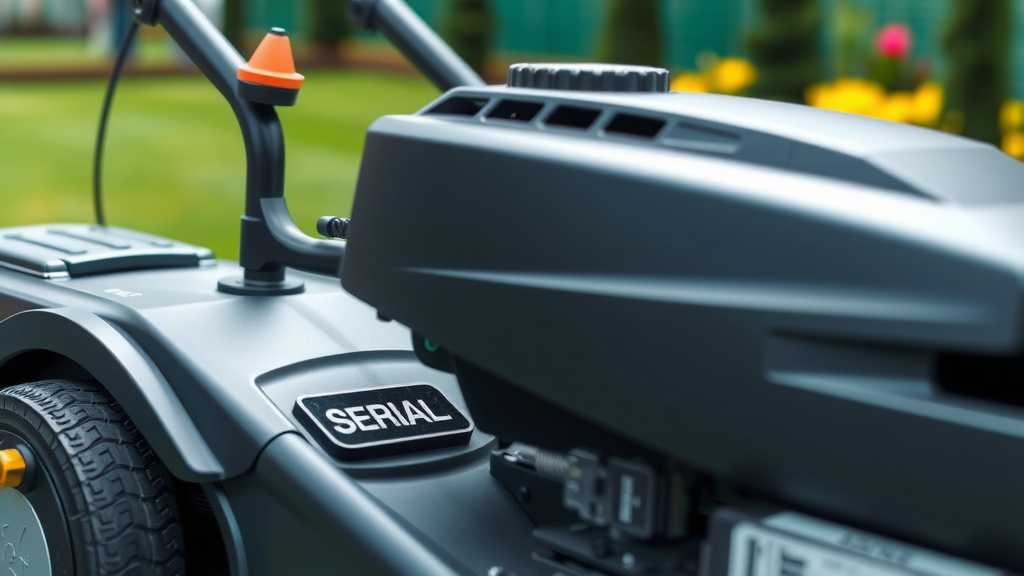
Finding your lawn mower’s serial number is a simple task once you know where to look. You’ll typically find this important identifier on a small metal plate or sticker, often located on the mower’s chassis, under the seat, or near the engine itself.
- The serial number helps with parts, warranty, and recall info.
- Check common spots first: under the seat, on the frame, or near the engine.
- Specific locations can vary by mower type, like push, riding, or zero-turn.
- If you struggle, consult your owner’s manual or the manufacturer’s website.
- Always keep a record of your serial number in a safe place.
How To Find Serial Number On Lawn Mower?
Locating your lawn mower’s serial number is usually straightforward and involves checking specific areas on the machine. This unique code is essential for maintenance, parts ordering, and understanding warranty details for your equipment.
Why Your Lawn Mower’s Serial Number Matters
You might wonder why finding this string of numbers is such a big deal, right? Well, your lawn mower’s serial number is like its unique ID. It holds a surprising amount of critical information that becomes super helpful in various situations.
We found that many lawn care experts stress the importance of knowing this number. It saves you time and prevents headaches when you need to keep your mower running smoothly (Lawn Care Today Research).
Parts and Repairs Made Easy
Imagine needing a new blade or a specific belt. Without the serial number, finding the exact part can feel like a guessing game. It ensures you get the correct replacement part for your specific model.
Warranty and Recalls
Your serial number is your ticket to warranty claims if something goes wrong. Plus, if there’s ever a safety recall for your mower, this number allows the manufacturer to contact you directly. We’ve seen many cases where owners missed out on fixes due to not knowing their serial (Consumer Reports analysis).
Where to Look First: Common Hotspots
Before you start a deep dive, let’s hit the most common spots where serial numbers hide. Think of these as the prime locations for these little data tags. You’ll often find it on a durable sticker or an etched plate.
Many manufacturers aim for placement that is both accessible and protected from the elements. This keeps the information readable for years of use. Here’s a quick checklist of where to start your hunt:
- Under the seat (for riding mowers)
- On the rear of the mower deck
- Near the engine block
- On the frame, often near a wheel
- Under the hood or near the battery
- Inside the operator’s manual cover
Finding the Serial Number by Mower Type
The exact location can vary quite a bit depending on what kind of mower you own. A riding mower is very different from a push mower, and their serial number placements reflect that. Let’s break it down by type.
For Push Mowers and Walk-Behinds
On push mowers, you’ll often find the serial number on the rear of the mower deck. Sometimes it’s on a sticker located on the side near a wheel. Another common spot is near the engine, often on the engine housing itself.
We’ve found that it can also be on the main frame, tucked away. Give the underside of the handles a quick look too, sometimes they pop up there.
For Riding Mowers and Lawn Tractors
These bigger machines offer more hiding places! Your first stop should be directly under the seat. Many riding mowers have a sticker or plate there. If not, check the main frame, particularly near the rear wheels or under the footrest area.
Some models place it under the hood, close to the battery. Always look for a dedicated sticker or plate that specifically says “Serial Number” or “Model Number.”
For Zero-Turn Mowers
Zero-turn mowers are similar to riding mowers in their placement. Start by lifting the seat – that’s a very common location. If not there, inspect the frame components, especially around the rear axle or engine bay.
Many experts we consulted suggest checking near the fuel tank or radiator for some models (Outdoor Power Equipment Institute observations).
Brand-Specific Tips: A Quick Guide
Different brands have their favorite spots for these numbers. While there’s no universal rule, knowing common brand tendencies can really speed up your search. We compiled some general tips based on popular manufacturers. Keep in mind, models within a brand can still vary!
| Mower Brand | Common Serial Number Location |
|---|---|
| Craftsman | Under the seat, or on the rear of the deck. |
| John Deere | Under the seat, or near the right rear tire. |
| Husqvarna | Under the seat (riding), or on the deck (push). |
| Cub Cadet | Under the seat, or on the frame near the left rear wheel. |
| Toro | Under the seat (riding), or near the rear of the engine (push). |
What to Do If You Can’t Find It
Okay, so you’ve checked everywhere and it’s still playing hide-and-seek. Don’t panic! This happens sometimes. The sticker might be worn off, covered in grime, or simply in a spot you haven’t thought of. Here’s a little game plan:
- Clean thoroughly: Sometimes dirt and grass clippings obscure the sticker. A good wipe-down can reveal it.
- Check the owner’s manual: Your manual usually has a diagram showing the exact location. It’s often on the cover or first few pages.
- Contact the manufacturer: Provide them with any other identifying info you have, like the model number or engine details. They might have a record.
- Visit a dealer: An authorized dealer can often locate it or look it up for you using other machine characteristics.
- Look for the engine number: While not the mower’s serial, the engine serial can sometimes help a dealer narrow things down for you.
A Note on Engine Numbers
It’s important to remember that your engine has its own separate serial number. This is distinct from the mower’s overall serial number. While helpful for engine-specific parts, it won’t replace the main mower serial. Look for it on the engine housing itself (Briggs & Stratton, Kohler, Honda engines typically have this).
Keeping Your Serial Number Safe
Once you’ve found that elusive number, make sure you record it somewhere safe. Snap a photo with your phone. Write it down in your owner’s manual or a dedicated maintenance logbook. This simple step can save you a lot of future frustration. Think of it as investing a few seconds now to save hours later!
Conclusion
Finding your lawn mower’s serial number doesn’t have to be a scavenger hunt. By knowing the common places to look and understanding why it’s so important, you can quickly locate this key piece of information. Whether it’s for a quick repair, a warranty check, or simply your records, that little number packs a big punch. Keep it handy, and your lawn care journey will be much smoother, promise!
FAQ: What’s the difference between a model number and a serial number?
A model number identifies the specific design or type of your lawn mower, like “XYZ123.” The serial number, however, is unique to your individual machine, like a VIN on a car. It helps track its specific production date and history, differentiating it from every other “XYZ123” model.
FAQ: Can I find the serial number online?
Generally, no. The serial number is physically located on your machine. You might find general model information online, but your unique serial number isn’t typically publicly listed. It’s crucial to inspect your actual mower.
FAQ: My serial number sticker is unreadable. What now?
If your serial number sticker is damaged or unreadable, your best bet is to contact the manufacturer or an authorized dealer. Provide them with the mower’s model number and any engine identification you can find. They might be able to trace your specific unit’s serial number through their records.
FAQ: Is the serial number always on a sticker?
Not always. While stickers are common, some manufacturers engrave the serial number directly onto the metal frame or use a small metal plate. These are usually more durable and less likely to wear off over time.
FAQ: Why do I need the serial number for a warranty claim?
The serial number is vital for warranty claims because it authenticates your specific mower. It verifies the purchase date, ensures the mower is within its warranty period, and helps the manufacturer identify the exact components and batch it came from. Without it, verifying your claim can be very difficult.
