
How To Make A Lawn Mower Lift?
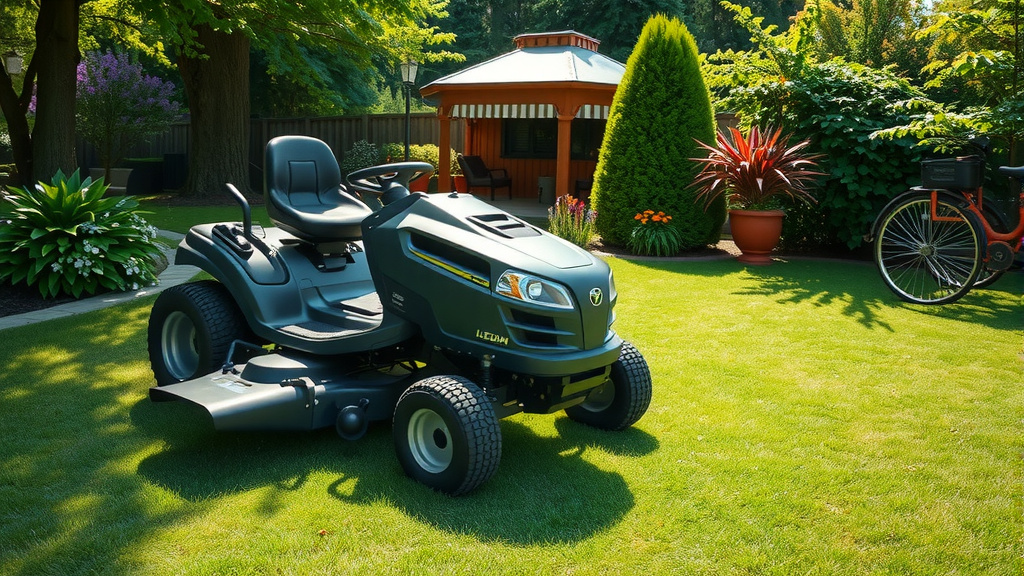
To make a lawn mower lift, you can construct a simple ramp from sturdy lumber, or build a robust stand using strong materials like steel or thick wood. These DIY options help you raise the mower safely for essential maintenance tasks.
Always prioritize stability and safety when lifting your lawn mower, ensuring the structure can hold its weight securely and prevent tipping. Proper lifting allows you to access the underside for blade sharpening, deck cleaning, or oil changes with greater ease and less strain.
- Get your lawn mower off the ground easily and safely for maintenance.
- Discover simple DIY solutions using common materials like wood or metal.
- Learn about critical safety steps to avoid accidents when lifting heavy equipment.
- Find out which tools and materials you’ll need for your DIY mower lift project.
- Explore practical tips for regular lawn mower upkeep, made easier with a lift.
How To Make A Lawn Mower Lift?
You can create a dependable lawn mower lift by using **strong materials like wood** or metal to build a stable ramp or support stand. This helps you access the mower’s underside securely.
Building your own lift offers a **cost-effective way to perform** routine maintenance safely, right in your own garage.
Why Bother Lifting Your Mower?
Lifting your lawn mower isn’t just about convenience; it’s about **making maintenance safer** and more effective. Imagine trying to clean the deck or sharpen blades while your mower is flat on the ground. It’s awkward, right?
When you lift your mower, you get a clear view and **easy access to its underside**. This makes tasks like changing the oil, checking belts, or cleaning grass clippings far simpler. We found that regular cleaning can extend your mower’s lifespan considerably.
Safety First: Essential Steps
Before you even think about lifting, safety is your **number one priority**. You are dealing with heavy machinery, after all. Always disconnect the spark plug wire first. This prevents the engine from accidentally starting while you work.
Also, drain any fuel or oil if you plan to tilt the mower significantly. This step helps **avoid spills and potential hazards**. Many experts say a clean workspace is a safe workspace.
Here’s a quick safety checklist before you begin:
- Disconnect the spark plug: Absolutely essential to prevent accidental starts.
- Drain fuel and oil: If tilting significantly, prevent spills and fire risks.
- Chock the wheels: Use blocks to stop the mower from rolling on ramps.
- Wear protective gear: Gloves and eye protection are always a good idea.
- Work on a flat surface: A stable, level ground is non-negotiable for safety.
DIY Lawn Mower Lift Options
There are a few ways you can build a lift at home, depending on your comfort level and the materials you have. We’ll look at simple ramps and more **robust stand designs**. Both aim to get your mower off the ground safely.
Remember, the goal is always stability. A wobbly lift is **more dangerous than no lift** at all. Think like an engineer, even if you’re just using basic tools.
Building a Simple Wooden Ramp
A wooden ramp is perhaps the **easiest DIY lift solution**. You’ll need some sturdy 2×10 or 2×12 lumber. You might also want some thicker pieces for a base, like 4x4s.
Start by cutting two pieces of lumber to your desired ramp length, usually 4-5 feet. Then, attach a stop block at one end of each ramp piece. This **prevents your mower from rolling** off the top.
Next, secure the other end of your ramp pieces to a sturdy base. You can use strong hinges or simply screw them into a solid timber block. We found that a slight incline is **easier to drive the mower** up. Just don’t make it too steep!
Crafting a Sturdy Mower Stand
If you prefer a more permanent solution, a sturdy stand can be built. This often involves **using thicker lumber or even steel** square tubing. The idea is to create a platform that your mower can sit on, elevated off the ground.
You’ll need four strong legs, cross supports, and a top platform. Think of it like a heavy-duty workbench for your mower. Many experts recommend adding diagonal bracing to the legs for **maximum stability and support**.
This type of lift is great if you do **frequent maintenance tasks**. It allows you to walk underneath or sit comfortably while working on the deck.
Tools and Materials You’ll Need
To build your lift, you won’t need a professional workshop. For a wooden ramp, you’ll likely need a saw (a circular saw works great), a drill, and some screws or bolts. A tape measure and a pencil are also **your best friends for accuracy**.
If you’re going for a metal stand, you might need a welder or heavier-duty fasteners, depending on your design. We found that having **the right tools makes the job** much smoother and safer.
Let’s compare DIY options with store-bought lifts:
| Feature | DIY Lift (Wood Ramp/Stand) | Commercial Lift (Jack/Ramp) |
|---|---|---|
| Cost | Generally low, using scrap or inexpensive lumber. | Can range from moderate to high, depending on capacity. |
| Customization | Highly customizable for your specific mower size. | Limited to available models and designs. |
| Time to Build | Can take a few hours to a day, depending on complexity. | Ready to use immediately after assembly. |
| Storage | Can be bulky, may require disassembly or dedicated space. | Often foldable or compact for easier storage. |
| Weight Capacity | Depends entirely on construction and material strength. | Clearly specified by manufacturer; typically reliable. |
Using Your New Mower Lift Safely
Once your lift is built, using it correctly is just as important as building it well. When driving your mower onto a ramp, go slowly and steadily. Many experts advise having **a spotter if you’re unsure**, especially the first time.
For a stand, make sure the mower’s wheels are fully centered and stable on the platform. Always do a **quick wiggle test** to ensure everything feels solid before you get underneath. Your peace of mind is worth the extra few seconds.
Maintenance Tasks Made Easy
With your mower lifted, you can finally tackle those tricky maintenance jobs with ease. Sharpening blades becomes less of a chore. You can also **inspect the deck for rust** or damage. Research often connects regular cleaning with improved mower performance (University of Minnesota Extension).
Changing the oil is also much cleaner when you have room for a drain pan. Don’t forget to **check and replace air filters** and spark plugs, as these are often easier to reach from the side or front.
When to Consider a Commercial Lift
While DIY lifts are fantastic, there might be times a commercial lift makes more sense. If you have a very heavy riding mower, or if you simply prefer the convenience, a manufactured lift could be better. These often come with **hydraulic systems for effortless lifting**.
Many commercial lifts also offer features like wheel clamps or locking mechanisms for added security. If you perform **very frequent or heavy-duty maintenance**, a specialized lift could be a smart investment.
Conclusion
Creating your own lawn mower lift is a rewarding project that greatly enhances your ability to perform routine maintenance. Whether you opt for a simple wooden ramp or a more robust stand, the goal is always to **prioritize safety and stability**. By following simple construction principles and adhering to safety guidelines, you can build a reliable tool that serves you for years.
A well-made lift transforms maintenance from a back-breaking chore into a manageable task, allowing you to keep your lawn mower in **peak condition with minimal fuss**. So, roll up your sleeves, gather your materials, and get ready to elevate your lawn care game!
How often should I clean my lawn mower deck?
You should aim to clean your lawn mower deck after every few uses, or at least once a month during peak mowing season. This prevents grass clippings from building up, which can cause rust and affect blade performance.
Can I use car ramps to lift my lawn mower?
While some small walk-behind mowers might fit on car ramps, it’s generally not recommended for safety reasons. Car ramps are designed for vehicles with different weight distribution and wheel spacing. Using dedicated mower ramps or a purpose-built lift is much safer.
What kind of wood is best for a DIY mower lift?
For a DIY mower lift, using pressure-treated lumber like 2x10s or 2x12s is often recommended. These types of wood are resistant to rot and offer good strength for supporting the mower’s weight. Always choose straight, knot-free pieces.
Is it safe to work under a tilted mower without a lift?
Working under a mower that is simply tilted on its side without proper support is very risky. It can easily fall over, causing serious injury. A stable lift or stand ensures the mower is securely held in place, providing a much safer working environment.
What maintenance tasks become easier with a mower lift?
A mower lift makes several tasks much easier, including sharpening or replacing blades, cleaning the underside of the deck, inspecting belts and pulleys, and changing the oil and oil filter. Access to the underside improves visibility and reduces strain.
