
How To Lift Lawn Mower With 2 Post Lift?
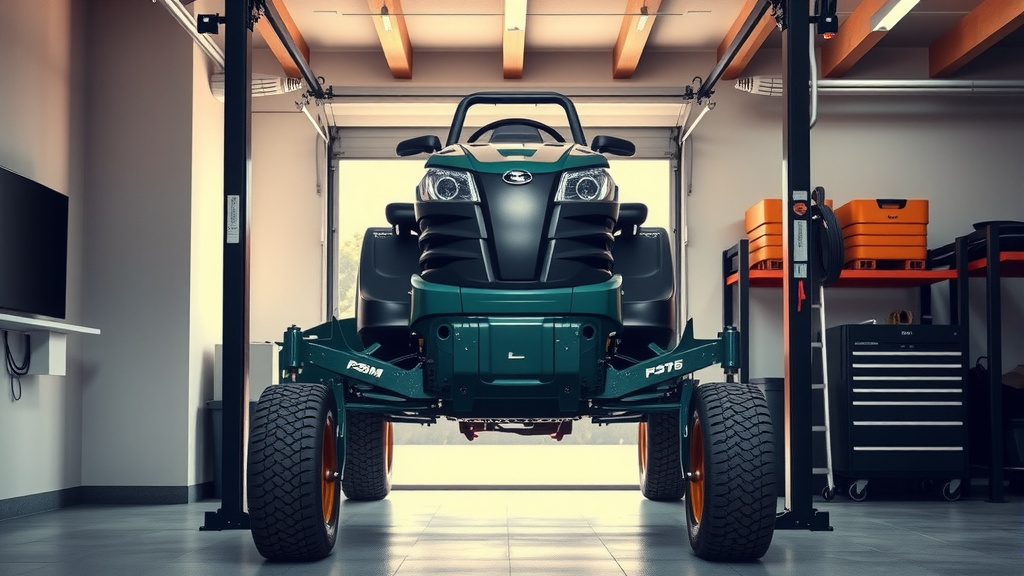
To safely lift a lawn mower with a 2 post lift, first ensure the lift’s capacity significantly exceeds the mower’s total weight and carefully position the mower to achieve balanced support on the lift’s arms.
Always verify that the lift points make secure contact with the mower’s sturdy frame components, not the deck, and engage all safety locks before performing any work underneath your lawn mower.
- Properly prepare your lawn mower by emptying fuel and disconnecting the battery before lifting.
- Always check your 2 post lift’s weight capacity to match or exceed your mower’s weight.
- Place lift arms on strong frame points, avoiding the mower deck or engine components.
- Raise the mower slowly, watching for balance, and engage safety locks immediately.
- Never work under a mower without fully engaged safety locks on your 2 post lift.
How To Lift Lawn Mower With 2 Post Lift?
Lifting a lawn mower with a 2 post lift requires careful preparation and precise execution to ensure safety. You’ll need to understand your lift, prepare the mower, and identify correct lift points.
Why Lift Your Lawn Mower with a 2 Post Lift?
Using a 2 post lift offers unmatched access for various maintenance tasks. Think about cleaning the mower deck, sharpening blades, or changing oil filters. It provides a stable, elevated platform, making these jobs much easier than working on your knees.
We found that professionals often use lifts for efficiency and safety. It reduces strain on your back and gives you a clear view of the undercarriage. This access can help you spot potential problems early on.
Understanding Your 2 Post Lift
Before you even think about lifting, get to know your equipment. What is your 2 post lift’s maximum weight capacity? This is a critical piece of information. Exceeding it is extremely dangerous and could lead to serious injury or damage.
Research suggests always reading your lift’s owner’s manual. It provides specific instructions for safe operation. Familiarize yourself with the controls, safety latches, and emergency stop procedures. Many experts say a well-maintained lift is a safe lift.
Mower Preparation: Essential Steps
Prepping your lawn mower is just as important as setting up the lift. First, you need to empty the fuel tank. Why? Because fuel can spill and is highly flammable when the mower is tilted. This significantly reduces fire risk (NFPA guidelines).
Next, disconnect the spark plug wire or remove the battery if it’s an electric start. This prevents accidental engine starts. Imagine the engine kicking on while your hand is near the blades. Not a fun thought, right? Finally, clean off any large debris or mud from the mower. This makes it easier to find the proper lift points.
Your Pre-Lift Checklist
- Check Lift Capacity: Is your lift rated for your mower’s weight? Always ensure it is.
- Clear the Area: Make sure there’s enough space around the lift and no obstructions.
- Empty Fuel Tank: Minimize fire hazards from spills.
- Disconnect Battery/Spark Plug: Prevent accidental starts.
- Clean Mower Undercarriage: Helps identify secure lift points.
- Gather Tools: Have everything you need within reach.
Positioning Your Lawn Mower on the Lift
Careful positioning is key to a stable lift. Drive or push your lawn mower between the two posts. You want it centered as much as possible. This ensures an even weight distribution. Imagine a seesaw; if one side is too heavy, it won’t balance.
Once centered, align the mower so that the lift arms can reach the strong, designated lift points. Sometimes, you might need to adjust the mower a little. Take your time here. A few extra minutes now can prevent big problems later.
Identifying Safe Lift Points
This is where many people make mistakes. You absolutely do NOT want to lift your mower by its deck. The deck is often thin and can bend or break. We found that the best lift points are the sturdy frame rails, axle housings, or designated chassis points. Look for strong, structural metal parts.
Think of it like lifting a car; you wouldn’t lift it by the door. The same principle applies here. If you’re unsure, consult your mower’s owner’s manual. It often shows diagrams of safe lifting locations. Many experts stress the importance of these specific points.
Comparing Safe vs. Unsafe Lift Points
| Safe Lift Points | Unsafe Lift Points |
|---|---|
| Main Frame Rails | Mower Deck |
| Axle Housings | Plastic Components |
| Engine Mounts (if robust) | Fuel Tank |
| Heavy-Duty Cross Members | Oil Pan |
| Designated Chassis Points | Wiring or Hoses |
Raising the Mower Slowly and Safely
With the arms properly placed, begin raising the mower. Do this slowly, watching closely for any signs of imbalance. Does one side look lower? Is the mower tilting? If anything seems off, lower it immediately and re-adjust the arms.
Raise it just enough to ensure the lift arms are securely settled. Then, activate the lift’s safety latches. These latches prevent the mower from dropping if there’s a hydraulic failure. Never work under a lift without the safety latches engaged. This is non-negotiable for your personal safety.
Lowering Your Lawn Mower
When your work is done, lowering the mower needs the same care. First, ensure no tools or parts are left on the mower or under the lift. Clear the area around the mower. Then, slightly raise the mower to disengage the safety latches. You’ll usually hear a click or a release sound.
Once the latches are free, slowly lower the mower to the ground. Keep an eye on the mower and its surroundings as it comes down. Ensure the lift arms clear all parts of the mower before you move it. A smooth descent prevents any accidental bumps or scrapes.
Common Mistakes to Avoid
Knowing what not to do is just as important. Forgetting to engage safety locks is a huge risk. Never rely solely on hydraulics. Another common error is rushing the process. A quick lift or a hurried setup can lead to instability.
Many people also fail to check for adequate clearance around the mower. What if a tool is in the way? Or a pet wanders underneath? Always ensure a clear zone. Overlooking the mower’s weight capacity is another serious mistake. Always double-check.
Conclusion
Lifting a lawn mower with a 2 post lift can greatly simplify maintenance and repair tasks, making your life easier. By following a methodical approach, from checking your lift’s capacity to identifying safe lift points and engaging safety locks, you ensure a secure working environment. Your safety is paramount, so always prioritize preparation and precision over speed. Take the time to do it right, and your mower will thank you with reliable performance, and you’ll stay safe too.
Can I lift any type of lawn mower with a 2 post lift?
While 2 post lifts are versatile, they are best suited for larger riding mowers or zero-turn mowers with sturdy frames. Smaller push mowers or very lightweight models might be challenging to balance safely on typical 2 post lift arms, and their frames may not offer adequate lift points. Always check the mower’s structure and weight.
What safety gear should I wear when working under a lifted lawn mower?
When working under a lifted lawn mower, you should always wear appropriate safety gear. This includes safety glasses to protect your eyes from debris, work gloves to protect your hands, and sturdy closed-toe shoes. Some people also opt for ear protection if working with air tools, and a respirator if dealing with dusty or chemical tasks.
How often should I inspect my 2 post lift for safety?
Many manufacturers recommend a daily visual inspection of your 2 post lift before each use, checking for any obvious damage, leaks, or wear. A more thorough annual inspection by a qualified professional is also highly recommended. This ensures all components, including cables, chains, and hydraulic systems, are in optimal working condition (ANSI guidelines).
What if my lawn mower doesn’t have obvious frame lift points?
If your lawn mower lacks clear frame lift points, you might need to get creative but always prioritize safety. Some models have strong axle housings or dedicated points for towing that can be used. If you’re unsure, consult the mower’s owner’s manual or reach out to the manufacturer. Sometimes, specialty adapters for lift arms are available for specific mower types.
Is it okay to leave my lawn mower on the lift for extended periods?
While a 2 post lift with engaged safety locks offers stability, it’s generally not recommended to leave your lawn mower elevated for extended periods (days or weeks). This can put unnecessary strain on the lift components and the mower’s suspension. Lower the mower once your work is completed to prolong the life of both your lift and the mower.
