
How To Pick The Right Size Lawn Mower?
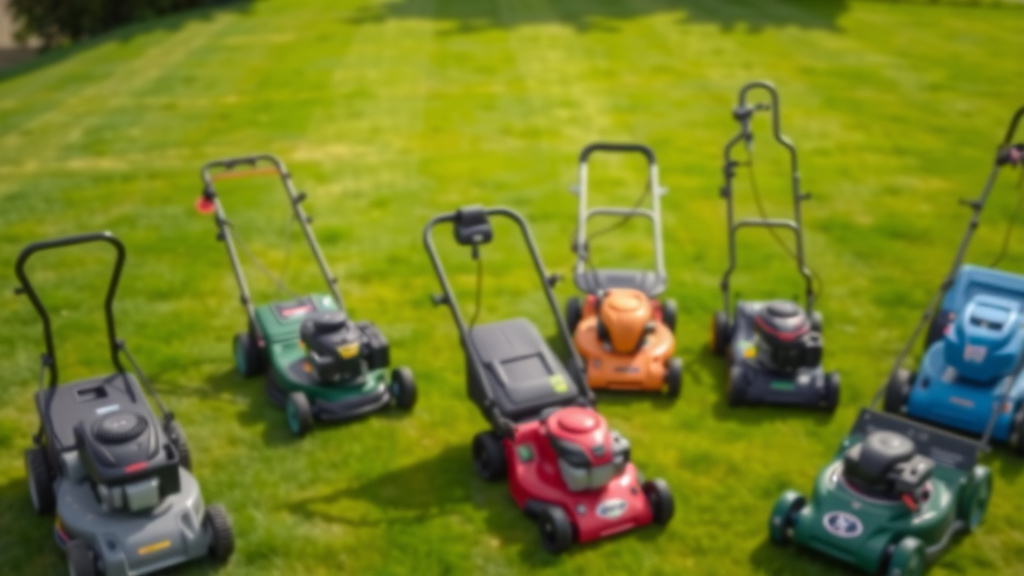
To pick the right size lawn mower, measure your yard’s acreage first. For smaller yards, a push mower with a narrow deck is ideal, while larger areas benefit from riding mowers with wider decks.
Your lawn’s size directly affects the mower deck width you need, ensuring efficient cutting and saving you time and effort.
Here’s a quick rundown of what you need to know:
- For small yards, think manual or electric push mowers with smaller decks.
- Medium yards often suit self-propelled gas mowers.
- Large properties? You will likely need a riding mower or a zero-turn.
- Consider obstacles, terrain, and how much time you have.
- The right size means less work and a healthier lawn.
How To Pick The Right Size Lawn Mower?
Picking the right size lawn mower centers on your yard’s area. A smaller yard needs a smaller mower, while a larger space requires a wider cutting deck to finish quickly.
Think of it like buying shoes. You would not wear hiking boots for a sprint, would you? The right fit makes all the difference for comfort and performance.
Why Mower Size Matters More Than You Think
Choosing the correct mower size is not just about convenience. It impacts your time, effort, and even your lawn’s health.
An undersized mower makes you work harder and longer. An oversized one might be overkill, difficult to maneuver, and could damage tight spots.
Many experts say matching the mower to your lawn is key for both efficiency and a pristine cut.
Understanding Your Yard’s Footprint
First, grab a tape measure or use an online tool to estimate your lawn’s size. Knowing your acreage is the first, most important step.
Is your lawn a small urban patch or a sprawling suburban estate? This measurement will guide your entire decision process.
What Does “Deck Width” Even Mean?
The deck width refers to the cutting path of your mower. It is how wide a strip of grass your mower can cut in one pass.
A wider deck means fewer passes across your lawn. This saves you significant time, especially on larger properties.
Imagine painting a wall. A wider roller covers more area faster, right? It is the same principle for lawn mowers.
Mower Sizes for Different Yards
Let’s break down mower sizes by common yard dimensions. This will help you pinpoint the best fit for your home.
Small Yards (Up to 1/4 Acre or Less)
Do you have a small urban yard or just a tiny patch of grass? You are in luck! You do not need a beast of a machine.
For these spaces, a push mower or a smaller electric model is perfect. Look for deck widths between 18 to 21 inches.
These mowers are easy to store, simple to operate, and typically more affordable. You will finish mowing in under an hour.
Medium Yards (1/4 to 1/2 Acre)
This is where most suburban yards fall. You need a mower with a bit more muscle and efficiency.
A self-propelled push mower is often ideal here. A deck width of 21 to 24 inches works well, balancing speed and maneuverability.
You might consider a gas-powered model for consistent power. Many research studies show self-propelled mowers reduce operator fatigue significantly (NIH).
Large Yards (1/2 Acre to 1 Acre)
If your lawn is getting serious, around half an acre to a full acre, you need a different strategy. Pushing a mower for this size is a real workout!
This is prime territory for rear-engine riding mowers or entry-level lawn tractors. Look for deck widths from 30 to 42 inches.
Riding mowers cut down your mowing time dramatically. They are an investment, but they save your back and weekend.
Very Large Yards (Over 1 Acre)
Welcome to the big leagues! For properties over an acre, you need serious cutting power and speed.
Lawn tractors or zero-turn mowers are the clear winners here. Their deck widths can range from 42 to 60 inches or even more.
Zero-turn mowers, in particular, offer incredible maneuverability and speed. They can cut mowing time by up to 50% compared to traditional tractors (Many industry reports).
Beyond Yard Size: Other Key Considerations
Your lawn’s size is primary, but it is not the only factor. Let us think about the specifics of your outdoor space.
Obstacles and Landscaping
Do you have lots of flower beds, trees, or tricky corners? A smaller, more agile mower might be better, even for a slightly larger yard.
A wide riding mower might be efficient in open spaces, but it can be a nightmare navigating around tight turns and garden features.
Terrain and Slope
Is your yard perfectly flat or more like a rolling hill? Steep slopes require mowers with good traction and sometimes even specific safety features.
Self-propelled mowers or those with all-wheel drive can be a blessing on uneven or hilly terrain. Safety is always first.
Storage Space
Where will you keep your new mower? A massive riding mower needs a garage or shed. A small electric mower might tuck away in a corner.
Always measure your storage area before buying. You do not want a shiny new mower with nowhere to park it!
Choosing Your Mower Type
Once you know your yard size and special considerations, you can pick the right mower type.
| Yard Size Category | Approximate Acreage | Recommended Mower Type(s) | Typical Deck Width |
|---|---|---|---|
| Small Yards | Up to 0.25 acre | Manual, Electric Push | 14-21 inches |
| Medium Yards | 0.25 to 0.5 acre | Gas Push, Self-Propelled | 21-24 inches |
| Large Yards | 0.5 to 1 acre | Rear-Engine Rider, Lawn Tractor | 30-42 inches |
| Very Large Yards | Over 1 acre | Lawn Tractor, Zero-Turn Mower | 42-60+ inches |
Checklist for Your Perfect Mower
Before you make a final decision, run through these quick points:
- What is my yard’s exact size? (Measure it!)
- How many obstacles or tight spots do I have?
- Is my terrain flat or does it have slopes?
- Do I have adequate storage space for the mower?
- What is my budget for purchase and maintenance?
- How much time am I willing to spend mowing each week?
Power Source: Gas vs. Electric
The power source also ties into size and convenience. Gas mowers generally offer more power and longer run times, suitable for larger yards.
Electric mowers, whether corded or battery-powered, are quieter, cleaner, and great for smaller to medium lawns. We found their battery technology keeps improving for extended use.
Conclusion
Choosing the right size lawn mower truly transforms your lawn care experience. It is about working smarter, not harder.
By considering your yard’s size, layout, and your personal needs, you will find a mower that makes cutting the grass less of a chore and more of a pleasure.
So, measure your lawn, think about those tricky spots, and pick a mower that truly fits your life.
What is the most common lawn mower deck width for suburban homes?
For average suburban homes, which often fall into the medium yard category (0.25 to 0.5 acres), a deck width of 21 to 24 inches is very common. This size provides a good balance of cutting efficiency and maneuverability.
Can I use a riding mower on a small lawn?
While technically possible, using a riding mower on a very small lawn (under 0.25 acres) is usually impractical. They are less maneuverable in tight spaces and might be overkill for the job, making a push or self-propelled mower a better choice.
Are zero-turn mowers difficult to operate for beginners?
Zero-turn mowers have a different steering system compared to traditional tractors, which can take some getting used to. Many people find them intuitive after a short practice period, but there is a slight learning curve for beginners.
How does the height of my grass affect mower size choice?
The height of your grass primarily affects the mower’s power and blade type, rather than its size. However, if your grass gets very tall or thick, a more powerful engine and a wider deck can handle it more efficiently without bogging down.
Should I consider a bagging or mulching mower for my yard size?
Most modern mowers offer both bagging and mulching options regardless of their size. For smaller yards, mulching is often preferred as it returns nutrients to the lawn. For very large yards, bagging might be necessary to avoid excessive clippings.
