
How To Put John Deere Lawn Mower In Neutral?
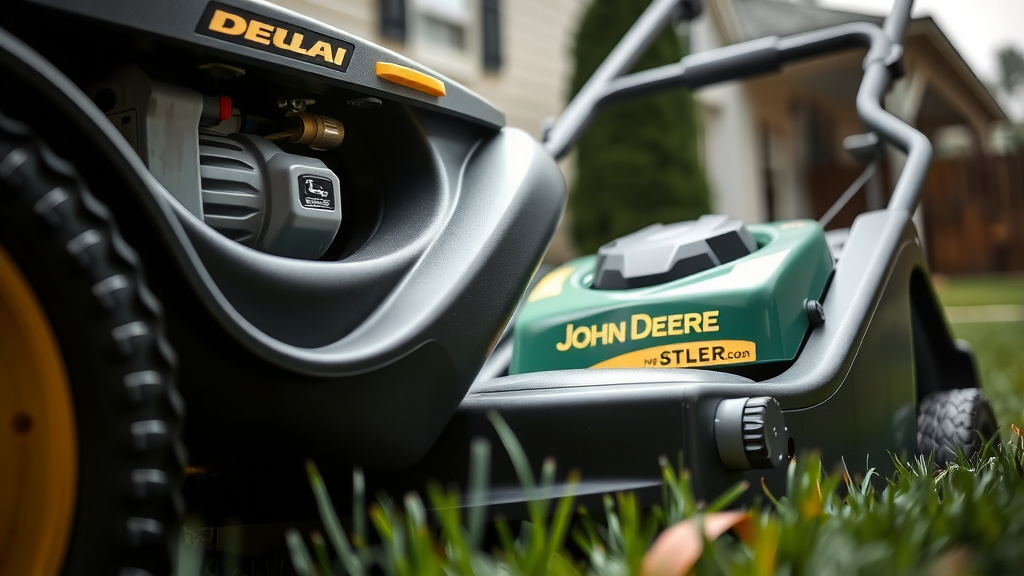
To put a John Deere lawn mower in neutral, you typically need to locate the freewheel control, often a lever or rod, usually found at the rear of the machine under the seat.
After engaging the parking brake and turning off the engine, push or pull this control to allow the mower to be moved manually without engine power.
- To move your John Deere mower by hand, simply locate the freewheel lever or rod, often at the back.
- Always set the parking brake and turn off the engine before touching any controls.
- Push or pull the lever to release the hydrostatic drive and put it in neutral.
- You should then be able to push the mower without resistance.
- Remember to disengage neutral before starting the engine again for safe operation.
How To Put John Deere Lawn Mower In Neutral?
Putting your John Deere lawn mower in neutral allows you to push or move it without the engine running. This is essential for storage, small adjustments, or if the engine won’t start.
Why Bother With Neutral? It’s All About You!
Have you ever tried pushing a locked-up mower? It feels like moving a brick wall, doesn’t it? Engaging neutral isn’t just a technical step; it’s about making your life easier and safer.
We found that many folks need to move their mowers for various reasons. Maybe you need to get it into a tight spot in the garage. Or perhaps it ran out of gas far from the shed. Neutral is your friend here.
Finding That Elusive Freewheel Control
The key to putting your John Deere in neutral lies with the freewheel control. On most riding mowers and lawn tractors, this control is usually at the rear. You might find it beneath the seat or near the back wheels.
It often looks like a small lever, a push-pull rod, or sometimes even a T-handle. This control disengages the hydrostatic transmission, letting the wheels spin freely.
It’s Like Finding a Hidden Gem
Think of it like finding the secret button for “easy mode” on your mower. We found that the exact location can vary a bit. A quick look at your owner’s manual will show you precisely where your model’s control resides.
Your Step-by-Step Guide for Riders
Ready to get your John Deere rolling? Follow these straightforward steps. It’s a simple process once you know the drill.
Parking Brake First: Safety Always Wins
Before you touch anything else, make sure your mower is on level ground. Then, firmly engage the parking brake. This is a critical safety measure (Occupational Safety and Health Administration).
You wouldn’t want your mower rolling away unexpectedly, would you? Safety is paramount.
Engine Off: A Quiet Machine is a Safe Machine
Next, turn off the engine completely. Take the key out if it’s a riding mower. For walk-behinds, make sure the engine stop lever is disengaged. You want a completely inactive machine before proceeding.
This prevents accidental starts or engagement of blades, keeping your fingers safe.
Engaging the Lever or Rod: The Big Moment!
Now, locate that freewheel control we discussed. Depending on your model, you’ll either pull the lever out or push the rod in. Some models have a T-handle you pull upward and out.
Many experts say this action disconnects the drive system from the wheels. It’s often a distinct click or movement.
Confirming Neutral: Give it a Gentle Nudge
Once you’ve engaged the control, release the parking brake. Now, try to push your mower gently. Does it move easily? If it glides without much resistance, you’ve successfully put it in neutral. Bravo!
If it still feels stuck, re-check the lever or rod. Sometimes it needs a firmer push or pull to fully engage.
Model Variations: Not All John Deeres Are Created Equal
Just like cars, John Deere mowers have different designs. A D100 series might have a slightly different mechanism than an X300 or a ZTrak. It’s a bit like comparing apples to slightly different apples.
We found that newer models often simplify these controls. Always check your specific model’s manual if you’re unsure.
| John Deere Mower Series | Typical Neutral Control Location | Action to Engage Neutral |
|---|---|---|
| 100 Series (D100-D170, E100-E180) | Rear of the machine, below the seat | Pull a small, often yellow-handled lever or rod out |
| X300/X500 Series Lawn Tractors | Rear, often a push-pull rod near the hitch plate | Push the rod inward to engage |
| ZTrak (Zero-Turn) Mowers | Often two levers on the transaxles (one for each wheel) | Push or pull levers to release hydrostatic pressure |
| Older LT/LX Series | Similar to 100 series, a pull-out rod | Pull a rod out from the rear |
Safety First: A Quick Pre-Push Checklist
Before you start pushing, take a moment for these quick checks. It’s like glancing in your rearview mirror before changing lanes – just good practice!
- Is the engine definitely off?
- Are the blades disengaged?
- Is the area clear of obstacles?
- Are you on a relatively flat surface?
- Do you have a clear path for movement?
Troubleshooting Common Hurdles
Sometimes, things don’t go exactly as planned. Don’t worry; we’ve all been there. It’s usually a quick fix.
My Lever Is Stuck! What Now?
If your freewheel lever feels stuck, don’t force it too hard. Try rocking the mower gently back and forth while attempting to engage the lever. Sometimes the transmission gears need a little wiggle room to align.
We found that a small amount of dirt or debris can sometimes hinder the mechanism. A quick visual check can help.
Mower Still Won’t Roll Easily
If you’ve engaged the neutral control and it still feels like you’re pushing against a wall, double-check the lever. Is it fully engaged? Sometimes, it might be only halfway. Also, ensure the parking brake is fully released.
For zero-turn mowers, remember you often have two transaxle levers to disengage, one for each wheel (many experts confirm this).
Maintenance Tips for a Happy Neutral
A little care goes a long way. Keeping your freewheel control in good shape means it will always work when you need it.
Many experts suggest occasional lubrication. A light spray of general-purpose lubricant on the pivot points of the lever or rod can keep things moving smoothly. We found that this prevents rust and stiffness.
Also, keep the area around the control clean. Debris can jam the mechanism. A simple brush-off after mowing can make a difference.
When to Call a Professional for Help
If you’ve tried everything and your John Deere still refuses to go into neutral, it might be time for a professional. Persistent issues could indicate a transmission problem or a deeper mechanical fault.
Don’t hesitate to contact a certified John Deere dealer. They have the specific tools and expertise to diagnose and fix the problem safely.
Your Quick Checklist to Neutralize Your Mower
- Park on level ground.
- Engage the parking brake.
- Turn off the engine completely and remove the key.
- Locate the freewheel control (lever/rod).
- Push or pull the control to engage neutral.
- Release the parking brake.
- Gently push the mower to confirm neutral.
Conclusion
Putting your John Deere lawn mower in neutral is a straightforward process once you know where to find the freewheel control and how to engage it. It’s a critical skill for moving your mower safely and efficiently around your property or into storage.
Always prioritize safety by ensuring the engine is off and the parking brake is set before you begin. A little care and attention to your mower’s controls will keep it operating smoothly for years to come. Remember, your owner’s manual is always your best specific guide!
How do I know if my John Deere mower is in neutral?
You know your John Deere mower is in neutral when you can push it with minimal effort without the engine running. If it rolls freely and doesn’t feel like the wheels are locked, you’ve successfully engaged neutral.
Can I put my John Deere mower in neutral with the engine running?
No, it’s highly advised never to attempt putting your John Deere mower into neutral with the engine running. Always turn off the engine and engage the parking brake before touching the freewheel control for safety reasons.
What is the freewheel control on a John Deere mower?
The freewheel control on a John Deere mower is a mechanical lever or rod, typically located at the rear, that disengages the hydrostatic transmission. This allows the wheels to turn freely, enabling you to push the mower manually.
Why won’t my John Deere mower move even after putting it in neutral?
If your John Deere mower won’t move after putting it in neutral, first reconfirm the freewheel control is fully engaged and the parking brake is completely released. For zero-turn mowers, ensure both transaxle levers are disengaged. If issues persist, there might be a mechanical problem requiring professional inspection.
Is it the same process for all John Deere riding mowers and zero-turns?
The general concept of engaging a freewheel control is similar, but the exact location and type of control can vary significantly between John Deere riding mowers and zero-turn models. Always consult your specific model’s owner’s manual for precise instructions.
