
How to Remove a Lawn Mower Blade?

To safely remove a lawn mower blade, firmly secure the blade, then use a wrench to turn the retaining bolt counter-clockwise while bracing the blade. This typically loosens the bolt, allowing for safe removal of the blade. Always remember to disconnect the spark plug first for safety.
You need to change your mower blade periodically for a better cut and healthier lawn. A dull blade can tear grass, leading to brown tips and even disease. Replacing it keeps your mower running efficiently and makes your weekend chores much easier.
- Safety first: always disconnect the spark plug before starting.
- Gather your tools: you’ll need the right wrench and gloves.
- Secure the blade to prevent it from spinning.
- Loosen the retaining bolt by turning it the correct way.
- Safely remove the old blade and prepare for a new one.
Let’s walk through exactly how to remove a lawn mower blade, step by step, so you can tackle this task with confidence and keep your lawn looking sharp. We’ve done the research to bring you the safest methods.
Pre-Removal Preparation for Your Mower Blade
Before you even think about touching that blade, let’s talk about getting ready. We want to make sure you’re safe and that the job goes smoothly. Think of it like packing for a trip; you wouldn’t just jump in the car without your essentials, right?
Safety First: Disconnecting the Spark Plug
This is the most critical step. Seriously, it’s not a suggestion; it’s a rule. You absolutely must disconnect the spark plug wire before doing anything else. Why? Because you don’t want your mower to accidentally start while your hands are near the blade. We found that accidental starts are a leading cause of injury during mower maintenance (Consumer Product Safety Commission).
- Locate the spark plug wire. It’s usually a thick, insulated cable connected to the top or side of the engine.
- Gently but firmly pull the wire off the spark plug. It might have a rubber boot covering it; just pull that off.
- Tuck the wire away from the spark plug. Maybe rest it on the engine housing or secure it with a cable tie so it can’t accidentally reconnect.
- Some people even remove the spark plug itself for added peace of mind.
Gathering Your Essential Tools
You wouldn’t try to hammer a nail with a banana, would you? The right tools make all the difference. We’ve put together a list of what you’ll likely need:
| Tool | Why You Need It |
|---|---|
| Work gloves (heavy-duty) | Protects your hands from sharp blades and grease. |
| Wrench (socket or adjustable) | To loosen the blade bolt. Sizes vary, so have a few options. |
| Wood block or blade brace | Secures the blade from turning while you work. |
| Wire brush | Helps clean off dirt and grass from the underside. |
| Penetrating oil (optional) | For stubborn, rusted bolts. WD-40 or similar. |
| Torque wrench (for reinstallation) | Ensures the new blade is tightened correctly. |
Having everything ready beforehand saves you trips back and forth to the garage. We usually lay everything out on a towel or tarp.
Positioning Your Mower Safely
Now, let’s get your mower into the right position. You need to access the underside where the blade is. Laying it on its side is common, but there’s a right way to do it.
- Make sure the fuel tank opening is facing upwards. This prevents gas from leaking out and making a mess.
- If your mower has a 4-stroke engine, tilt it so the carburetor is facing up. This prevents oil from flowing into the cylinder and causing starting issues later.
- Some mowers have a “maintenance position” marked on them. Check your owner’s manual if unsure.
- A sturdy workbench or sawhorse can be helpful here to elevate the mower.
The Process of Removing the Mower Blade
Okay, all prepped and ready? Now we’re getting to the main event: actually taking off that blade. Remember, the goal is to do this safely and efficiently.
Securing the Blade for Removal
You can’t just try to wrench off the bolt while the blade spins freely. You need to stop it from moving. This is where your wood block comes in handy.
- Place a sturdy piece of wood between the blade and the edge of the mower deck.
- Make sure the wood is thick enough not to slip and strong enough not to break.
- The blade should be pressed against the wood, unable to rotate.
- Some specialized blade removal tools exist that clamp onto the deck and hold the blade.
We’ve found that a 2×4 works perfectly for most standard mowers. Just make sure your fingers are clear!
Loosening the Blade Retaining Bolt
This is often the trickiest part, especially if it’s been a while since the blade was changed. The bolt holds the blade to the crankshaft.
Determining the Turn Direction
Almost all lawn mower blade bolts are “righty-tighty, lefty-loosey.” This means you’ll turn the bolt counter-clockwise to loosen it. Think of it like a standard screw.
- Hold your wrench firmly onto the bolt head.
- You’ll likely need to apply a good amount of force. Sometimes, a quick, sharp turn works better than a slow, steady push.
- If the bolt is really stuck, try spraying it with penetrating oil. Let it sit for 10-15 minutes to work its magic. We often tap the bolt head gently with a hammer a few times after applying oil; it can help the oil get into the threads.
- You might even need a ‘cheater pipe’ – a longer pipe that fits over your wrench handle – to get more leverage. Just be careful not to strip the bolt head.
You’ll know you’re making progress when you hear a satisfying “pop” or feel the bolt finally give way. That’s the moment of truth!
Removing the Old Blade
Once the bolt is sufficiently loose, you can finish taking it off. It might feel like a victory dance is in order, but stay focused.
- Unscrew the bolt completely. Keep track of any washers or spacers that might come off with it.
- Carefully slide the old blade off the shaft. Be mindful of its weight and sharpness.
- Most blades are balanced, so note which side was facing up or down. Often, the cutting edge faces towards the ground.
- Take a moment to inspect the area around the blade. Clean off any built-up grass, dirt, or debris with your wire brush. This is a great time for a quick underside cleanup.
Many people replace the blade bolt and washer when installing a new blade. Check your owner’s manual or the new blade’s instructions for this recommendation.
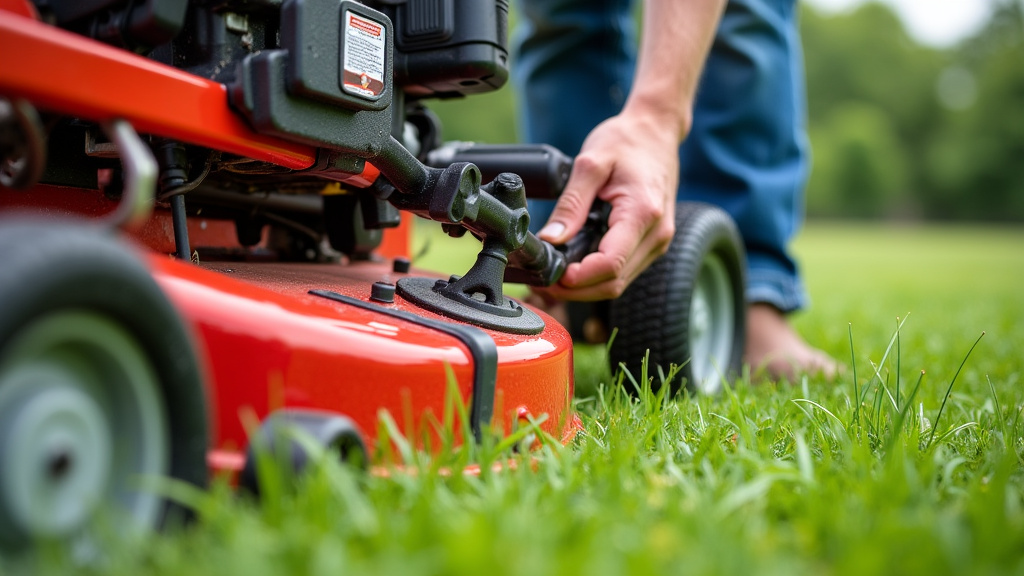
Ready for the New Blade
Congratulations, you’ve successfully removed the old blade! Now you’re ready for the exciting part: putting on the shiny new one. But that’s a story for another time. For now, take pride in knowing you’ve tackled a common mower maintenance task, all while prioritizing safety. You’re becoming quite the lawn care pro!
Quick Checklist for Blade Removal
Just a quick recap to make sure you’ve covered all your bases:
- ✅ Spark plug wire disconnected?
- ✅ Mower tilted safely (fuel tank and carburetor up)?
- ✅ Heavy-duty gloves on?
- ✅ Blade secured with a wood block?
- ✅ Bolt turned counter-clockwise with wrench?
If you checked all these boxes, you did it right. Smooth sailing, and happy mowing!
Conclusion
You’ve seen that changing your lawn mower blade isn’t as daunting as it might seem. By prioritizing safety, gathering the right tools, and carefully following each step, you can successfully remove an old blade. This simple maintenance task keeps your lawn looking its best and extends the life of your mower. You’re now equipped to tackle this chore with confidence, making your yard work a little easier and a lot more productive.
Frequently Asked Questions
How often should I remove my lawn mower blade?
You should typically remove and sharpen or replace your mower blade at least once per mowing season, or every 25 hours of use. If you hit obstacles frequently, inspect it more often for damage, even mid-season.
What if the blade bolt is completely stuck and won’t budge?
For a stubborn bolt, apply more penetrating oil and let it soak longer, even overnight. You might also need a longer breaker bar or “cheater pipe” for extra leverage. If it still doesn’t move, a professional might need to heat the bolt carefully.
Can I remove the mower blade without putting the mower on its side?
While possible, it’s generally much harder and less safe. Laying the mower on its side provides better access, stability, and visibility to the blade and bolt. Always ensure fuel and oil are prevented from spilling by tilting correctly.
What tools specifically do I need for my electric or battery-powered mower?
The tools are largely the same: gloves, a wrench for the bolt, and a block to secure the blade. The main difference is disconnecting the power source – remove the battery or unplug the cord – which is your equivalent to disconnecting a spark plug.
Is it better to sharpen or replace the blade?
If your blade has minor nicks or dullness, sharpening it is cost-effective. However, if the blade is bent, severely nicked, cracked, or has significant material loss, replacing it entirely is the safer and more effective option for a healthy lawn and mower.
