
How To Tow A Lawn Mower?
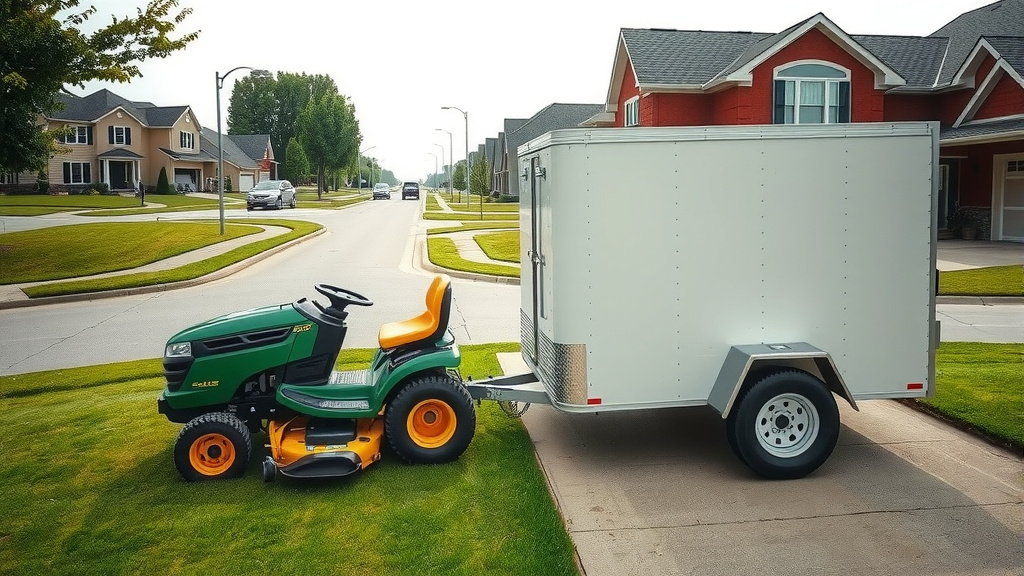
To tow a lawn mower, use a sturdy utility trailer with a proper hitch and secure the mower using heavy-duty straps over the axles or frame points.
Always drain excess fuel, disconnect the battery if possible, and ensure the mower deck is raised and locked before you begin the process of towing your lawn mower.
- Tow a lawn mower safely by selecting the right trailer and securing equipment.
- Prepare your mower: drain fuel, disconnect the battery, and secure the deck.
- Load carefully using ramps, ensuring proper balance and strong tie-downs.
- Drive cautiously, checking straps periodically during transport.
- Unload slowly and always prioritize safety at every step.
How To Tow A Lawn Mower?
Towing a lawn mower involves carefully preparing the machine and trailer, then securing it properly for safe transport.
Always prioritize safety by ensuring your equipment is rated for the mower’s weight and that all tie-downs are tight.
So, you need to move your lawn mower? Maybe it’s going for service, or you’re helping a friend across town. Towing a lawn mower might seem simple, but there’s a bit more to it than just loading it up.
We want to help you move your equipment without any mishaps. Following these steps ensures a smooth, safe journey for everyone on the road.
Safety First! Your Top Priority
Before you even think about connecting a trailer, think safety. Your personal well-being and the safety of others on the road depend on it.
Always wear appropriate safety gear, like gloves, when handling heavy equipment. Check your owner’s manuals for both your tow vehicle and the mower for specific safety notes.
Is Your Mower Ready to Roll?
Not all lawn mowers are created equal when it comes to towing. What type of mower do you have? This will affect how you prepare it for transport.
Understanding your mower’s specific features will make a big difference in the towing process. Let’s look at the main types.
Riding Lawn Mowers: Your Primary Tows
These are the most common mowers people tow. Riding mowers often have a dedicated tow point or a strong frame that works well with straps.
You’ll need to put them in neutral and disengage the parking brake once loaded. Always check the manual for towing recommendations for your model.
Zero-Turn Mowers: Special Considerations
Zero-turn mowers are heavier and sometimes wider than standard riding mowers. They often have bypass levers to allow free wheel movement for towing.
Many experts say it’s important to know your mower’s specific instructions for transport (Consumer Reports).
Push Mowers: Transport, Not Towing
You don’t typically “tow” a push mower with a trailer hitch. Instead, you transport it by loading it onto a truck bed or trailer.
For push mowers, the focus is on securing it so it doesn’t shift or fall during transit. Simple tie-downs can work wonders here.
Gathering Your Towing Gear
Having the right tools is half the battle. Think about what you need for a secure and stable tow. This helps prevent accidents and damage.
A little preparation here saves a lot of headaches later on. Let’s make sure you have everything ready.
The Right Trailer for the Job
You’ll need a utility trailer that can handle the weight and size of your mower. Check the trailer’s gross vehicle weight rating (GVWR).
Ensure your trailer’s hitch receiver matches your tow vehicle’s ball size. A properly matched setup means a much safer tow.
Essential Tie-Downs and Ramps
Good quality tie-down straps are non-negotiable. Look for straps with a working load limit (WLL) that exceeds your mower’s weight.
You’ll also need sturdy loading ramps. Many guidelines point to aluminum ramps with good grip as a solid choice (NHTSA).
Pre-Tow Mower Prep Checklist
- Check tire pressure on both mower and trailer.
- Verify trailer lights and turn signals work.
- Ensure the trailer hitch is securely locked onto the ball.
- Test trailer brakes if applicable.
- Confirm you have enough tie-down straps.
- Have wheel chocks ready for the trailer if parking on an incline.
Preparing Your Mower for Travel
Before loading, your mower needs a bit of pre-flight check. These steps are simple but make a huge difference in safety and cleanliness.
Ignoring these steps could lead to issues like fuel spills or damaged components during transit. A few minutes of prep can save you hours later.
Managing Fuel and Fluids
It’s always a good idea to run the fuel tank low before transport. Emptying it completely prevents spills and reduces fire risk.
Check for any fluid leaks, like oil or hydraulic fluid, before moving. Address them beforehand to avoid messes on your trailer.
Securing Blades and Deck
Raise the mower deck to its highest position and lock it if possible. This prevents it from scraping the ground or trailer during loading.
Ensure the blades are disengaged and cannot spin. Some models have a blade engage lever that should be off.
Loading Your Mower Onto the Trailer
Loading is often the riskiest part of the towing process. Take your time and be extremely careful. Don’t rush this step.
A slow, controlled approach is always better than a fast, risky one. Have someone spot you if you’re unsure.
Using Ramps Safely
Position your ramps squarely against the trailer and secure them so they won’t slip. Ensure the ramps are wide enough for your mower’s wheels.
Drive the mower up slowly and steadily, keeping your body centered. If you feel uncomfortable, walk beside it or use a winch.
Finding the Sweet Spot for Balance
Once on the trailer, position the mower so that roughly 60% of its weight is over the front half of the trailer. This creates “tongue weight” for stable towing.
Too much weight at the back can cause the trailer to sway dangerously. Too much at the front can strain your tow vehicle’s hitch.
How to Secure Your Mower
This is where your tie-down straps shine. Proper securing prevents movement, which is key to a safe journey. Think of it like giving your mower a firm hug.
You want your mower to feel like it’s a part of the trailer. This means it shouldn’t be able to shift forward, backward, or side-to-side.
| Tie-Down Method | Description | Benefit |
|---|---|---|
| Over-Axle Straps | Loop straps directly over mower axles or frame. | Direct downforce, strong hold. |
| Wheel Chocks + Straps | Place chocks around wheels, then strap over tires. | Prevents rolling, less pressure on suspension. |
| Cross-Strap Pattern | Strap from mower front-left to trailer rear-right, etc. | Resists movement in all directions. |
Tie-Down Techniques That Work
Use at least four tie-down points, one at each corner of the mower. Crossover strapping offers extra stability, as we found in our research.
Secure straps to sturdy frame points on the mower, not just fenders or plastic parts. These weaker areas can break off.
Tighten the straps evenly until the mower feels completely rigid on the trailer. Give it a good push and pull test to be sure.
Driving with a Towed Mower
Once everything is secured, you’re ready to hit the road. But remember, driving with a trailer is different than driving without one.
Adjusting your driving habits is a small change that brings big safety rewards. Your journey will be much calmer.
Mind Your Speed and Turns
Drive slower than usual, especially around curves and turns. Trailers can sway if you go too fast or take corners too sharply.
Allow more distance for braking. The added weight of the mower and trailer means you’ll need more time and space to stop.
Check-Ins During Your Drive
Stop after the first 10-15 miles and re-check all your tie-down straps. They sometimes loosen a bit after the initial bumps.
Regularly check them during longer trips. A quick glance at your mirrors for any shifting can also be helpful.
Unloading Your Mower
You’ve arrived! Now, the unloading process needs just as much care as the loading. Don’t let your guard down now.
Remove the tie-downs first, then position your ramps securely again. Back off slowly, keeping the mower straight.
Once the mower is off the trailer, move it to a safe, level spot before performing any checks or maintenance.
Common Towing Pitfalls to Avoid
Many mistakes are easy to avoid with a little awareness. Don’t be that person with a wobbly trailer or a shifting load.
Forgetting to latch the hitch, using worn-out straps, or overloading your trailer are common errors. Always double-check everything.
Conclusion
Towing a lawn mower doesn’t have to be a stressful ordeal. By following these steps, you’re setting yourself up for a safe and successful transport experience.
Remember, preparation, the right equipment, and a careful approach are your best friends. Prioritize safety above all else, and your lawn mower will arrive at its destination sound and secure.
Happy towing, and may your lawn always be perfectly manicured!
Can I tow a lawn mower without a trailer?
Generally, no. A proper trailer is needed for towing a lawn mower safely and legally. Attempting to tow a mower directly behind a vehicle without a trailer is unsafe and could lead to damage or accidents.
What kind of straps should I use to secure a lawn mower?
You should use heavy-duty ratchet straps with a high working load limit (WLL) that exceeds the weight of your mower. Avoid bungee cords or thin rope, as they are not strong enough to secure heavy equipment.
Do I need to disconnect the battery before towing a riding mower?
It’s a good practice to disconnect the battery, especially for longer trips or if there’s any risk of electrical shorts. This prevents unexpected starts and reduces fire hazards during transport.
How do I know if my vehicle can tow my lawn mower?
Check your vehicle’s owner’s manual for its maximum towing capacity. Compare this to the total weight of your lawn mower plus the trailer. Your tow vehicle’s capacity must be greater than this combined weight.
Is it better to load a mower front-first or rear-first onto a trailer?
Loading front-first is usually preferred. This allows for better visibility when driving up ramps and helps position the engine (the heaviest part) over the front half of the trailer, contributing to proper tongue weight and stability.
