
How To Transport Lawn Mower In Car?
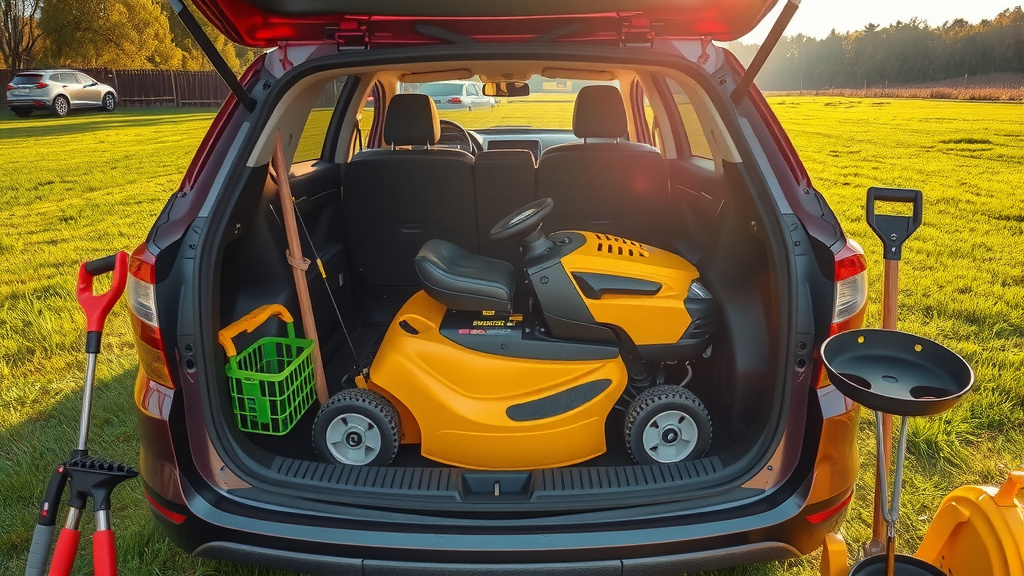
To transport a lawn mower in a car safely, first drain all fuel and oil, disconnect the spark plug, and clean it thoroughly. Then, load it upright if possible, or on its side with the carburetor facing up to prevent leaks.
Always secure your lawn mower firmly inside your vehicle using straps, ropes, or blocking materials to prevent any movement during transit.
- Drain all gasoline and oil to avoid spills and fire hazards.
- Disconnect the spark plug wire for safety against accidental starting.
- Clean off grass and dirt to keep your car tidy and reduce mess.
- Load the mower upright or on the correct side (carburetor up) to prevent fluid leaks.
- Secure it tightly with straps or blocks so it cannot shift during travel.
How To Transport Lawn Mower In Car?
Transporting a lawn mower in your car requires careful preparation and loading to ensure safety. You must handle fuel and oil correctly, secure the machine, and choose the best position for your specific vehicle.
Why Does Transporting a Mower Need Care?
Moving a lawn mower isn’t like moving a box of clothes. It has fluids, a heavy engine, and sharp blades. Neglecting proper steps can cause messy leaks, damage to your car, or even a fire hazard.
Understanding the Risks
Imagine a spilled gallon of milk inside your car; now picture gasoline. The dangers are real, including spills, fumes, and the mower shifting. Many experts emphasize safety first when moving any motorized equipment.
Preparation is Key: Before You Load
Before you even think about lifting that mower, some essential steps protect both your car and yourself. Think of it as preparing for a safe road trip.
Drain the Fuel
Gasoline is flammable and fumes can fill your car, posing a risk. You need to empty the fuel tank completely. We found that draining all gasoline is a top recommendation across various safety guidelines (OSHA).
Why Bother with Fuel?
Leaving fuel in the tank is like carrying a leaky cup of coffee in your car. Even small bumps can slosh fuel out. The fumes alone can be dangerous, especially in an enclosed space like a car trunk or back seat.
Check and Drain Oil (If Laying Down)
If you plan to lay the mower on its side, draining the oil is a good idea. For upright transport, you might be able to skip this step. However, oil leaks can be very messy to clean up.
Oil Leakage Concerns
Oil can seep out of engine vents if the mower isn’t kept upright or on the correct side. This makes a dreadful stain on your car’s upholstery or cargo area. Many repair shops advise draining oil for extended transport where tipping is likely.
Disconnect the Spark Plug
This simple step prevents the engine from accidentally starting. You just pull off the spark plug wire. It ensures the mower stays completely off while you’re handling it.
Clean Your Mower Thoroughly
No one wants grass clippings and dirt all over their car. Take a moment to brush or hose off your mower. A clean mower means a cleaner car interior. This also helps you spot any loose parts.
Keeping Your Car Clean
You can also place a tarp, old blanket, or cardboard under the mower. This creates an extra barrier against any residual dirt or minor drips. We found this practice saves a lot of cleanup time later.
- Remove loose grass from the deck.
- Brush off dirt from wheels and engine.
- Wipe down exterior surfaces.
- Check for any small stones caught in the blades.
- Place a protective tarp in your car.
Choosing the Right Vehicle
Not all cars are created equal for mower transport. The type of vehicle you have dictates how you can safely move your machine.
Sedans and Small Cars
Transporting a standard push mower in a sedan can be challenging. You often need to fold handles and use the back seat or trunk. This option typically means laying the mower on its side, which requires draining all fluids.
SUVs, Hatchbacks, and Wagons
These vehicles generally offer more space and height. An SUV or hatchback often allows you to keep the mower upright, or at least load it more easily. This reduces the risk of oil or fuel leaks significantly.
Trucks and Trailers
Undoubtedly, a truck bed or a trailer is the easiest way to transport a lawn mower. It provides ample space, easy loading, and ventilation for any lingering fumes. You can easily keep the mower upright and secure it well.
| Vehicle Type | Loading Ease | Fluid Risk | Space Available |
|---|---|---|---|
| Sedan | Difficult | High | Limited |
| SUV/Hatchback | Moderate | Medium | Good |
| Truck/Trailer | Easy | Low | Ample |
Loading Your Lawn Mower Safely
Now that your mower is prepped and your vehicle chosen, it’s time to get it inside. This step is where many people make mistakes.
Upright is Best
If your vehicle has enough vertical space, always keep the mower upright. This is the safest position for preventing any fluid leaks, even if you thought you drained everything. It mimics how the mower typically sits.
If Laying Down: Which Side is Up?
Sometimes, laying the mower down is your only option. But don’t just flop it over! There’s a right way to do it. Think of it like a puzzle piece fitting into place.
The Carburetor Side Up Rule
Many experts advise laying the mower on its side with the carburetor facing upwards. This prevents fuel from leaking into the air filter or muffler. We found that following this rule significantly reduces post-transport starting problems (Briggs & Stratton service manuals).
Secure It Tightly
Once loaded, the mower must not move. Use strong bungee cords, ratchet straps, or ropes to tie it down. You can loop these around the handles or the sturdy frame parts.
Preventing Movement
Consider adding cardboard boxes, old tires, or even towels around the mower. These act as buffers to fill empty spaces. This extra step keeps the mower from sliding or rolling into other items or the vehicle’s interior walls.
During the Drive
With the mower loaded and secured, your journey begins. A smooth drive ensures everything stays in place.
Drive Carefully
Avoid sudden stops, sharp turns, or speeding. Drive as if you’re carrying a delicate package. You want to minimize any jostling that could loosen straps or cause spills.
Monitor for Issues
Every now and then, if safe to do so, check your rearview mirror. Listen for any unusual sounds. If you smell gasoline, pull over immediately to inspect the situation. Safety is always the priority.
Unloading and Aftercare
You’ve arrived! Unloading needs the same care as loading to avoid mishaps.
Safe Unloading Practices
Take your time. Get help if the mower is heavy. Release straps carefully. Once out, do a quick visual check for any immediate leaks or damage. We found that rushing this step often causes small accidents.
Reconnecting and Refueling
After unloading, reconnect the spark plug wire. Then, refill the fuel and oil if you drained them. Allow a few minutes for fluids to settle before attempting to start the mower. This gives everything time to return to its proper place.
Checklist for Safe Mower Transport
Here’s a quick reminder to make sure you’ve covered all your bases:
- Drain all fuel from the tank.
- Drain oil if the mower will lay on its side.
- Disconnect the spark plug wire.
- Clean off grass and debris thoroughly.
- Lay down a protective tarp or cardboard.
- Load upright if possible, or carburetor side up.
- Secure the mower tightly with straps or ropes.
- Drive slowly and avoid sudden movements.
- Inspect for leaks during and after transport.
Conclusion
Transporting a lawn mower in your car doesn’t have to be a stressful ordeal. By taking a few extra minutes to prepare, load, and secure your equipment properly, you can avoid messy spills, potential damage, and even safety risks. Remember, a little planning keeps your car clean and your mower ready for action. Follow these steps, and you’ll get your lawn mower from point A to point B safely every time. Your peace of mind, and your car’s interior, will thank you.
FAQs
Is it OK to put a lawn mower in the back of an SUV?
Yes, you can put a lawn mower in the back of an SUV, especially larger models. Ensure all fluids are drained and the spark plug is disconnected. Place a tarp down and secure the mower tightly so it cannot shift during your drive. Keeping it upright is ideal if space allows.
Can I transport a riding lawn mower in a minivan?
Transporting a riding lawn mower in a minivan is generally not recommended due to its size and weight. A riding mower is too large and heavy for most minivan interiors. You would likely need a truck or a trailer for safe and proper transport.
How long does fuel need to be drained before transport?
You should drain all fuel until the tank is empty. The process itself only takes a few minutes using a siphoning pump or by running the engine until it stops. Ensure the tank is dry before loading the mower.
What if my mower starts leaking oil during the drive?
If your mower starts leaking oil during the drive, pull over at the nearest safe spot. Inspect the leak source. If it’s a minor drip, you might be able to put down more absorbent material. For significant leaks, it might be best to call for assistance to prevent further damage or safety issues.
Can I just lay my mower on its side without draining fluids?
No, laying your mower on its side without draining fluids is strongly advised against. This action almost guarantees fuel and oil leaks into your car, creating a mess and a potential fire hazard. Always drain fluids if you must transport it on its side.
