
Is a Self-propelled Mower Worth the Extra Cost?
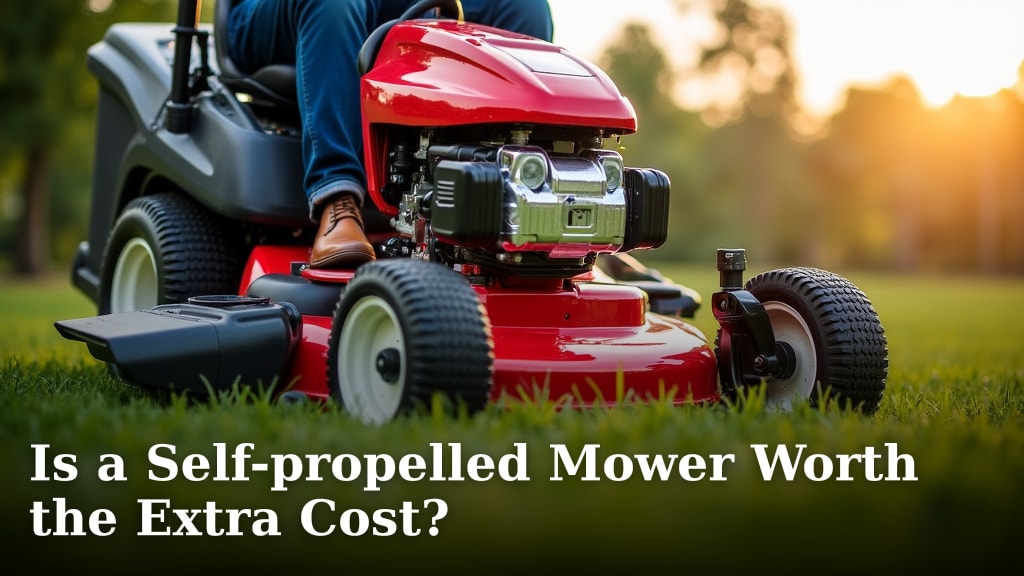
Yes, a self-propelled mower is often worth the extra cost, especially if you have a larger lawn or struggle with pushing. They take the hard work out of mowing. You simply walk behind it, and the mower does the driving for you.
While the initial price tag might seem higher, consider the long-term benefits. Many homeowners find the reduced physical strain a major plus. It can make lawn care feel less like a chore and more manageable. You’ll also likely finish mowing faster.
- Self-propelled mowers take the pushing effort away.
- They are ideal for larger lawns and sloped yards.
- They can significantly reduce the physical strain of mowing.
- You can often finish mowing your lawn more quickly.
Let’s break down whether a self-propelled mower is the right choice for your yard and budget.
Is a Self-Propelled Mower a Smart Investment?
For many homeowners, the idea of a mower that drives itself sounds like a dream. You’re probably wondering if the higher price tag is truly justified. We’ve researched this extensively, and the answer often boils down to your lawn’s size and your physical comfort.
A self-propelled mower takes the pushing effort out of lawn care. The engine powers both the blades and the wheels. You simply guide it where you want it to go. This can make a world of difference, especially if you have a large yard or hilly terrain.
Understanding How Self-Propelled Mowers Work
Think of a self-propelled mower like a car for your grass. Its engine is strong enough to move itself forward, so you don’t have to do the heavy lifting. This means less strain on your body and more time enjoying your yard.
Front-Wheel Drive vs. Rear-Wheel Drive
There are two main types of self-propelled systems: front-wheel drive (FWD) and rear-wheel drive (RWD). Each has its own strengths and weaknesses, influencing how you’ll maneuver the mower. There are two main types of self-propelled systems: front-wheel drive (FWD) and rear-wheel drive (RWD).
Front-Wheel Drive (FWD)
FWD mowers are great for maneuverability. The front wheels pull the mower forward. This makes them easy to turn and pivot. You can lift the front wheels to go over bumps or change direction quickly. Many find this style ideal for yards with many obstacles, like trees or garden beds.
Rear-Wheel Drive (RWD)
RWD mowers offer excellent traction. The rear wheels provide the main driving force. This is particularly helpful on hills or when the grass is thick and wet. They tend to have a more stable feel, pushing forward with consistent power. Some models also offer variable speed control.
Variable Speed Control
Many self-propelled models come with variable speed settings. This allows you to adjust how fast the mower moves. You can set a comfortable walking pace for yourself. This feature is a game-changer for maintaining a consistent mowing speed, regardless of your walking gait. It prevents the mower from racing ahead of you.
Key Benefits of Choosing a Self-Propelled Mower
The benefits extend beyond just saving your arms. Self-propelled mowers can make lawn care more accessible and less physically taxing for a wider range of people.
Reduced Physical Strain
This is perhaps the biggest advantage. Pushing a traditional mower, especially a larger one, can be exhausting. We found that for individuals with back issues, joint pain, or those who simply want to conserve energy, a self-propelled mower is a fantastic option. It takes the ‘push’ out of ‘push mower’, making mowing feel less like a chore and more manageable (Cleveland Clinic).
Faster Mowing Times
Because the mower propels itself, you can often cover your lawn more quickly. You’re not expending energy pushing; you’re just walking. This means you can get the job done in less time. Many users report finishing their mowing tasks significantly faster than before.
Ideal for Sloped or Uneven Lawns
If your yard has hills or slopes, a self-propelled mower is almost a necessity. Pushing uphill can be extremely difficult. A self-propelled system provides the power needed to ascend inclines with ease. It also offers better control on downhill sections, preventing the mower from getting away from you. This enhanced control can also help prevent accidents (CDC).
Easier for Larger Lawns
For lawns that are a quarter-acre or larger, the difference is palpable. Pushing a mower across a vast expanse can turn a weekend chore into a lengthy workout. A self-propelled model significantly reduces the fatigue associated with mowing a big yard. You’ll feel less tired and more accomplished.
Considering the Extra Cost: Is It Worth It?
Let’s talk about the elephant in the room: the price. Self-propelled mowers typically cost more than their push-behind counterparts. The exact difference can range from $100 to $300 or more, depending on the brand and features.
So, when does that extra cost become a smart investment rather than just an expense? It hinges on your personal circumstances and your lawn’s needs.
When the Extra Cost Makes Sense
You’re likely to find a self-propelled mower to be worth the investment if:
- Your lawn is larger than 1/4 acre.
- Your yard has significant slopes or hills.
- You experience physical limitations that make pushing difficult.
- You want to save time and energy mowing.
- You find mowing to be a physically taxing activity.
When a Push Mower Might Suffice
Conversely, you might be perfectly happy with a standard push mower if:
- Your lawn is small and relatively flat.
- You enjoy the physical activity of mowing.
- Your budget is a primary concern.
- You have no trouble pushing and maneuvering a mower.
We found that for many, the increased ease of use and reduced physical demand justifies the higher upfront cost. It’s an investment in your comfort and your ability to maintain your property.
Comparing Features and Price Points
When you look at self-propelled models, you’ll see a range of features that influence the price. Basic models will offer the self-propel function, while premium versions might include electric start, mulching capabilities, bag collection, and premium engine brands.
To help you visualize the options, consider this general breakdown:
| Mower Type | Typical Price Range (USD) | Key Features |
|---|---|---|
| Basic Push Mower | $250 – $400 | Engine, blades, wheels. Simple operation. |
| Basic Self-Propelled (FWD/RWD) | $350 – $550 | Engine, blades, wheels, self-propel system. |
| Mid-Range Self-Propelled | $500 – $700 | Variable speed, electric start, better deck material, mulching/bagging options. |
| Premium Self-Propelled | $700+ | All mid-range features plus high-performance engines, durability, often wider cutting decks. |
As you can see, the self-propelled function adds a noticeable amount to the cost. However, the mid-range options often provide the best balance of features and value for most homeowners.
Making Your Final Decision: A Quick Checklist
To help you decide if a self-propelled mower is the right fit for you, run through this quick checklist. Be honest with yourself about your lawn and your comfort levels.
- Assess your lawn’s size: Is it small, medium, or large?
- Evaluate your yard’s terrain: Is it flat, or does it have hills?
- Consider your physical ability: How much effort can you comfortably exert?
- Think about your time: How much time do you want to spend mowing?
- Review your budget: What is your comfortable spending limit?
- Prioritize your needs: Is reducing physical strain or saving time more important?
By answering these questions, you’ll gain a clearer picture of whether the extra cost of a self-propelled mower aligns with your needs and will make your lawn care routine significantly easier.
Conclusion
Ultimately, a self-propelled mower often justifies its higher price tag. If you’re dealing with a larger yard, challenging slopes, or simply want to reduce the physical toll of lawn care, the investment makes sense. You’ll likely spend less time and energy making your lawn look great. Consider your specific lawn needs and personal comfort when making your choice. Your next step is to assess your yard’s size and terrain to see if a self-propelled model will truly simplify your routine.
Frequently Asked Questions
Will a self-propelled mower actually make mowing faster?
Yes, a self-propelled mower can help you finish mowing faster. Since you’re not expending energy pushing, you can maintain a consistent walking pace. This often means covering your lawn in less time than you would with a manual push mower.
Are self-propelled mowers harder to store than push mowers?
Generally, no. Self-propelled mowers are typically the same size and weight as comparable push mowers. Their storage footprint is usually similar, so you shouldn’t encounter significant storage challenges.
How much more do self-propelled mowers typically cost?
You can expect to pay about $100 to $300 more for a self-propelled mower compared to a similar manual push mower. This price difference can increase with added features like electric start or variable speed control.
Is front-wheel drive or rear-wheel drive better for a self-propelled mower?
Front-wheel drive offers better maneuverability, making it easier to turn and pivot around obstacles. Rear-wheel drive provides superior traction, which is especially helpful on hills or thick grass.
Can I turn off the self-propel feature if I want to push it myself?
Yes, most self-propelled mowers allow you to disengage the drive system. This gives you the option to push the mower manually when needed, such as when you want to move it a short distance without the engine engaged.
