
Is a Zero-turn Mower Worth It?
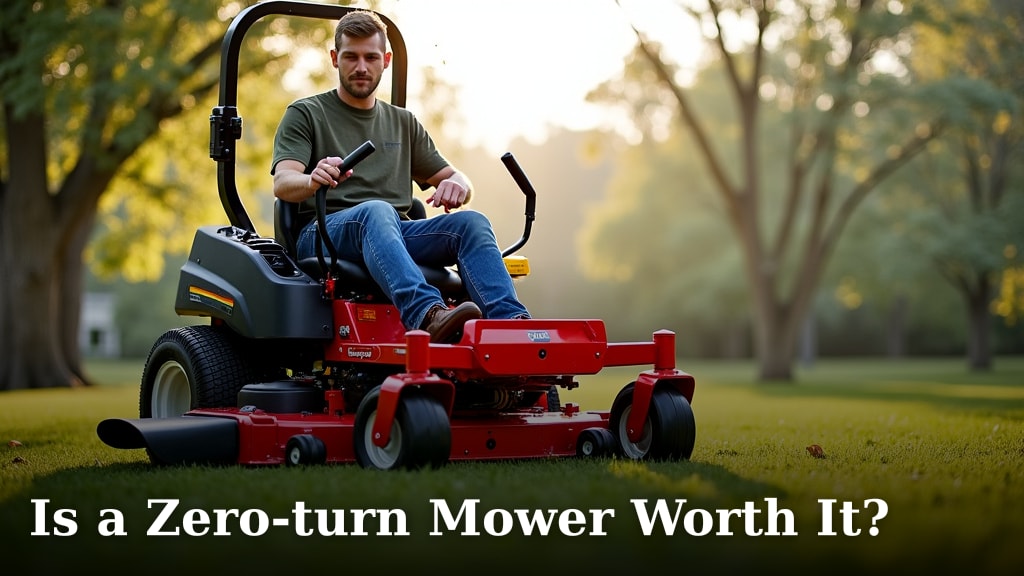
Yes, a zero-turn mower is worth it for many homeowners, especially those with larger yards or tricky landscapes. These mowers offer unmatched speed and maneuverability, cutting down your mowing time significantly.
You’ll find that zero-turn mowers are designed for efficiency and precise cuts. They help you navigate around obstacles like trees and flowerbeds with ease. We looked into what makes these mowers so popular among homeowners.
- Zero-turn mowers save you time.
- They offer superior maneuverability.
- You get a cleaner, more precise cut.
- They are great for larger properties.
- Consider your yard size and budget.
Let’s dive into all the details and help you decide if a zero-turn mower is the right choice for your lawn care needs.
Is a Zero-Turn Mower a Smart Buy for Your Yard?
Deciding if a zero-turn mower is right for you boils down to a few key factors about your property and your priorities. Let’s explore what makes these machines stand out and if they align with your lawn care needs.
The Need for Speed: How Zero-Turns Save Time
One of the biggest reasons people consider a zero-turn mower is the promise of faster mowing times. And it’s a promise they typically deliver on. We found that these mowers can cut your time behind the handles by a significant margin compared to traditional lawn tractors.
Unmatched Maneuverability and Efficiency
Imagine turning on a dime – that’s essentially what a zero-turn mower does. Its independent wheel motors allow each drive wheel to rotate at a different speed, even in opposite directions. This means you can pivot in place, without needing to make wide, sweeping turns.
- You can cut around trees and flowerbeds with fewer passes.
- No need to backtrack over previously cut areas.
- The ability to navigate tight spaces easily reduces manual trimming.
Think about how many times you turn your current mower. Each turn takes time. With a zero-turn, those movements become incredibly efficient, allowing you to cover more ground in less time. It’s like comparing a go-kart to a tractor trailer in a tight parking lot – one is simply more agile.
Precision Cutting and a Professional Finish
Beyond speed, zero-turn mowers are renowned for their ability to deliver a superior cut quality. This is often due to their deck design and the way they move across your lawn.
Achieving a Beautiful Lawn Every Time
When you’re able to make clean, straight lines and tight turns, your lawn ends up looking more uniform and polished. We found that the precise control offered by a zero-turn helps you avoid scalping the grass or missing spots, leading to a much more consistent appearance.
Many owners report that their lawns look like they were professionally maintained after switching to a zero-turn. This isn’t just about speed; it’s about the quality of the work itself. You’re getting a cleaner, crisper edge around obstacles and a more even cut across the entire property.
Consider Your Yard Size and Layout
While zero-turns are fantastic, they aren’t for everyone. Your specific yard characteristics play a huge role in determining if one is a worthwhile investment for you.
When a Zero-Turn Shines Brightest
If you have a larger property, typically an acre or more, a zero-turn mower really starts to pay off. The time savings become substantial. Similarly, if your yard has lots of obstacles – trees, garden beds, play sets, or winding paths – the maneuverability is a game-changer.
Imagine trying to navigate a traditional riding mower around a dozen trees. You’d spend half your time reversing and repositioning. A zero-turn allows you to simply zip around each one with minimal effort. This makes yard work feel less like a chore and more like a satisfying task.
When a Traditional Mower Might Be Better
On the other hand, if you have a very small, simple, flat yard, a zero-turn might be overkill. For properties under half an acre with few obstacles, the benefits might not outweigh the additional cost. A good lawn tractor or even a push mower could be a more economical choice for you.
We found that smaller, flatter yards don’t offer enough challenges for a zero-turn to truly show off its capabilities. You might not see the significant time savings that larger, more complex yards experience. It’s like buying a race car for city driving; it’s capable, but you might not use its full potential.
Cost vs. Benefit: The Financial Aspect
Let’s be honest, zero-turn mowers are generally more expensive than their traditional riding mower counterparts. This is a significant factor in your decision-making process.
Initial Investment and Long-Term Value
The upfront cost can be a deterrent. Entry-level zero-turns often start where mid-range lawn tractors leave off. However, it’s important to look beyond just the purchase price. Consider the long-term value. Are you saving time? Is your lawn healthier? Are you enjoying the process more?
Many homeowners view a zero-turn as an investment in their free time and the aesthetic appeal of their property. We found that the efficiency gains can free up several hours a month, which for some, is priceless. Plus, a well-maintained zero-turn can offer a good resale value.
Operating Costs and Maintenance
Operating costs are generally comparable to traditional riding mowers. Fuel consumption will depend on engine size and your mowing habits. Maintenance is also similar, requiring oil changes, blade sharpening, and occasional belt replacements. However, some specialized parts or repairs might be slightly more expensive due to their advanced steering system (Consumer Reports).
It’s always a good idea to factor in the cost of routine maintenance when budgeting for any piece of outdoor power equipment. Think of it like owning a car; regular tune-ups keep it running smoothly and extend its life.
Learning Curve and Ease of Use
Operating a zero-turn mower is different from driving a car or a traditional lawn tractor. It uses lap bars instead of a steering wheel, which can take some getting used to.
Getting Comfortable with the Controls
When you first sit on a zero-turn, it might feel a little strange. You push both levers forward to go straight, pull them back to stop or reverse, and manipulate them independently to turn. It’s a bit like driving a tank! But don’t worry, the learning curve is typically short.
We found that most people get the hang of it within an hour or two of practice. Start in an open area, away from obstacles, and practice basic movements. You’ll quickly develop the muscle memory needed for precise control. Soon, it will feel as natural as driving your car.
Making Your Decision: A Quick Checklist
To help you decide if a zero-turn mower is worth it for your specific situation, consider these points:
- Do you have a yard larger than half an acre?
- Does your property have numerous trees, garden beds, or other obstacles to navigate?
- Is saving time on your mowing tasks a high priority for you?
- Are you looking for a more professional and manicured look for your lawn?
- Are you comfortable with a slightly higher initial investment for long-term benefits?
- Are you willing to learn a new driving style for improved maneuverability?
If you answered “yes” to most of these questions, a zero-turn mower is very likely a valuable addition to your lawn care arsenal.
Conclusion
So, is a zero-turn mower worth it for you? We’ve seen that for many homeowners, the answer is a resounding yes. If you have a larger yard with obstacles and value your time, its speed and maneuverability can transform your lawn care experience. You’ll likely enjoy a more precise cut and a healthier-looking lawn.
While the initial cost is higher, consider the long-term benefits of time saved and a beautifully maintained property. Take an honest look at your yard’s size and complexity. Then, perhaps, visit a dealer to even try one out yourself. You might just find that a zero-turn mower is the perfect upgrade for your outdoor space.
Frequently Asked Questions
What’s the typical lifespan of a zero-turn mower?
The lifespan of a zero-turn mower can vary widely based on usage, maintenance, and brand. With proper care, many residential models can last 10 to 15 years, or even longer. Commercial models are built for heavier use and often exceed these numbers.
Are zero-turn mowers difficult to maintain?
No, they are generally not difficult to maintain. Routine maintenance is similar to traditional riding mowers, including oil changes, filter replacements, and blade sharpening. Access to components might differ, but basic tasks remain straightforward for most homeowners.
Can zero-turn mowers handle slopes or hills?
Zero-turn mowers can handle gentle slopes, but they are not ideal for steep hills. Their steering mechanism, which relies on independent wheel speed, can make them less stable on aggressive inclines. Always check the manufacturer’s recommendations for maximum safe slope angles.
Do zero-turn mowers come with different engine options?
Yes, zero-turn mowers offer a variety of engine options, ranging from smaller horsepower engines for residential use to powerful commercial-grade engines. Engine size often correlates with the mower’s deck size and intended use, impacting performance and speed.
Is it common for zero-turn mowers to have attachments?
Many zero-turn mowers can accommodate various attachments, though usually fewer than traditional lawn tractors. Common attachments include bagging systems, mulching kits, and pull-behind dethatchers or spreaders. Always verify compatibility with your specific mower model.
