
What Is the Best Fertilizer Spreader for Small Lawns?
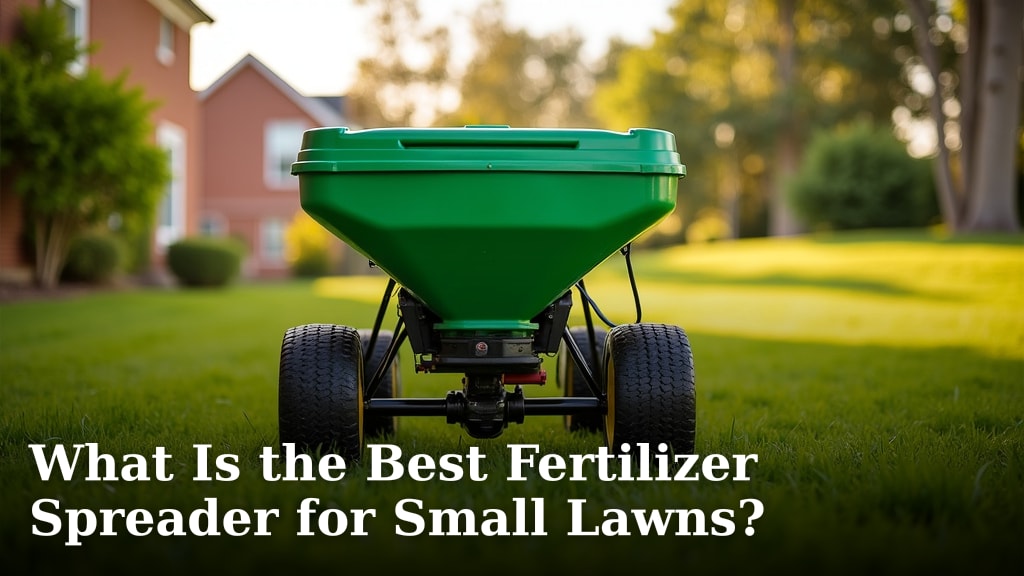
For small lawns, the best fertilizer spreader is typically a broadcast spreader, especially a handheld or push model, because they offer the most control and are easy to maneuver in tighter spaces. These spreaders allow you to evenly distribute granular fertilizer, seed, or ice melt without wasting product. You’ll get a professional-looking result without a huge investment.
Choosing the right spreader can seem tricky, but it’s mostly about matching the tool to your lawn’s size and your personal preference. We’ve researched many options and found that for lawns under 5,000 square feet, a smaller, more manageable spreader is usually the way to go. This helps you avoid over-fertilizing, which can harm your grass and the environment, and ensures you don’t spend more than you need to on a tool. Our guide on how often you should fertilize your lawn can help you determine the best schedule.
- Smaller lawns benefit most from broadcast spreaders.
- Handheld and push models offer excellent control for tight areas.
- Even distribution prevents lawn damage and product waste.
- Choose a spreader sized for your lawn for best results.
Let’s walk through what makes a good fertilizer spreader for your small lawn and which types we found work best.
Choosing the Right Spreader for Your Small Yard
So, you’ve got a petite patch of green, and you’re ready to give it some love with fertilizer or seed. Great idea! But which spreader is the best fertilizer spreader for your cozy lawn? We’ve done the digging, and the answer usually comes down to a few key factors that make life easier and your lawn happier.
For most small lawns, under 5,000 square feet, you’ll find that a broadcast spreader is your best friend. Think of it as the Goldilocks of spreaders – not too big, not too small. It’s designed to cast material evenly over an area. The real magic for smaller spaces? The handheld or push models. They give you the precision you need without overwhelming your yard.
Types of Fertilizer Spreaders: What Works for You?
When you’re shopping for a spreader, you’ll see a few main types. Understanding them helps you pick the perfect match for your yard’s size and your own physical comfort.
Broadcast Spreaders: The All-Arounder
Broadcast spreaders are the most common and for good reason. They work by flinging granular material in a wide arc. This is great for covering ground quickly.
Handheld Broadcast Spreaders: Mighty Mites
These are like a salt shaker on steroids. You crank a handle, and it disperses the fertilizer. They’re lightweight and perfect for very small lawns or touching up spots. Think of them as your go-to for precision work. We found they are fantastic for areas up to 1,000 square feet. Plus, they’re budget-friendly!
Push Broadcast Spreaders: Your Personal Lawn Butler
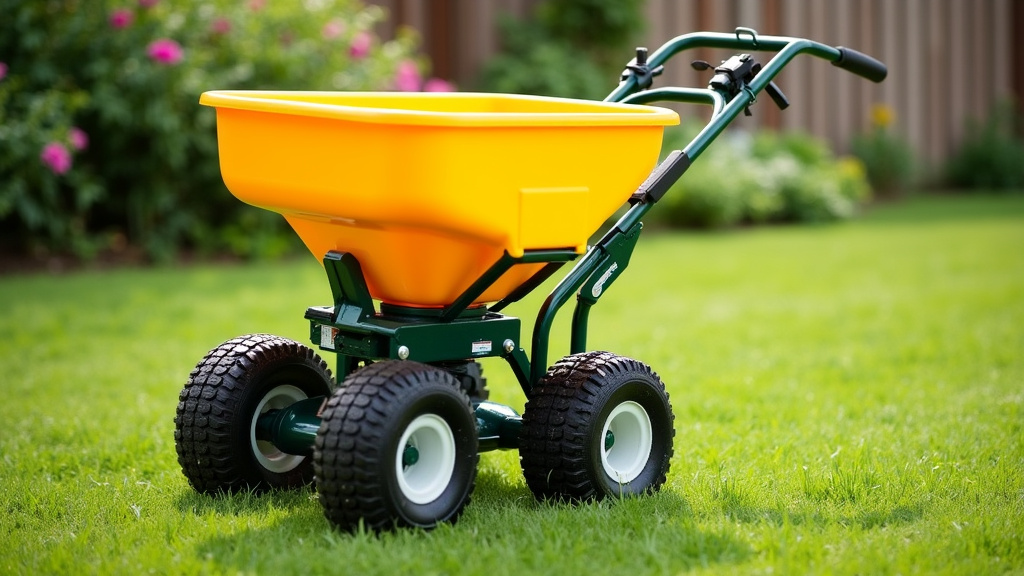
These are the workhorses for many homeowners. You push them, and a mechanism spreads the fertilizer. For small to medium-sized lawns, a smaller push model is ideal. Look for ones with hopper capacities around 10-20 pounds. They offer a good balance of coverage and maneuverability. Many experts say these are the easiest to control for even application.
Drop Spreaders: Precision, But Slower
Drop spreaders are different. They release fertilizer directly below the hopper in a straight line. This means you have to overlap your passes carefully. They offer excellent accuracy, which can be good for very small, precise areas or near delicate garden beds. However, they can be slow for larger lawns. We found that for lawns over 2,000 square feet, using a drop spreader can feel like a marathon.
Rotary vs. Edging Feature: What to Look For
When you’re eyeing a broadcast spreader, pay attention to its spinning mechanism (rotary) and any special features. A good rotary action ensures even coverage.
The Rotary Mechanism: How it Spreads
Most broadcast spreaders use a rotary mechanism. A spinning plate or fan disperses the fertilizer outward. The quality of this mechanism affects how evenly your lawn gets fed. Cheaper models might have uneven dispersal, leading to stripes of over-fertilized or under-fertilized grass. We recommend looking for models with a consistent spin.
Edge Guard or E-X-T-R-A Control: Staying on Track
This is a feature you’ll love. An edge guard or similar technology helps you control where the fertilizer goes. It can shut off or reduce dispersal along sidewalks, driveways, or garden beds. This is a huge plus for small yards with lots of borders. It prevents waste and keeps fertilizer off hard surfaces where it can wash into storm drains.
Key Features for Small Lawn Spreaders
Beyond just the type, several features can make a spreader perfect for your compact lawn. Think about what makes your life easier and your lawn healthier.
Hopper Size: Less is More
For small lawns, a massive hopper is actually a downside. You’ll end up refilling it less, sure, but a huge hopper makes the spreader heavier and harder to maneuver in tight spots. We found that a hopper capacity of around 5-15 pounds is usually just right for most small yards. It keeps the unit light and manageable.
Material and Durability: Built to Last?
You want a spreader that won’t rust or break after one season. Look for spreaders made from durable plastic or powder-coated steel. A sturdy frame and reliable wheel assembly are also important. Think about how often you’ll use it. If it’s a few times a year, a good quality plastic is often sufficient. For heavier use, metal might be a better investment.
Ease of Use: Comfort Matters
A spreader should feel good in your hands. Adjustable handles, comfortable grips, and smooth-rolling wheels make a big difference. If you have mobility issues, a lightweight model with an ergonomic design is a must. We also found that spreaders with simple calibration settings are a breeze to use. You don’t want to spend ages figuring out dials.
Making the Right Choice: A Quick Checklist
Before you click “buy” or head to the store, run through this quick checklist. It’ll help you narrow down your options and ensure you get the best tool for your lawn care needs.
- Lawn Size: Is your lawn under 5,000 sq. ft.? A broadcast spreader is likely your winner.
- Type: Handheld for tiny spots or minimal use, small push spreader for regular care.
- Hopper Size: Aim for 5-15 pounds. Bigger isn’t always better for small spaces.
- Durability: Does it feel sturdy? Look for good quality plastic or coated metal.
- Ease of Use: Are the handles comfortable? Do the wheels roll smoothly?
- Special Features: Is an edge guard important for your landscaping?
Understanding Fertilizer Application Rates
Using the right spreader also means using it correctly. Applying too much fertilizer can harm your grass and the environment. Many guidelines point to proper application rates to prevent over-fertilization (U.S. Environmental Protection Agency).
Your fertilizer bag will have instructions. It will tell you how much to apply per 1,000 square feet. You then adjust your spreader based on these rates. We found that most spreader manufacturers provide charts or guides to help you set the dial correctly. Always start with a lower setting and test it out. You can always add more if needed, but you can’t easily take it away!
| Spreader Type | Best For Lawn Size | Pros | Cons |
|---|---|---|---|
| Handheld Broadcast | Under 1,000 sq. ft. | Lightweight, highly portable, precise for small areas, affordable. | Can be tiring for larger spots, smaller capacity. |
| Small Push Broadcast | 1,000 – 5,000 sq. ft. | Even coverage, easy to maneuver, good capacity, controllable. | Requires physical effort to push. |
| Drop Spreader | Very small, precise areas (e.g., around flower beds) | High accuracy, good for borders, minimal product scatter. | Slow, requires careful overlapping, can miss spots if not done right. |
Conclusion
You’ve got the lowdown on choosing the best fertilizer spreader for your small lawn. Remember, for areas under 5,000 square feet, a broadcast spreader—either handheld or a compact push model—offers the control and efficiency you need. Prioritize features like a manageable hopper size and an edge guard for precision. By matching the spreader to your yard’s needs, you’ll achieve a lush, healthy lawn without frustration or waste. Now, get out there and give your grass the best care!
Frequently Asked Questions
What’s the main difference between a broadcast and a drop spreader for a small yard?
A broadcast spreader scatters fertilizer in a wide arc, covering ground quickly, which is great for general feeding. A drop spreader releases fertilizer in a straight line directly below, offering more precision but requiring careful overlapping to avoid missed spots. For most small lawns, the broadcast type is usually more efficient.
How often should I fertilize my small lawn, and does spreader type matter for this?
Fertilizing frequency depends on your grass type and climate, typically ranging from 2-4 times per year. The spreader type matters because it ensures you apply the correct, even amount each time, preventing over- or under-fertilization, which is key for lawn health regardless of how often you fertilize.
Are handheld spreaders really effective for even coverage on a small lawn?
Yes, handheld broadcast spreaders can be very effective for small lawns, especially if you move at a consistent pace and overlap your passes slightly. They offer excellent control in tight spots and near garden beds, helping you achieve even distribution when used properly.
My small lawn has a lot of flower beds. Which spreader feature is best for avoiding damage?
For lawns with many borders, look for a spreader with an edge guard or an “E-X-T-R-A” control feature. This allows you to shut off or reduce fertilizer dispersal along sidewalks, driveways, or garden beds, preventing product waste and potential damage to your plants.
Can I use a fertilizer spreader for grass seed and other lawn treatments too?
Absolutely! Most broadcast and push spreaders are designed to handle granular fertilizer, grass seed, and even ice melt during the winter. Just be sure to clean the spreader thoroughly between uses, especially if you’re switching between different types of products, to prevent contamination.
