Which Stihl Weed Eaters Can Use a Blade?
Several STIHL brushcutters can use approved metal blades, but the exact model, guard, blade, washer, nut, and handle setup must match the manual. Do not install a blade on a string trimmer unless STIHL approves that configuration.
On this page (8 sections)
- Which Stihl weed eaters can use a blade?
- What Stihl models are commonly used with blades?
- What conversion hardware does a Stihl weed eater need?
- When should you use a blade instead of line?
- Which alternatives help if your trimmer cannot use a blade?
- What should you check before installing a Stihl blade?
- Does a brush cutter attachment fit every Stihl weed eater?
- What is the safest decision rule?
Several STIHL brushcutters can use an approved metal blade, but not every STIHL weed eater is blade-compatible. The model manual controls the answer, along with the blade type, guard, mounting hardware, handle, and harness.
The safest starting point is to find the exact model number on the shaft or engine housing. Then check its STIHL instruction manual for approved cutting attachments and required conversion parts.
If you need basic terminology first, this guide to what a weed trimmer is explains how string trimmers, edgers, and brushcutters differ.
Which Stihl weed eaters can use a blade?
STIHL FS brushcutters are the main blade-capable group. Models commonly associated with approved metal cutting attachments include the FS 56 RC-E, FS 70 R, FS 91, FS 111, FS 131, FS 240, and FS 261 C-E, but the permitted attachment depends on the exact model and manual.
These machines are different from a light-duty string trimmer. A brushcutter is built around a drive system and guard arrangement that can support heavier cutting attachments when STIHL approves the setup.
Model names alone aren't enough. A model may need a specific blade diameter, deflector, mounting kit, handle arrangement, or harness before it can be used for brush cutting.
How do you confirm which Stihl weed eater can use a blade?
Match the complete model number to the STIHL manual before buying a blade. Look for the sections covering approved cutting attachments, deflectors, blade guards, and handle or harness requirements.
Check these details:
- Find the exact model number.
- Confirm whether metal blades are approved.
- Check the maximum blade diameter and permitted blade style.
- Identify the required guard or deflector.
- Confirm the thrust washer, rider plate, nut, and retainer.
- Check whether a bike handle or shoulder harness is required.
- Follow the manual's installation and balance instructions.
If you don't have the manual, use STIHL's official product support pages or ask an authorized STIHL dealer to identify the correct parts. A general blade advertised for another trimmer isn't enough proof of compatibility.
What Stihl models are commonly used with blades?
The FS 56 RC-E, FS 70 R, FS 91, FS 111, FS 131, FS 240, and FS 261 C-E are models to check first for approved blade use. They belong to STIHL's brushcutter range, but their permitted attachments and required hardware are not identical.
The FS 56 RC-E and FS 70 R are smaller brushcutters suited to users who need more cutting ability than line provides. The FS 91, FS 111, and FS 131 offer larger brushcutter platforms for heavier grass and brush work.
The FS 240 and FS 261 C-E are aimed at demanding brush-cutting tasks. Their greater cutting capacity doesn't remove the need for the correct guard, blade, mounting parts, and protective equipment.
Treat this list as a model-checking guide, not permission to fit any blade. STIHL can change attachment instructions by model and market, so confirm the current manual for your exact machine.
What conversion hardware does a Stihl weed eater need?
A blade conversion usually needs a compatible blade, guard, thrust washer, rider plate, mounting nut, and retainer. The parts must fit the shaft and cutting-head design on your STIHL model.
The guard is especially important. A line-trimmer guard may not provide the protection required for a metal blade, and using the wrong deflector can expose you to debris or make the attachment unsafe.
The mounting hardware keeps the blade centered and secured. A missing washer, incorrect nut, or wrong spacer can let the blade wobble, loosen, or sit out of alignment.
Some STIHL brushcutters also require a bike handle and shoulder harness for blade work. These controls help you guide the machine and keep the cutting attachment at a safer working distance.
Never improvise with hardware from another brand. Use the parts specified for the model and blade combination.
Can you put a blade on a Stihl string trimmer?
Only if STIHL specifically approves the model for that blade and conversion setup. A string trimmer designed for nylon line should remain a line trimmer.
The motor, clutch, shaft, guard, handle, and balance may not be suitable for a metal blade. A blade can also transfer more impact when it contacts a hidden rock, fence post, or thick woody stem.
If the manual lists only nylon line or an approved plastic head, don't convert the machine. Choose a brushcutter designed for the work instead.
The difference matters when comparing a string trimmer vs brush cutter. A brushcutter is the better starting point when your regular work includes woody weeds or dense overgrowth.
When should you use a blade instead of line?
Use an approved blade for thick grass, heavy weeds, and light brush that line cannot cut efficiently. Use nylon line for lawn edges, fence lines, garden borders, and trimming around hard surfaces.
A metal blade can cut stems that are too tough for ordinary line. It can also make a rough area faster to clear when the machine is approved and properly set up.
Line is more forgiving around obstacles. It wears down instead of transferring the same kind of impact to the drive system when it touches a post or wall.
Don't use a blade near people, pets, cars, windows, or buildings unless the area is controlled and the manual's safety instructions are followed. Remove loose objects first and wear the protective equipment STIHL specifies.
For attachment choices, compare the guide to the best brush cutter blade before selecting a cutting style.
Which alternatives help if your trimmer cannot use a blade?
If your STIHL weed eater isn't approved for a blade, keep using the correct line head or replace it with a compatible brushcutter. A different attachment cannot turn an incompatible trimmer into a brushcutter.
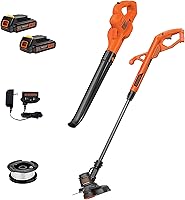
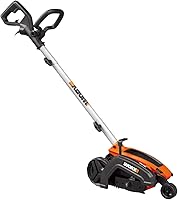
The WORX WG163 uses a 12 in cutting width, 0.065 in line, and a command-feed spool. It converts between trimming and edging, includes 2 batteries and a charger, and is intended for edging and trimming rather than blade conversion.
Use a compatible line trimmer when you work around lawn borders, plants, and hard surfaces. For thicker growth, compare the best weed eater for brush cutting and choose a machine designed for that attachment class.
The WORX WG509 combines blowing, vacuuming, and mulching in one corded tool. It delivers up to 350 CFM and 210 MPH, uses an 18:1 mulch ratio, and collects debris in a 42 L bag.
This tool suits cleanup after mowing, edging, or trimming. It doesn't replace a brushcutter because it moves and mulches yard debris instead of cutting standing brush.
The BLACK+DECKER BEBL7000 is a 3-in-1 corded blower, vacuum, and mulcher with up to 250 MPH and 400 CFM. It includes a blow tube, vac tube, and backpack bag.
Its backpack format can help with leaf cleanup after trimming, but it isn't a blade attachment or a substitute for a STIHL brushcutter. Choose it when the remaining job is blowing and collecting debris.
What should you check before installing a Stihl blade?
Check the manual, guard, mounting hardware, blade condition, handle, and harness before installation. Do not rely on the blade's diameter alone.
Confirm that the blade is approved for your model and that the guard matches the cutting attachment. Inspect the blade for cracks, bends, missing teeth, or excessive wear.
Check the thrust washer, rider plate, nut, and retainer for damage. Clean the mounting area and make sure the blade sits flat and centered before tightening it as instructed.
Wear eye and face protection, hearing protection, gloves, long pants, boots, and any other equipment required by the manual. Keep bystanders away from the work area.
Stop the engine and disconnect the power source before inspecting, cleaning, or changing the cutting attachment. Never handle a blade while the machine can start.
Does a brush cutter attachment fit every Stihl weed eater?
No. A brush cutter attachment fits only models and shaft systems approved for that attachment.
The mounting pattern, guard, shaft, power system, and balance all matter.
An attachment made for one STIHL model may not fit another model safely. Even when it physically mounts, the guard or power rating may be wrong.
Review the best brush cutter attachment for string trimmer guide if you're comparing conversion options. Use it as a starting point, then confirm compatibility with the STIHL manual.
For readers who prefer a cordless setup, Best Weed Eater Cordless covers line trimmers and related buying choices. A cordless line trimmer still isn't automatically suitable for a metal blade.
What is the safest decision rule?
Pick an approved STIHL brushcutter when you need a blade, and keep an ordinary string trimmer on nylon line. The manual, guard, mounting hardware, handle, and harness must all match before you cut with metal.
Choose the FS 56 RC-E or FS 70 R as models to investigate for lighter brush work, and check the FS 91, FS 111, FS 131, FS 240, or FS 261 C-E when your work is heavier. Confirm every attachment detail before use.
If you mainly trim grass and edge sidewalks, line is simpler and more forgiving. If you are also comparing brands, Echo vs Stihl weed eater can help with the wider buying decision.
STIHL's trimmers and brushcutters are separate from its lawn mower range, so Does STIHL Make A Lawn Mower? explains where those product categories fit.
Frequently asked questions
Which Stihl weed eaters can use a blade?
STIHL models in its brushcutter range, including the FS 56 RC-E, FS 70 R, FS 91, FS 111, FS 131, FS 240, and FS 261 C-E, may support approved metal cutting attachments when equipped as their manuals require. Confirm the exact model and attachment combination before converting.
Can every Stihl weed eater use a metal blade?
No. A STIHL string trimmer may be designed only for nylon line or approved plastic cutting tools.
Blade use depends on the model, engine, handle, deflector, blade guard, mounting parts, and manual instructions.
If your manual doesn't approve a metal blade, don't install one.
What hardware is needed to put a blade on a Stihl trimmer?
A blade conversion normally needs an approved metal blade, blade guard or deflector, thrust washer, rider plate, mounting nut, and any required retainer or spacer. Some models also require a bike handle, shoulder harness, and matching guard.
The exact parts vary by model.
Is a blade better than string for cutting weeds?
A blade is better for thick grass, woody weeds, and light brush when the STIHL unit and attachment are approved for that work. Nylon line is usually the better choice near fences, walls, beds, and other surfaces where a metal blade could cause damage or kickback.