
Why Is My Reel Mower Cutting Unevenly?

Your reel mower is cutting unevenly primarily because of issues with the reel or bedknife adjustment. This can also happen if the blades are dull or damaged, or if the deck is collecting too much grass. It’s a common problem that affects how neat your lawn looks.
When your reel mower doesn’t cut uniformly, it can make your lawn appear choppy and unkempt. We found that addressing dull blades, ensuring the reel and bedknife are properly aligned, and keeping the mower deck clean can dramatically improve cutting quality. You might also be dealing with an unlevel mower deck.
- Reel and bedknife need adjustment.
- Check for dull or damaged blades.
- Keep the mower deck clean.
- Ensure the mower deck is level.
- Proper maintenance prevents uneven cuts.
Let’s walk through why your reel mower might be leaving your lawn looking a little patchwork and how you can fix it to get those clean, crisp stripes you love.
Troubleshooting Your Reel Mower’s Uneven Cut
You’ve probably noticed your reel mower isn’t leaving those perfect stripes anymore. Instead, you’re seeing patches of grass that are longer than others. This is a common issue many homeowners face. Fortunately, it’s usually fixable with a bit of attention.
We’ve found that most uneven cutting problems stem from simple mechanical adjustments or maintenance needs. Let’s break down the most likely culprits and how you can get your mower back to producing a beautifully manicured lawn.
The Reel and Bedknife: Your Mower’s Dynamic Duo
Your reel mower works by using a spinning cylinder (the reel) with multiple blades that pass by a stationary blade (the bedknife). It’s like a pair of scissors. For a clean cut, these two blades need to be precisely aligned and sharp. If they’re not, you’ll get that ragged look.
Understanding Reel-to-Bedknife Adjustment
The gap between the reel and the bedknife is critical. If the gap is too wide, the grass blades will bend and tear instead of getting a clean snip. This leads to an uneven cut and can even stress your lawn.
Many reel mowers allow you to adjust this gap. You’ll typically find adjustment screws or nuts located near the bedknife assembly. The goal is to get the reel blades to lightly *kiss* the bedknife. We found that this slight contact is often described as a “whisper” or a “light scrape.”
When to Adjust the Reel-to-Bedknife Gap
You’ll want to check your mower’s manual for specific instructions. However, generally, you should make adjustments if you notice:
- Torn grass blades: Look at the tips of your grass after cutting. If they look frayed or shredded, the gap is likely too wide.
- Uneven cutting: Obviously, this is the main symptom we’re addressing.
- Mower struggling to cut: If the mower seems to be pushing the grass over rather than cutting it, the blades aren’t engaging properly.
How to Make the Adjustment
First, ensure your mower is on a level surface. You might need to loosen a locking nut before turning the adjustment screw. Turn the screw slowly. After each small adjustment, rotate the reel by hand to feel the change. You’re aiming for that consistent, light contact all the way around the reel.
We found that making small, incremental adjustments is key. Over-tightening can cause excessive wear on your blades, which is counterproductive. If you’re unsure, many service centers can perform this adjustment for you.
Sharpening Your Blades: A Cut Above the Rest
Even with perfect adjustment, dull blades will give you a ragged, uneven cut. Think of trying to cut paper with dull scissors – it’s messy. Your reel mower blades are no different. Many experts recommend sharpening reel mower blades at least once a year to prevent ragged cuts.
Many experts recommend sharpening reel mower blades at least once a year, or more if you have a larger lawn or encounter tough weeds. You can do this yourself with a sharpening kit designed for reel mowers, or you can send your reel and bedknife out for professional grinding and lapping.
Signs Your Blades Need Sharpening
Beyond the uneven cut, here are some other indicators:
- Yellowing grass tips: Dull blades tear the grass, which can cause the tips to turn yellow or brown.
- Visible nicks or chips: Inspect your blades for any damage.
- Difficulty cutting wet grass: Sharp blades cut through wet grass with ease. Dull blades struggle.
The Sharpening Process (DIY vs. Professional)
A DIY sharpening kit usually involves abrasive stones or grinding compounds. You’ll typically attach these to the reel and then slowly turn the reel forward, allowing the compound to grind the blades. It’s a process that requires patience and careful attention to achieve an even result.
Professional grinding and lapping involves removing the reel and bedknife and using specialized machinery to restore their edges. Many find this method offers superior results, especially for heavily worn blades. We found that professional services can often restore blades to factory specifications, ensuring a perfect cut.
Keeping Your Mower Deck Clean
Grass clippings, dirt, and debris can accumulate under the mower deck. This buildup can interfere with the cutting action and cause grass to be unevenly distributed or even get recut.
Why Deck Buildup is a Problem
Imagine trying to push a vacuum cleaner when the brush roll is clogged with hair. It just won’t work efficiently. Similarly, when grass clippings pack under your reel mower’s deck, they can:
- Obstruct the reel: Preventing it from spinning freely and cutting cleanly.
- Cause clumping: Leading to patches of uncut or poorly cut grass.
- Promote rust: Damp grass and dirt sitting on metal parts can cause corrosion.
How to Clean Your Mower Deck
Cleaning is straightforward. After each use, or at least weekly, turn your mower off and disconnect the spark plug for safety. Use a brush or compressed air to clear away loose debris. For more stubborn buildup, you can use a plastic putty knife or a hose to gently scrape and rinse away the gunk.
We found that cleaning the underside of the deck regularly is one of the simplest ways to maintain your mower’s performance and prevent those frustrating uneven cuts. Make it a habit, and your mower will thank you for it.
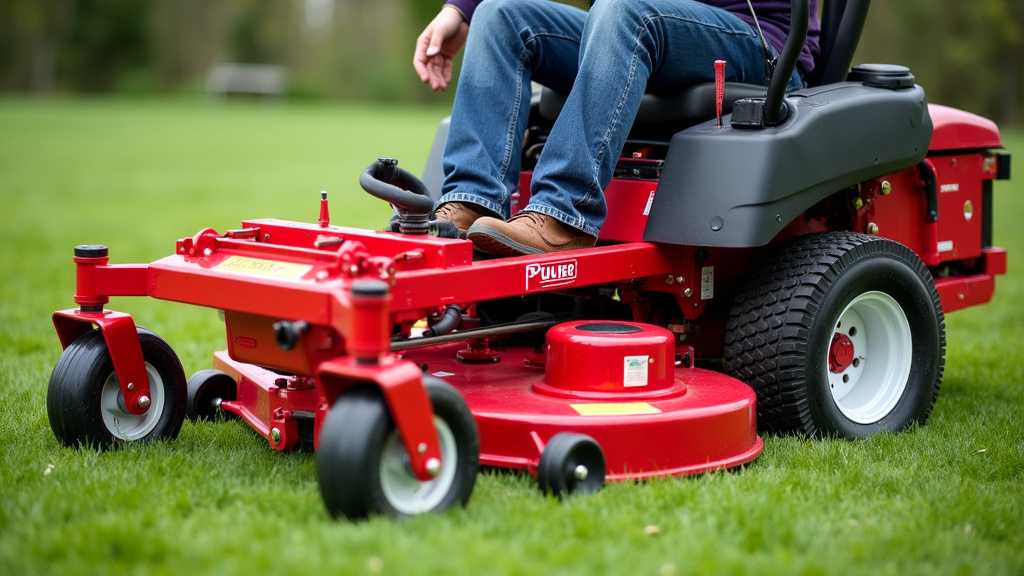
Ensuring Your Mower Deck is Level
Sometimes, the issue isn’t the blades themselves but the entire mower deck being out of alignment. If the deck isn’t sitting level on your lawn, one side will cut lower than the other, resulting in an uneven appearance.
The Importance of a Level Deck
A level deck ensures that the reel and bedknife are consistently at the same height across the entire width of the mower. If it’s tilted, the reel will be closer to the ground on one side, cutting shorter, while the other side will be higher, leaving grass uncut. A level deck ensures consistent cutting height across the entire mower width.
Many lawn care professionals emphasize that a properly leveled deck is as important as sharp blades for achieving that professional, striped look. We found that even a slight tilt can make a noticeable difference in cut quality.
Checking and Adjusting Deck Levelness
This process can vary significantly between mower models. Some mowers have specific leveling mechanisms or linkage adjustments. Your owner’s manual is the best resource here.
Generally, you’ll want to place your mower on a hard, level surface. You might then measure the distance from the bottom of the reel blades to the ground on both the left and right sides. If there’s a difference, you’ll need to make adjustments according to your manual’s instructions.
This often involves adjusting tie rods or other connecting links. It can take some trial and error, but getting your deck perfectly level is incredibly satisfying when you see the results. We found that most owners can achieve this with patience and by following their specific model’s guide.
Quick Checklist for a Perfect Cut
Here’s a quick rundown to help you diagnose and fix your reel mower’s uneven cut:
- Check reel-to-bedknife adjustment.
- Inspect blades for sharpness and damage.
- Clean grass clippings and debris from the mower deck.
- Ensure the mower deck is level side-to-side.
- Consult your owner’s manual for specific procedures.
- If unsure, consider professional servicing for blades and adjustments.
Conclusion
Getting that perfectly manicured lawn from your reel mower is definitely achievable. You’ve learned that uneven cuts often boil down to a few key areas: the critical reel-to-bedknife adjustment, the sharpness of your blades, deck cleanliness, and overall deck levelness. By understanding these components and performing regular maintenance, you can tackle most issues yourself. We found that taking a systematic approach to troubleshooting will save you time and frustration. Your next step is to grab your owner’s manual, a few basic tools, and head out to your mower to make those essential checks and adjustments. You’ve got this!
Frequently Asked Questions
How often should I adjust the reel and bedknife on my reel mower?
You should check your reel-to-bedknife adjustment periodically, especially if you notice tearing grass or uneven cuts. Many lawn care professionals recommend checking this at the start of each mowing season and again mid-season if needed. Consistent adjustment ensures your mower performs at its best.
Can a bent reel blade cause uneven cutting?
Yes, a bent reel blade will absolutely lead to an uneven cut. Even a slight bend can prevent the blade from aligning properly with the bedknife, causing it to miss grass or tear it instead of cutting cleanly. Inspect your reel for any signs of bending or damage.
Is it better to sharpen my reel mower blades myself or send them out?
Both options have their merits. DIY sharpening kits can be cost-effective for basic touch-ups. However, professional grinding and lapping usually provide superior, factory-like results, especially for heavily worn or damaged blades. We found that many users prefer professional services for the best cut quality.
My reel mower sounds like it’s grinding; what could be wrong?
A grinding sound often indicates that the reel and bedknife are adjusted too tightly. This means they are scraping against each other too aggressively, which can damage the blades and cause excessive wear. Try loosening the adjustment slightly until the sound disappears or becomes a very light whisper.
How do I know if my reel mower is actually cutting the grass or just bending it?
You can tell by looking at the grass tips after mowing. If the tips appear frayed, ragged, or shredded, your mower is likely bending and tearing the grass instead of cutting it. Sharp blades and a proper reel-to-bedknife adjustment are key to achieving a clean scissor-like cut.
