
How To Fit Lawn Mower In Car?
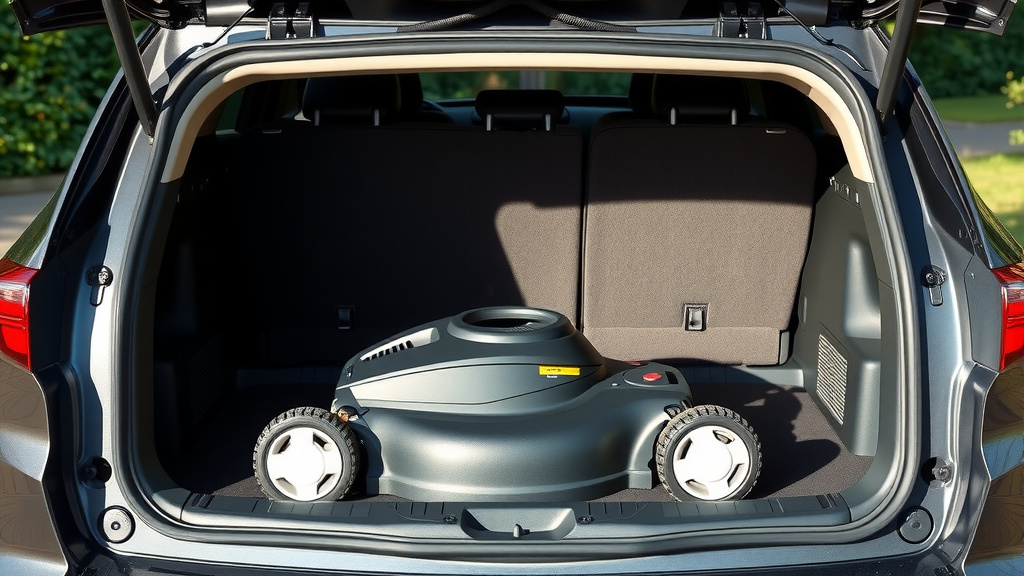
To fit a lawn mower in your car, first prepare it by draining fuel, disconnecting the spark plug, and cleaning the deck to prevent spills and hazards. Then, measure both your mower and your vehicle’s cargo space to confirm it will fit securely.
Always prioritize safety by getting help with lifting, protecting your car’s interior, and securing the mower tightly with straps to prevent shifting during transit.
Here’s a quick summary of fitting your lawn mower in a car:
- Always drain fuel and oil before moving to prevent spills and fire risks.
- Disconnect the spark plug to stop accidental starting.
- Measure your mower and your car’s trunk or cargo area carefully.
- Lift with help or use ramps to avoid back strain.
- Secure the mower firmly with straps to prevent shifting during travel.
How To Fit Lawn Mower In Car?
Fitting a lawn mower into your car involves careful preparation and smart planning. You need to consider safety, vehicle capacity, and the best way to load and secure the equipment.
Safety First: Your Non-Negotiables
Before you even think about lifting, safety is paramount. We found that skipping these initial steps can lead to dangerous spills or even fires (National Fire Protection Association).
Always treat your lawn mower with respect. It’s a powerful tool, even when turned off.
Emptying the Gas Tank
Gasoline is flammable and messy. You absolutely must drain all the fuel from the tank before loading.
Use a siphoning pump or carefully pour the gas into a certified fuel container. Don’t leave any fuel in the tank; even a small amount can slosh out and cause fumes.
Draining the Oil (or Minimizing Spills)
Oil can be just as messy as gas. Many experts recommend draining the oil completely if you plan a long trip or have to tilt the mower significantly.
If you’re only going a short distance and know which way to tilt it safely, you might get away with leaving the oil in. We’ll cover tilting next.
Disconnecting the Spark Plug
This step is small but critical. Pulling the spark plug wire prevents the engine from accidentally starting while you’re moving it.
It’s a simple flick of the wrist for peace of mind.
Removing the Battery (Electric Mowers)
For electric or battery-powered mowers, always remove the battery pack. This prevents any accidental power activation and potential damage to the battery.
Store the battery safely in a separate, cool place.
Cleaning the Deck
Nobody wants a car full of grass clippings and dirt. Give your mower deck a good clean before loading it up.
Scrape off any caked-on grass and wipe down the exterior. It keeps your car cleaner and makes the whole process smoother.
Sizing Up Your Ride: Car Compatibility
Will it even fit? That’s the big question. You need to know the dimensions of your mower and the usable cargo space in your vehicle.
A small push mower is very different from a large self-propelled model.
Measure Your Mower
Grab a tape measure. Measure the mower’s length, width (including the wheels), and height (with the handle folded down).
Remember, some handles can be folded down or removed entirely to reduce height.
Measure Your Car’s Cargo Space
Open your trunk, hatchback, or SUV cargo area. Measure the maximum length, width, and height with seats folded down.
Don’t forget to account for any wheel wells or other interior protrusions that might limit space.
Here’s a quick guide for common car types:
| Car Type | Mower Fit Potential | Tips |
|---|---|---|
| Sedan | Low (small push mowers only) | Rear seats must fold flat; protective tarp essential. |
| Hatchback | Medium (most push mowers) | Good for space, but angle of entry can be tricky. |
| SUV / Minivan | High (most walk-behind mowers) | Lots of room, easier to load and secure. |
| Pickup Truck | Highest (any walk-behind, some riders) | Easiest option, use ramps and secure well. |
The Lifting Strategy: Smart & Safe
Lawn mowers are heavier than they look. Don’t try to be a hero and hurt your back. Think about getting some assistance.
Get a Helping Hand
We often find that two people make this job much safer and easier. Coordinate your lift, bend with your knees, and lift with your legs, not your back.
Communication is key to avoid dropping the mower.
Using Ramps
If you have loading ramps, use them! This is especially true for heavier self-propelled mowers or if you’re loading into a truck bed.
Position the ramps securely against the vehicle, and slowly push the mower up.
Tilting Techniques for Different Mowers
This is where things can get tricky. How you tilt your mower matters a lot for its engine health and to prevent fuel/oil leaks.
Many experts say to tilt the mower so the carburetor is facing upwards.
Side-Tilt for Most Push Mowers
For most standard push mowers, tilting onto their side is common. However, always tilt so the air filter and carburetor are on the “up” side.
Tilting the other way can cause fuel or oil to flood the carburetor or air filter, leading to starting problems later (Briggs & Stratton guidelines).
Front or Back Tilt for Specific Designs
Some mowers, especially those with unique engine placements, might prefer a front or back tilt.
Check your mower’s manual for its recommended transport position. If in doubt, minimizing the tilt is always best.
Securing Your Mower for the Journey
Once it’s in, it needs to stay in place. A shifting mower can damage your car or become a projectile in a sudden stop.
Protect Your Car’s Interior
Lay down a heavy-duty tarp or old blankets. This protects against any remaining drips of oil, gas, or grass stains.
Your car’s carpet will thank you.
Strap it Down Tightly
Use ratchet straps or strong rope to secure the mower to tie-down points in your vehicle. Make sure it can’t slide forward, backward, or sideways.
Give it a good wiggle test to ensure it’s truly stable.
Prevent Blade Movement
While the spark plug is disconnected, the blade can still spin freely. Pad the blade area if possible, or ensure nothing can come into contact with it.
This prevents accidental cuts or damage to your vehicle’s interior.
Here’s a quick checklist to make sure you’ve covered all bases:
- Gas drained completely?
- Oil drained or tilted correctly?
- Spark plug disconnected?
- Battery removed (if applicable)?
- Mower deck cleaned?
- Car interior protected with tarp/blankets?
- Mower measured and confirmed fit?
- Securely strapped down?
- Lifting done safely (with help or ramps)?
After the Drive: Reassembly & Check-Up
You’ve arrived! Now it’s time to get your mower ready for action again.
Refilling Fuel and Oil
Carefully refill your mower with the correct type and amount of fuel and oil. Double-check your levels.
Spilled fuel is still a fire hazard, so be cautious.
Reconnect Spark Plug and Battery
Once everything is in place, reconnect the spark plug wire and reinsert the battery if you removed it.
Make sure all connections are snug.
First Start Considerations
After being tilted and transported, your mower might take a few extra pulls to start. Don’t worry, this is often normal.
Let it run for a minute or two to ensure all fluids are circulating properly.
Conclusion
Transporting a lawn mower in your car isn’t a massive challenge, but it does require attention to detail. By following these steps – from careful preparation and safe lifting to secure loading and post-transport checks – you ensure both your safety and the longevity of your equipment.
A little planning goes a long way. So, next time you need to move your mower, you’ll be ready for a smooth, worry-free journey.
Can I transport a lawn mower lying down?
Yes, you can transport a lawn mower lying down, but it’s crucial to tilt it on the correct side. You should always tilt the mower so the air filter and carburetor are facing upwards. This prevents fuel and oil from leaking into the air filter or engine components, which can cause starting issues or damage.
What size car do I need to fit a lawn mower?
The car size needed depends on the mower’s dimensions. Small push mowers can sometimes fit in the trunk of a sedan with the back seats folded down. However, hatchbacks, SUVs, minivans, or pickup trucks generally offer enough cargo space for most walk-behind lawn mowers, especially with the handles folded.
Do I have to drain all the gas from my lawn mower before transport?
Yes, it is highly recommended to drain all the gas from your lawn mower before transport. Gasoline is flammable and can spill easily, creating a fire hazard or damaging your car’s interior. Even a small amount can cause strong, unpleasant fumes in your vehicle.
How do I prevent oil leaks when moving a lawn mower?
To prevent oil leaks, either drain the oil completely before transport or ensure you tilt the mower correctly. If tilting, the oil fill cap should always be on the “up” side, and the air filter/carburetor should also be facing upwards. Using a heavy-duty tarp can also catch any residual drips.
Is it safe to put a lawn mower in the back of an SUV?
It is generally safe to put a lawn mower in the back of an SUV, provided it is properly prepared and secured. Always drain fuel and disconnect the spark plug. Use a tarp to protect the interior, and strap the mower down firmly to prevent it from shifting during braking or turns. Lifting assistance or ramps can make loading safer for your back.
