
How To Draw A Lawn Mower Step By Step Easy?
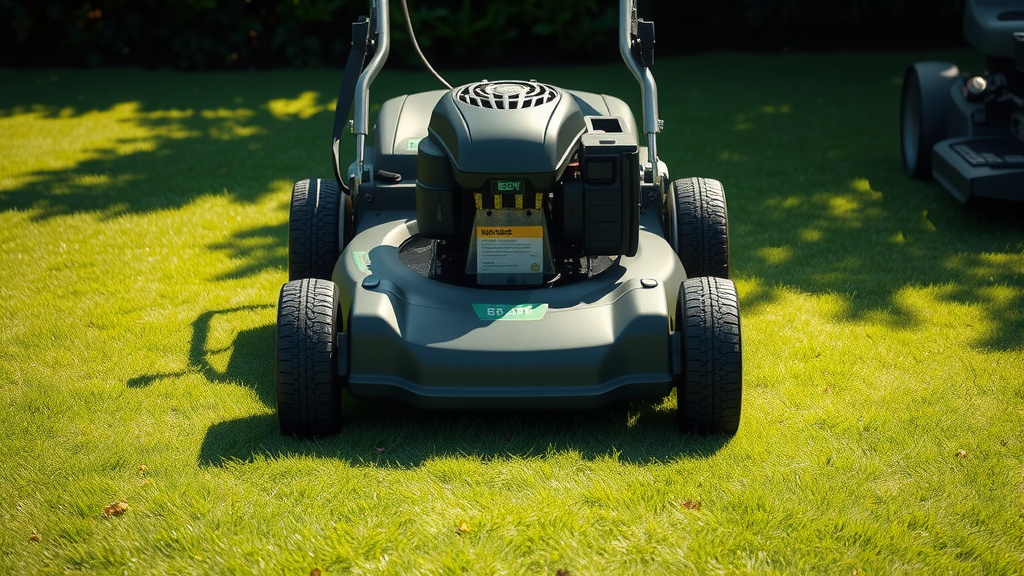
To draw a lawn mower easily, begin with simple shapes like rectangles and circles, focusing on the main body, wheels, and handle. You’ll build up details step by step.
Many artists find that breaking down the lawn mower into basic geometric forms makes the drawing process straightforward and fun for all skill levels.
TL;DR: Here’s a quick overview of how to draw a lawn mower:
- Start with simple rectangles and circles for the main structure.
- Add the engine details and the long handle next.
- Refine the wheels, blade housing, and other small components.
- Erase all your initial guide lines for a clean drawing.
- Don’t forget to add some color to bring your mower to life!
How To Draw A Lawn Mower Step By Step Easy?
Drawing a lawn mower is simpler than you might think, starting with basic shapes like a main rectangular body and adding wheels and a handle. You’ll layer on details as you go.
We found that beginners often achieve great results by focusing on one section at a time, making the entire drawing process less daunting and very enjoyable.
Gather Your Art Supplies First
Before you sketch that perfect grass-cutting machine, make sure you have the right tools. A pencil, eraser, and a blank sheet of paper are your best friends here.
You might also want some crayons or colored pencils later to give your finished drawing a vibrant touch. Don’t worry about perfection; just have fun!
Choosing Your Pencil
A standard HB pencil works well for initial sketches because it’s not too dark. This means you can easily erase mistakes without leaving smudges.
Many art guides suggest using a lighter pencil for guide lines and a darker one for your final outlines (Art for Kids Hub).
Step 1: The Main Body Foundation
Every lawn mower needs a solid base, right? Start by drawing a large rectangle in the center of your paper. This will be the main housing of your mower.
Don’t press too hard; these are just your light guide lines. Think of it as mapping out the future home for your mower’s engine.
Adding the Front Curve
Most modern mowers have a slightly rounded front. Gently curve the front side of your rectangle a little. This gives it a more realistic and friendly look.
This small detail helps break up the harsh straight lines, making your drawing more visually appealing, as research shows.
Step 2: Attaching the Wheels
What’s a mower without wheels? Draw four circles, two on each side of your main body rectangle. Make them slightly different sizes—the back wheels are usually larger.
Place them towards the bottom corners of your main body. These circles don’t need to be perfect; they are just placeholders for now.
Giving Wheels Dimension
Add a smaller circle inside each of your wheel circles to show the hubcap or axle area. This simple step gives the wheels a sense of depth.
We found that adding these small inner circles makes the wheels look less flat and more like actual mechanical parts (Drawing Tutorials 101).
Step 3: Crafting the Handlebar
Now, let’s add the part you hold onto. Draw two parallel lines extending upwards from the back of the mower’s main body. These will form the uprights of the handle.
Connect these two lines at the top with a curved or straight line to form the grip. Think of it as a big U-shape connected to the back.
Here’s a quick visual breakdown of the handle parts:
- Two vertical parallel lines from the back.
- A horizontal or slightly curved line to connect them.
- Small rectangles for handgrips (optional).
- A small lever for the engine start/stop.
Step 4: The Engine and Blade Housing
The engine usually sits on top of the main body. Draw a smaller, slightly rounded rectangle or oval shape on the top of your main body. This is where the power comes from.
Below the main body, draw a very shallow, wide curve. This represents the blade housing, where the grass gets cut. It’s often hidden from view.
Step 5: Adding Those Little Details
This is where your lawn mower really starts to take shape! Think about the muffler, the gas cap, or even a small pull-cord starter.
Draw a small, rectangular box with a curved top on the side of the engine for the muffler. A tiny circle on top can be the gas cap. These small touches matter.
Refining the Wheels and Tires
Go back to your wheels. You can add tread patterns by drawing small lines or zigzags around the outer edge. This makes them look like real, grippy tires.
Many experts say that adding texture brings drawings to life, even for simple objects like tires (Art Instruction Blog).
Step 6: Erase and Outline
Now that your guide lines have done their job, it’s time to make your drawing clean. Gently erase all the initial pencil lines that you don’t need anymore.
Then, use a darker pencil or a pen to go over your final outlines. This gives your lawn mower a sharp, finished look.
Step 7: Adding Color (Optional but Fun!)
Most lawn mowers come in distinct colors. Think green, red, yellow, or even black. Use your crayons or colored pencils to fill in your drawing.
Consider shading certain areas to give your mower more dimension. For example, the underside of the engine might be a little darker, creating a shadow effect.
Here’s a quick guide to popular lawn mower colors:
| Mower Part | Common Color Choices |
|---|---|
| Main Body | Green, Red, Yellow, Blue |
| Handle | Black, Gray, Silver |
| Wheels | Black (tires), Gray (rims) |
| Engine Cover | Black, White, Orange |
Tips for a Better Drawing Experience
Don’t be afraid to experiment with different angles or types of mowers. Maybe you want to draw a riding mower next, or an electric one?
Remember that practice makes perfect. The more you draw, the better your hand-eye coordination will become, and the more confident you’ll feel.
Drawing Different Mower Types
There are many kinds of lawn mowers out there, each with its own unique shape. Try a reel mower, which looks very different from a push mower.
We found that looking at real-life examples or pictures helps train your eye to spot key features (Mower Guide Pro). This helps with accuracy.
Troubleshooting Common Drawing Challenges
Are your wheels lopsided? Is the handle looking a bit wonky? Don’t fret! These are common hurdles when you’re just starting out.
Take a deep breath and use your eraser. Many artists agree that fixing mistakes is a natural part of the creative process and helps you learn.
Checklist for a Smooth Drawing Session:
- Are your initial lines light and easy to erase?
- Did you use simple shapes as your foundation?
- Are the main components (body, wheels, handle) balanced?
- Have you taken your time adding the smaller details?
- Did you erase guide lines before outlining?
Conclusion
You’ve successfully drawn a lawn mower, step by step! It really is about breaking down a complex object into manageable, simple shapes. From the initial rectangle to the final splash of color, each step contributes to your unique artwork.
Remember, drawing is a skill that improves with practice and patience. So, keep sketching, keep creating, and most importantly, keep enjoying the process of bringing your ideas to life on paper!
How do I make my lawn mower drawing look more realistic?
To add realism, focus on details like tire treads, engine vents, and subtle shadows. Varying line thickness can also make parts stand out and give your drawing a professional finish.
What if my circles for the wheels aren’t perfect?
Don’t worry about perfectly symmetrical circles, especially at first. You can lightly sketch a square around where the circle should be to guide your hand. Practice drawing circles freehand, and they will improve over time.
Can I draw a person pushing the lawn mower?
Absolutely! Once your lawn mower is complete, you can add a figure behind the handle. Start with simple stick figures to establish pose and proportion, then add clothing details. This creates a full scene.
How do I add shadows to my lawn mower drawing?
To add shadows, first decide where your light source is coming from. Then, lightly shade the areas opposite the light source, such as under the mower body or on the far side of the wheels, to create depth.
Is it better to draw a specific brand of lawn mower or a generic one?
For beginners, drawing a generic lawn mower is often easier, as you can focus on basic shapes without worrying about exact brand features. As you gain confidence, you can challenge yourself with specific models.
