
How To Load A Lawn Mower Into A Truck?
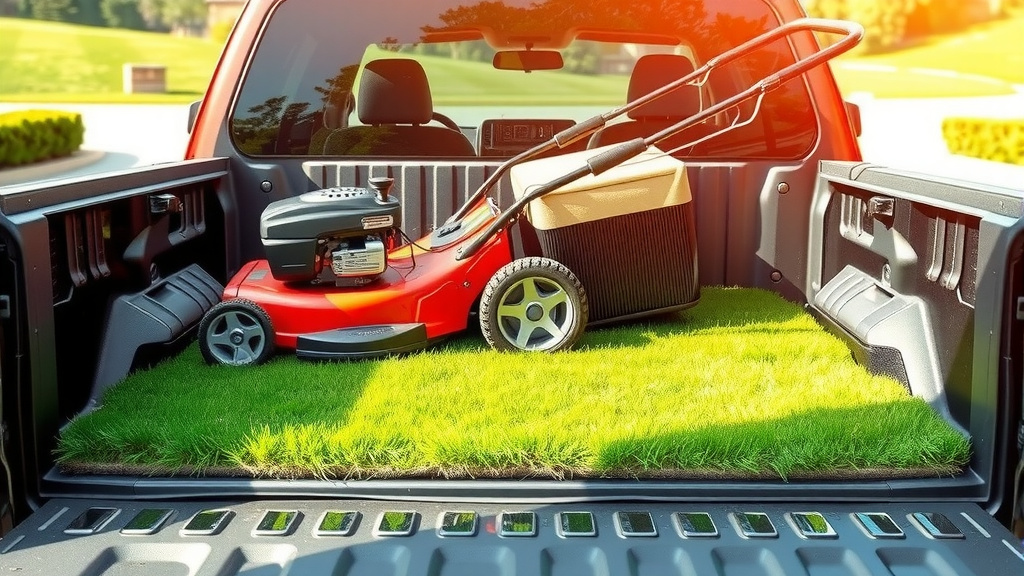
The safest way to load a lawn mower into a truck involves using a sturdy ramp, engaging the mower’s parking brake (if applicable), and securing it properly with tie-downs.
Before you load a lawn mower into a truck, always drain the fuel and oil to prevent spills and fire hazards during transport.
Here’s a quick overview of what you’ll find in this guide:
- Safety is paramount: Drain fuel, disconnect spark plug, wear gloves.
- Choose the right ramp: Assess mower weight, truck height, and ramp capacity.
- Position correctly: Back your truck to a slight incline, secure ramps.
- Load with care: Slowly push walk-behinds or drive riding mowers straight up.
- Secure it tightly: Use strong tie-downs at multiple points to prevent shifting.
How To Load A Lawn Mower Into A Truck?
Loading a lawn mower into a truck requires careful planning and proper equipment to prevent accidents and damage. You will need strong ramps and clear safety measures.
Why Even Bother Moving Your Mower?
There are many reasons you might need to transport your lawn mower. Maybe you are taking it for service, or perhaps moving to a new home. Perhaps a friend needs to borrow it.
Moving a mower safely prevents injury to you and damage to your equipment. It also protects your truck. A little preparation goes a long way here.
When You Might Need to Move It
Think about taking your mower to a repair shop. Or perhaps you bought a new one and need to get it home. Maybe you are helping a family member. These are all common scenarios.
Proper transport keeps your mower in top condition. It also avoids costly repairs from mishaps during loading. We understand these situations well.
Safety First: Your Pre-Loading Checklist
Before you even think about lifting or pushing, prioritize safety. This step is non-negotiable. Skipping it can lead to serious injuries or property damage.
Many experts say that preventative steps are crucial for heavy equipment handling (OSHA guidelines). Don’t rush this part of the process.
Fuel and Oil: The Hidden Dangers
Always drain the fuel tank before loading a gas-powered mower. Fuel can spill and create a fire hazard or simply make a mess. You don’t want gasoline sloshing around.
Next, drain the engine oil. Even small amounts can leak during transport. This prevents spills and keeps your truck bed clean. It also protects the engine.
Lastly, disconnect the spark plug wire. This stops the engine from accidentally starting. It’s a small step that adds a lot of safety, preventing unintended movement.
Battery Disconnection for Electric Models
If you have an electric or battery-powered mower, remove the battery pack. This prevents any accidental power surges. It also protects the battery itself from damage.
For corded electric mowers, ensure the cord is completely unplugged and secured. You do not want it dangling or getting caught. Safety extends to all power types.
Here’s a quick safety checklist before you start loading:
- Drain all fuel from the tank.
- Drain engine oil completely.
- Disconnect the spark plug wire.
- Remove battery from electric mowers.
- Clear truck bed of loose items.
- Wear sturdy gloves and closed-toe shoes.
Choosing Your Ramp Wisely
The right ramp is your best friend when loading a mower. Don’t grab just any old board. Your safety and the mower’s integrity depend on a quality ramp system.
We found that ramp selection is critical for safe loading (Consumer Reports). It needs to match your mower’s weight and your truck’s height.
Ramp Types: Which One is Right for You?
Different ramps serve different purposes. Some are better for heavier mowers. Others offer more stability. Let’s look at a few common types.
Understanding these options helps you make an informed choice. You want a ramp that feels secure. Consider your specific mower and truck setup.
| Ramp Type | Best For | Pros | Cons |
|---|---|---|---|
| Folding Ramps | Occasional use, walk-behind mowers | Easy to store, portable | May be less sturdy for heavy items |
| Arched Ramps | Riding mowers, ATVs | Prevents “bottoming out” of mower | Can be more expensive, bulky |
| Solid/Non-Folding Ramps | Heavy, frequent use, commercial mowers | Maximum stability, durable | Very bulky, hard to store |
Checking Ramp Capacity and Stability
Always check the ramp’s weight capacity. This information is usually printed on the side. Never exceed this limit. Your mower might be heavier than you think.
Ensure ramps have proper safety straps or a lip. These connect to your truck tailgate. This prevents the ramps from slipping out. Ramps must be secure.
The Step-by-Step Loading Process
With safety checks done and ramps chosen, it’s time to load. Take your time. Rushing often leads to accidents. Move slowly and deliberately.
Remember, a steady pace is key. There is no prize for loading the fastest. Your goal is a smooth, incident-free operation. We’re here to guide you.
Positioning Your Truck and Ramps
Back your truck onto a slight incline if possible. This lowers the tailgate angle. It makes loading much easier. Flat ground works, but an incline helps.
Attach your ramps securely to the tailgate. Ensure they are evenly spaced. They should match your mower’s wheel width. Double-check all connections.
Walk-Behind Mowers: Push or Drive?
For walk-behind mowers, slowly push them up the ramps. Maintain a firm grip on the handle. Keep your body behind the mower, guiding it forward.
Never try to pull a walk-behind mower up the ramps. It can lose balance. Push it from the ground. Use your body weight for momentum.
Riding Mowers: A Smoother Approach
If you have a riding mower, drive it up the ramps slowly. Keep it in a low gear. Maintain a straight path. Avoid sudden turns or stops on the ramps.
Many experts advise driving forward, not backing up. This offers better visibility and control. Once in the truck, engage the parking brake immediately.
Securing Your Mower for Transport
Once the mower is in the truck, secure it. Use strong tie-down straps. Attach them to sturdy points on the mower and the truck bed. This prevents any movement.
Cross-strap your tie-downs for maximum stability. Check all straps for tightness. The mower should not shift if you try to move it by hand.
Unloading Your Mower Safely
Unloading follows a similar careful process. Reverse the steps. Ensure your ramps are secure. Be just as cautious as you were during loading.
Never rush the unloading process. It can be just as risky as loading. We found that patience prevents mishaps during both processes.
Avoiding Common Loading Mistakes
A common mistake is using flimsy ramps. Another is not draining fluids. Not securing the ramps to the truck is also very dangerous. These are easily avoidable.
Always double-check everything. A quick look around before you start driving can save a lot of trouble. Don’t skip any safety steps.
What if I Don’t Have Ramps?
If you don’t have ramps, you have limited safe options. You might consider renting a trailer with a ramp. Or, you could hire a professional mover.
Trying to lift a mower manually is extremely risky. It can cause back injuries or drop the mower. Ramps are a necessary investment for safe transport.
Conclusion
Loading a lawn mower into a truck doesn’t have to be a stressful task. By following these practical steps, you ensure both your safety and the longevity of your equipment. From draining fluids to securing your ramps, each step plays a vital role. Remember, a little preparation and patience go a long way. Drive safely, and enjoy your perfectly transported mower.
How do I prevent my lawn mower from tipping over when loading?
To prevent tipping, always use ramps that are wide enough for your mower’s wheels and rated for its weight. Ensure ramps are securely attached to the truck. When loading, drive or push the mower slowly and maintain a straight path up the ramps. Avoid sudden movements or turns.
Can I use wooden planks as ramps for a lawn mower?
Wooden planks can be risky. While they might seem like an easy solution, they can split, break, or slip unexpectedly. We recommend using purpose-built metal ramps that are designed for vehicle loading. These offer superior strength, grip, and security compared to makeshift options.
Is it necessary to drain the gas from a lawn mower before transport?
Yes, draining the gas is highly recommended. Fuel can slosh out of the tank during transport, creating a fire hazard and making a mess. Even if your mower has a cap, leakage is possible, especially over bumpy roads. It’s a simple step that greatly improves safety.
How many tie-down straps do I need to secure a riding mower?
For a riding mower, we generally recommend using at least four tie-down straps. Secure one strap to each corner of the mower, attaching them to sturdy points on both the mower frame and the truck bed. Cross-strapping them provides additional stability and prevents lateral movement.
What if my truck bed is too high for my ramps?
If your truck bed is too high, try to find a natural incline, like a small hill or driveway slope, to back your truck onto. This will reduce the angle of the ramps. Alternatively, you might need longer ramps to achieve a shallower, safer loading angle. Never force a steep angle; it increases the risk of the mower tipping or bottoming out.
