
How To Load A Lawn Mower On A Trailer?
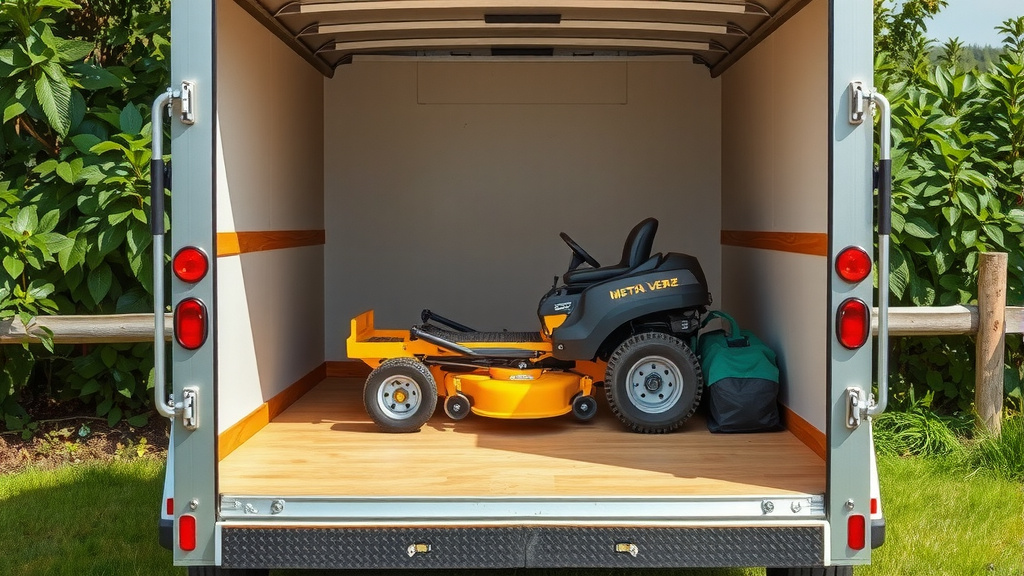
To load a lawn mower onto a trailer safely, you must first ensure your trailer is hitched and level, then attach secure, sturdy ramps at a low angle, and finally drive or push the mower up slowly and carefully.
Always prioritize safety by wearing proper gear, checking ramp stability, and securing the mower tightly with appropriate tie-downs to prevent movement during transport.
- Get your trailer ready: Hitch it and make sure it’s level.
- Pick good ramps: They need to be strong and secure.
- Prep your mower: Turn it off and check the fuel.
- Load it carefully: Drive slowly or push, always paying attention.
- Tie it down tight: Use strong straps at four points.
How To Load A Lawn Mower On A Trailer?
Loading a lawn mower onto a trailer involves a few key steps to ensure safety and prevent damage. You’ll need to prepare your equipment and the area before moving your mower carefully onto the trailer and securing it.
Why Loading Your Mower Correctly Matters
Loading your lawn mower correctly isn’t just about getting it from one place to another; it’s about protecting your investment and yourself. An improperly loaded mower can shift during transit, causing damage or even leading to serious accidents on the road. Many experts say that taking a few extra minutes for proper setup saves hours of potential trouble (National Safety Council).
Gathering Your Essential Gear
Before you even think about moving your mower, gather all the right tools. Think of it like packing for a trip; you wouldn’t forget your toothbrush, right? You’ll need a few specific items for a smooth process.
Choosing the Right Trailer
Your trailer needs to be appropriate for the mower’s size and weight. A small utility trailer works for most walk-behinds, but a riding mower or zero-turn demands a sturdier, wider trailer. Ensure the trailer is well-maintained, with working lights and tires in good condition.
Selecting the Safest Ramps
Ramps are your mower’s bridge to the trailer bed. They must be strong enough to support the mower’s weight, plus your own if you’re walking it. Look for ramps with a non-slip surface and a secure attachment mechanism to prevent slipping.
Securing Your Mower with Straps
You’ll need at least four heavy-duty tie-down straps or ratcheting straps. These aren’t just for show; they hold your mower firmly in place. We found that straps with a high working load limit are always best, as they provide extra peace of mind.
Preparing Your Lawn Mower for Transport
A little preparation of your mower goes a long way. First, make sure your fuel tank isn’t overflowing; a partially full tank helps prevent spills. It’s often recommended to drain some fuel if the tank is completely full (EPA guidelines).
Next, clean off any large clumps of grass or mud from the deck and wheels. This reduces debris during transport and lightens the load slightly. Turn off the engine, engage the parking brake if it’s a riding mower, and remove the key.
Prepping the Trailer and Area
This stage is like setting the stage for a play; everything needs to be in its proper place. Taking the time here prevents frustrating mishaps later.
Parking Your Trailer Safely
Park your trailer on a flat, level surface. This creates a stable loading environment and reduces the risk of the mower rolling off. Engage the parking brake on your tow vehicle and chock the trailer wheels for extra security, if possible.
Attaching Ramps Securely
Position your ramps correctly against the trailer’s edge. They should be spaced to match your mower’s wheel width. Many experts suggest using ramps with a lip or pin system that fits into the trailer to prevent them from sliding off.
Loading a Walk-Behind Mower
When loading a walk-behind mower, you’ll typically push it up the ramps. Position yourself behind the mower, guiding it slowly. If the mower is self-propelled, engage the drive but still keep a firm grip on the handle.
Walk slowly and steadily, being careful not to slip on the ramps. Once the front wheels are on the trailer bed, keep pushing until the entire mower is safely onboard. Remember, patience is your best friend here.
Loading a Riding Mower or Zero-Turn
Loading a larger mower involves driving it up the ramps. This requires a bit more nerve, but with caution, it’s quite simple. Remember to drive slowly and deliberately.
Driving Up Carefully
Line up your mower directly with the ramps. Engage the parking brake on the mower before you start, then release it when ready. Drive up the ramps at a slow, constant speed, avoiding sudden stops or turns. Keep your hands on the steering wheel or control levers and look straight ahead.
The Winch Method (Alternative)
If you’re uncomfortable driving a heavy mower up ramps, or if the angle is too steep, a winch is a great alternative. Attach the winch hook to a sturdy point on your mower, such as the frame. Slowly operate the winch, allowing it to pull the mower up the ramps. This method offers excellent control.
Securing Your Mower for the Road
Once your mower is on the trailer, the job isn’t done. Securing it properly is arguably the most critical step. Think of your mower as a large, heavy object that wants to move with every bump.
Where to Attach Tie-Downs
Attach your tie-down straps to the mower’s frame or strong, non-moving parts, like axles. Avoid attaching straps to plastic components or steering linkages. We found that securing each corner of the mower to a corner of the trailer creates the most stable hold.
Checking for Wiggle Room
After attaching all four straps, pull them tight. Try to shake the mower gently; it should barely move. If it wiggles significantly, you need to tighten the straps further. Many guidelines point to a four-point tie-down system as a good first step (Department of Transportation).
What to Do After Loading
You’ve successfully loaded and secured your mower. Now, take a final walk-around. Check that all tools are stored, ramps are secured or put away, and nothing is loose. Double-check your trailer lights and connections. It’s a small check that makes a big difference.
Common Mistakes to Avoid
Even experienced folks can make simple errors. Here’s a quick glance at what to watch out for:
| Mistake | Why It’s Bad | Better Approach |
|---|---|---|
| Using weak ramps | Ramps can buckle, causing falls. | Always use ramps rated for your mower’s weight. |
| Not chocking wheels | Trailer can roll or shift unexpectedly. | Chock trailer wheels on uneven ground. |
| Overloading fuel tank | Fuel can spill or slosh out. | Keep fuel tank partially full for transport. |
| Loose tie-down straps | Mower can shift, damaging itself or others. | Ensure all straps are taut and secure. |
| Driving up too fast | Loss of control, mower can tip. | Maintain a slow, consistent speed. |
Safety First: A Quick Checklist
Before you hit the road, run through this quick mental checklist. It’s like having a co-pilot for safety:
- Trailer is properly hitched and level?
- Ramps are clean, dry, and securely attached?
- Mower engine is off, key removed, brake engaged?
- Mower’s fuel is at a safe level?
- Mower is centered on the trailer?
- All tie-down straps are tight and secure at four points?
- No loose items on the trailer bed?
- Trailer lights and connections are working?
Conclusion
Loading a lawn mower onto a trailer might seem like a daunting task at first, but with the right preparation, tools, and a methodical approach, it becomes a simple process. Remember, safety isn’t an option; it’s a necessity. By taking the time to secure your mower properly, you ensure a smooth journey for your equipment and peace of mind for yourself. You’ve got this!
How do I prevent my lawn mower from rolling off the trailer?
To prevent your lawn mower from rolling off, always use at least four heavy-duty tie-down straps, securing each corner of the mower’s frame to the trailer. Additionally, ensure the trailer is level and parked on firm ground during loading, and consider chocking the trailer wheels.
Is it better to load a riding mower forwards or backward?
Most riding mowers are designed with more weight in the rear (engine position), so loading them forwards is generally safer. This provides better traction going up the ramps and distributes the weight more evenly on the trailer. However, always check your mower’s specific manual for recommendations.
What kind of ramps are best for loading a heavy zero-turn mower?
For a heavy zero-turn mower, you’ll need heavy-duty aluminum or steel ramps with a high weight capacity, often exceeding 1,500 pounds. Look for ramps with a wide surface and a secure attachment system, such as a plate or pin that hooks onto the trailer bed, to prevent slippage.
Can I use wooden planks as ramps for my lawn mower?
While possible for very light walk-behind mowers, wooden planks are generally not recommended due to their inconsistency in strength and tendency to split or flex. Manufactured metal ramps designed for vehicle loading are much safer and more reliable, especially for heavier or riding mowers.
What should I do if my mower gets stuck on the ramps?
If your mower gets stuck on the ramps, avoid forcing it. If driving, gently reverse down. If pushing, slowly pull it back down. Re-evaluate the angle of your ramps, ensure they are securely attached, and perhaps try a different approach, like using a winch or repositioning the trailer to reduce the incline.
