
How to Start a Lawn Mower That Won’t Start?
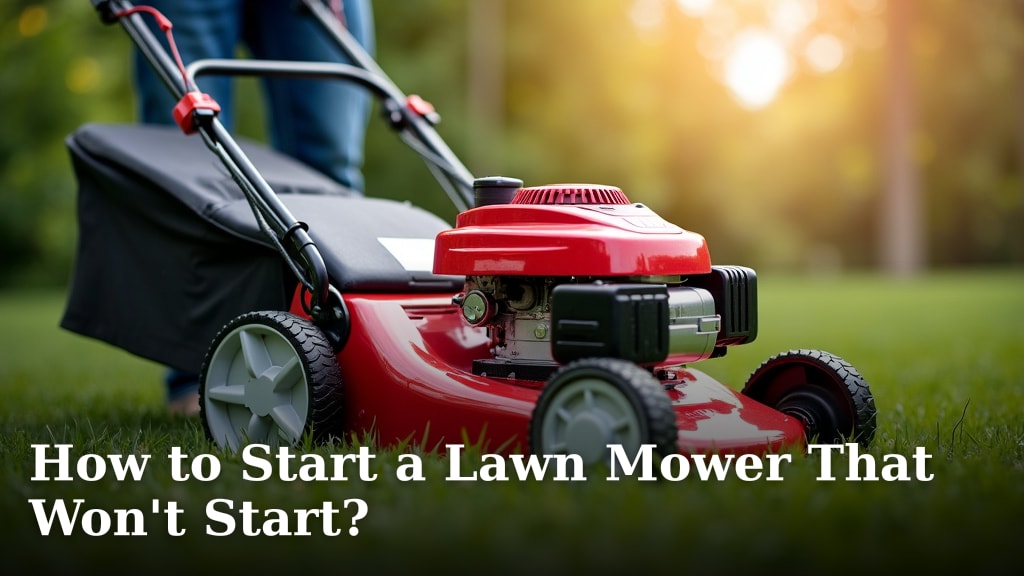
To start a lawn mower that won’t start, begin by checking the fuel level and quality, then inspect the spark plug for fouling, and finally ensure the air filter isn’t clogged.
You’re ready to mow, but your lawn mower just sits there. It’s a common and frustrating problem for many homeowners. We understand how annoying it is when your lawn mower decides to take a vacation just when you need it most. Often, a few simple checks can get your engine purring again, saving you a trip to the repair shop and keeping your lawn tidy.
- Inspect fuel and oil levels.
- Check the spark plug for dirt or damage.
- Clean or replace the air filter.
- Prime the engine if necessary.
- Ensure safety features are engaged.
Let’s walk through these common issues step-by-step. We’ll show you exactly how to diagnose and fix your stubborn mower so you can get back to enjoying your yard.
Getting Your Stubborn Lawn Mower Started Again
Is your lawn mower playing hard to get? You push the button or pull the cord, and… nothing. Don’t worry, many common issues prevent a mower from starting, and most are surprisingly easy to fix yourself. We’ll guide you through the most frequent culprits and how to tackle them, often with just a few basic tools.
Fuel First: The Lifeblood of Your Engine
Think of your mower like a car; it needs good, clean fuel to run. Always start here. Old or contaminated fuel is a surprisingly common reason for a no-start situation (Environmental Protection Agency).
Check Your Fuel Level and Quality
Is there enough gas in the tank? It sounds obvious, but we’ve all been there! Make sure your fuel tank isn’t just low, but actually has fresh gasoline. Gasoline can go bad relatively quickly, especially if it contains ethanol.
- Inspect the fuel level.
- Look at the fuel’s color and smell. Fresh gas is usually clear or slightly yellow. Old gas might look dark or cloudy and smell stale, like varnish.
- If the fuel is old, drain it and refill with fresh, unleaded gasoline. Consider adding a fuel stabilizer to extend its shelf life.
Examine the Fuel Filter
Your mower has a fuel filter, much like a car, to keep impurities from reaching the engine. If it’s clogged, fuel can’t flow properly. Many experts recommend checking this yearly.
- Locate the fuel filter, usually a small cylindrical component in the fuel line.
- If it looks dirty, discolored, or clogged with debris, it’s time for a replacement.
- Replacing a fuel filter is usually a straightforward process. You might need to clamp the fuel lines to prevent spills.
Spark Plug: The Ignition Point
The spark plug creates the spark that ignites the fuel-air mixture. If it’s dirty, damaged, or wet, your engine won’t start. This is a primary suspect if your mower cranks but won’t catch.
Inspect and Clean the Spark Plug
A little spark goes a long way. This small part is mighty important. First, you’ll need a special tool called a spark plug wrench to remove it.
- Carefully remove the spark plug wire.
- Use your spark plug wrench to unscrew the plug.
- Examine the tip: Is it covered in black soot? Is it oily? Is it wet with fuel?
- If dirty, clean it with a wire brush or fine-grit sandpaper.
- Adjust the gap carefully with a spark plug gapper if needed (check your mower’s manual for the correct gap).
- If it looks severely corroded, cracked, or the electrode is worn, replace it. They’re inexpensive.
Test for Spark
Want to see if your plug is doing its job? You can test it safely. This is where you literally check for a spark.
- Reconnect the spark plug wire to the cleaned or new plug.
- Hold the plug’s threaded base against a metal part of the engine (e.g., the engine block).
- Pull the starter cord or turn the key.
- You should see a strong, blue spark jump across the gap. If not, your ignition system might have issues, or the plug is truly dead.
Air Filter: Breathing Room for Your Engine
Just like you need to breathe, your engine needs clean air. A clogged air filter chokes the engine, preventing it from starting or running smoothly. It’s often overlooked, but it’s vital for performance.
Check and Clean or Replace the Air Filter
A dirty air filter means your engine is essentially gasping for air. This can lead to a rich fuel mixture, making starting difficult. Many manufacturers recommend checking your air filter before each mowing season.
- Locate the air filter housing, usually a plastic or metal box on the side of the engine.
- Open the housing and remove the filter.
- If it’s a paper filter, hold it up to a light source. If you can’t see light through it, it’s clogged and needs replacing. You can try tapping it clean, but often replacement is best.
- If it’s a foam filter, you can usually wash it with warm, soapy water, rinse thoroughly, let it dry completely, and then lightly oil it before reinserting.
Priming and Choke: Getting Fuel Where It Needs to Go
Some mowers need a little help getting fuel to the carburetor, especially in colder weather or after sitting for a while. This is where the primer bulb and choke come in handy. These mechanisms help get the air-fuel mixture just right for ignition.
Use the Primer Bulb Correctly
If your mower has a small rubber primer bulb, it’s there for a reason. Don’t overdo it, though!
- Press the primer bulb three to five times, depending on your manual’s recommendations. You should see fuel entering the clear line.
- Priming pushes fuel directly into the carburetor, helping with the initial start. Too many pushes, and you can flood the engine.
Engage the Choke
The choke limits the airflow into the engine, making the fuel-air mixture richer. This is crucial for cold starts. Think of it as holding your breath before a big push.
- For many mowers, moving the throttle lever to the “Start” position automatically engages the choke.
- If your mower has a separate choke lever, engage it fully before attempting to start.
- Once the engine fires, gradually disengage the choke as the engine warms up to prevent sputtering.
Oil Level and Type: The Engine’s Lubricant
While not a direct cause of a no-start, incorrect oil levels or wrong oil types can cause engine damage and prevent future starts. Always consult your mower’s manual for the recommended oil type and capacity. Some mowers have a low-oil sensor that will prevent starting for engine protection.
- Check your dipstick. The oil level should be between the “Add” and “Full” marks.
- Ensure the oil is clean and free of metal shavings, which could indicate a bigger problem.
- Top off or change the oil as needed.
Safety Features Checklist
Modern mowers have safety features that prevent them from starting under certain conditions. These are designed to keep you safe, but they can be frustrating if you don’t realize they’re engaged.
Always review your specific mower’s manual, but here are some common safety interlocks:
| Safety Feature | What to Check |
|---|---|
| Blade Control Bar (Walk-Behind) | Ensure you are holding the bar firmly against the handle. Most mowers won’t start otherwise. |
| Seat Switch (Riding Mower) | Are you properly seated? Some mowers won’t start if the switch doesn’t detect your weight. |
| Parking Brake (Riding Mower) | Is the parking brake set? Many riding mowers require it to be engaged. |
| PTO (Power Take-Off) Lever | Is the blade engagement lever disengaged? Blades must be off for starting. |
| Key Fob/Kill Switch | Is the kill switch in the “Run” position? Is the key fully inserted? |
Final Checklist Before Calling for Help
You’ve gone through everything! Before you throw in the towel, run through this quick recap. Sometimes, it’s a combination of small things. We hope this gets you back to mowing in no time!
- Is your fuel tank full with fresh, stabilized gasoline?
- Is the choke engaged (if needed), and have you primed the engine (if equipped)?
- Is the spark plug clean, gapped correctly, and producing a strong spark?
- Is the air filter clean and unobstructed?
- Have you checked and engaged all safety features (blade control, parking brake, etc.)?
- Is the oil level good?
Conclusion
So there you have it! Don’t let a stubborn mower ruin your weekend. By systematically checking the fuel, spark plug, and air filter, you can fix most common starting problems yourself. Remember to always prioritize safety and consult your owner’s manual for specific details on your model. With a little troubleshooting know-how, you’ll be back to a perfectly manicured lawn in no time. If these steps don’t work, consider professional help, but you’ve likely identified the issue!
Frequently Asked Questions
What if my lawn mower tries to start but then dies immediately?
If your mower sputters to life only to die, it often points to a fuel delivery issue. Check your fuel filter for clogs and ensure the carburetor isn’t gummed up. Sometimes, a partially engaged choke can also cause this behavior as the engine isn’t getting enough air once it warms up slightly.
Can a dirty carburetor prevent my lawn mower from starting?
Absolutely. A dirty or clogged carburetor is a very common reason for starting issues. Old, stagnant fuel can leave behind varnish and deposits that block the small passages in the carburetor, preventing proper fuel flow. Cleaning or rebuilding the carburetor might be necessary.
How do I know if my lawn mower’s battery is the problem?
For mowers with electric start, a weak battery will often result in a slow or non-existent crank. You might hear a clicking sound or nothing at all. You can test the battery’s voltage with a multimeter, and if it’s below 12.4 volts, it likely needs charging or replacing.
What does it mean if I smell gas but the mower won’t start?
A strong gasoline smell usually indicates a flooded engine. This happens when too much fuel gets into the combustion chamber, making it difficult for the spark plug to ignite the mixture. Try waiting 15-20 minutes, then attempt to start the mower without priming or choking it, holding the throttle wide open.
Is it always necessary to drain old fuel from my lawn mower?
Yes, if the fuel is more than a month or two old and smells stale or appears discolored, it’s best to drain it completely. Old fuel degrades and can cause significant problems for your engine and carburetor. Using a fuel stabilizer can help prevent this issue if your mower sits for extended periods.
