
How to Store a Lawn Mower for Winter?

To store
Preparing Your Lawn Mower for Winter Storage
Proper winterization protects your lawn mower. It prevents damage and ensures it starts up easily next spring.
Skipping this step can lead to costly repairs. We’ll walk you through each step. You’ll feel confident your mower is ready for its long nap.
Clean Your Mower Thoroughly
Before putting your mower away, give it a good cleaning. This removes grass, dirt, and debris that can cause rust and corrosion.
A clean mower is a happy mower. It also lets you spot any damage that needs attention.
Remove Grass Clippings
Underneath the deck, grass clippings tend to stick. They hold moisture against the metal parts.
Disconnect the spark plug wire first for safety. Then tip the mower carefully to clean the undercarriage.
Use a scraper, stiff brush, or hose. Avoid high-pressure washers, as they can force water into seals.
Wash the Exterior
Wipe down the entire outside of your mower. A damp cloth works well for most surfaces.
You can use a mild soap solution for stubborn grime. Rinse it thoroughly and allow it to dry completely.
Don’t forget the wheels and engine cover. These areas can collect a lot of dirt.
Fuel System Preparation
Fuel is a big concern for winter storage. Gasoline left in a tank can cause big problems.
It can break down, gum up, and damage engine components (EPA).
You have two main options here: drain the fuel or use a stabilizer.
Drain the Fuel Tank
Draining the fuel is often the best choice for long-term storage. This completely removes the risk of old fuel issues.
Run the engine until it stops from lack of fuel. This clears the carburetor as well.
Always use an approved container for draining. Dispose of old gasoline responsibly.
Use a Fuel Stabilizer
If draining isn’t practical, use a fuel stabilizer. This keeps gas fresh for months.
Add the stabilizer to a full fuel tank. Then run the engine for 10-15 minutes.
This circulates the treated fuel throughout the system. Check the product label for correct mixing ratios.
Oil Change and Spark Plug Inspection
Changing the oil before storage is a smart move. Old oil can contain contaminants that harm your engine.
It’s like sending your engine to bed with a fresh, clean dinner.
Change the Oil
Warm the engine up slightly before changing the oil. This helps the old oil flow out more easily.
Refer to your owner’s manual for the correct oil type and capacity. Always use clean oil.
Proper disposal of used oil is important. Many auto parts stores offer recycling.
Check the Spark Plug
A new spark plug can make a big difference in spring. It helps with easier starting.
Remove the old plug and check its condition. Look for deposits or wear.
Replace it if it looks fouled or worn. Make sure the gap is set correctly (Consumer Reports).
Blade Care and Battery Maintenance
Don’t overlook the cutting blade. A dull or damaged blade affects your lawn’s health next year.
And for electric start models, the battery needs some love too.
Inspect and Sharpen the Blade
Remove the mower blade for inspection. Check for nicks, bends, or dullness.
You can sharpen it yourself with a file or grinder. Or take it to a professional.
Always ensure the blade is balanced after sharpening. An unbalanced blade causes vibrations.
Battery Storage Tips
If your mower has an electric start, remove the battery. Store it in a cool, dry place.
Most small engine batteries benefit from a “trickle charger.” This maintains its charge without overcharging.
A fully charged battery lasts longer. It also prevents freezing in cold weather.
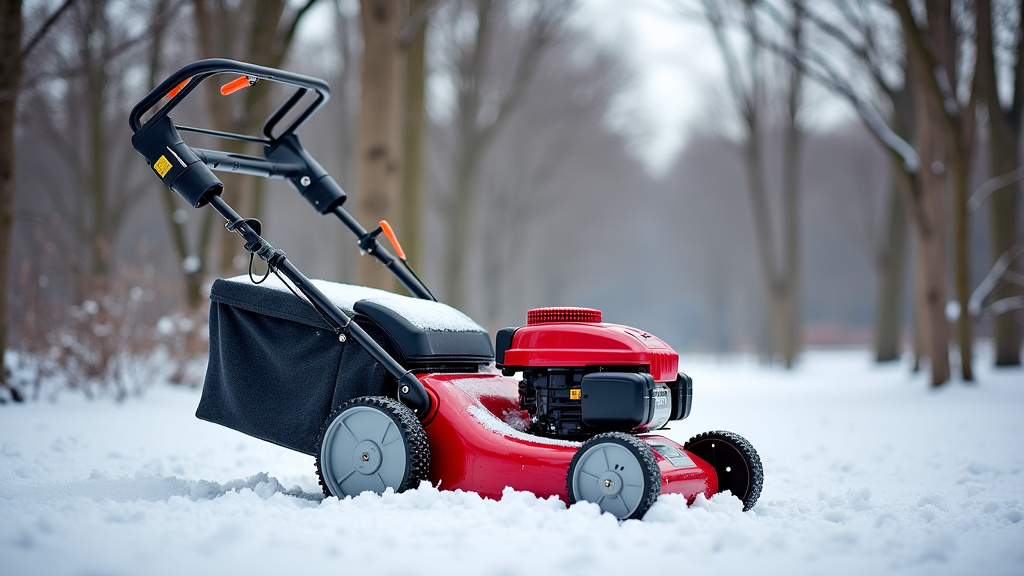
Final Storage Location and Protection
Where you store your mower matters. The environment plays a key role in its condition.
Think about temperature, moisture, and pests when choosing your spot.
Choose the Right Place
A dry, sheltered place is ideal. A garage, shed, or basement works well.
Avoid areas with drastic temperature swings. This can promote condensation and rust.
Elevate the mower off the ground if possible. This keeps it away from moisture.
Consider a Mower Cover
A breathable mower cover offers extra protection. It keeps dust and debris off your clean machine.
Look for covers designed for outdoor equipment. They often have ventilation to prevent moisture buildup.
Pest Control
Rodents love cozy nooks for winter. Your mower can be an inviting home.
Check air filters and exhaust ports. Block any openings with steel wool or mesh.
This prevents critters from building nests. They can chew wires or cause blockages.
Seasonal Lawn Mower Storage Checklist
To help you keep track, here’s a quick checklist. Use it to ensure you cover all the bases.
It’s a simple reminder to protect your investment.
- Disconnect the spark plug.
- Clean the mower deck and exterior.
- Drain fuel or add stabilizer.
- Change the engine oil.
- Replace or clean the spark plug.
- Inspect and sharpen the blade.
- Clean or replace the air filter.
- Remove and charge the battery.
- Store in a dry, safe place.
- Cover the mower to protect from dust.
Comparing Storage Needs by Mower Type
While many steps are universal, some differences exist. Different mower types have specific needs.
Understanding these helps you fine-tune your approach.
| Mower Type | Key Winterization Differences | Special Considerations |
|---|---|---|
| Gas Push Mower | Focus on fuel and oil changes. Blade sharpening is key. | Ensure carburetor is dry (by running out of fuel). |
| Gas Self-Propelled | Same as push, plus check transmission linkage. | Lubricate drive cables. |
| Electric Corded | No fuel/oil. Clean thoroughly. Store cord neatly. | Protect motor from extreme cold/moisture. |
| Electric Battery | Remove battery, store in warm, dry place. Charge it. | Clean battery terminals. |
| Riding Mower | More fuel to drain or stabilize. Larger oil capacity. | Check tires for proper inflation. Disconnect battery. |
As you can see, fuel management is the main differentiator. Electric mowers simplify this step considerably.
Conclusion
Taking a little time now saves you headaches and money later. By properly preparing your lawn mower for winter, you’re protecting a valuable investment. You’re ensuring it’s ready to tackle spring tasks with ease. Follow these steps, and you’ll avoid common problems like old fuel issues or rust. This proactive approach means less stress and more enjoyment when the mowing season returns. Give your mower the care it deserves, and it will serve you well for years to come.
Frequently Asked Questions
Is it really necessary to drain the gas from my lawn mower?
Yes, it’s highly recommended. Gasoline can break down over time, forming gummy residues that clog your carburetor. Draining the fuel eliminates this risk entirely, preventing potential starting issues and costly repairs in the spring.
Can I just leave my battery in the mower for winter?
You can, but it’s not ideal. Batteries tend to discharge slowly in cold conditions. Removing it and storing it in a warmer place, preferably connected to a trickle charger, significantly extends its lifespan and ensures it holds a full charge for spring.
How often should I sharpen my lawn mower blade?
It’s best to sharpen your blade at least once a year, ideally at the end of the season before storage. A sharp blade provides a clean cut, promoting a healthier lawn. A dull blade tears grass, which can make your lawn more susceptible to disease.
What kind of cover should I use for my lawn mower during winter?
Choose a breathable cover designed for outdoor power equipment. This type of cover protects against dust and minor scrapes without trapping moisture underneath. Trapped moisture can lead to rust and mildew, which you want to avoid.
My garage gets very cold. Is this bad for my stored lawn mower?
While a consistent, cool temperature is generally fine, drastic temperature swings can cause condensation. This condensation can encourage rust on metal parts. If your garage often fluctuates, consider elevating the mower and using a breathable cover for extra protection.
