
How To Tie Down Lawn Mower On Trailer?
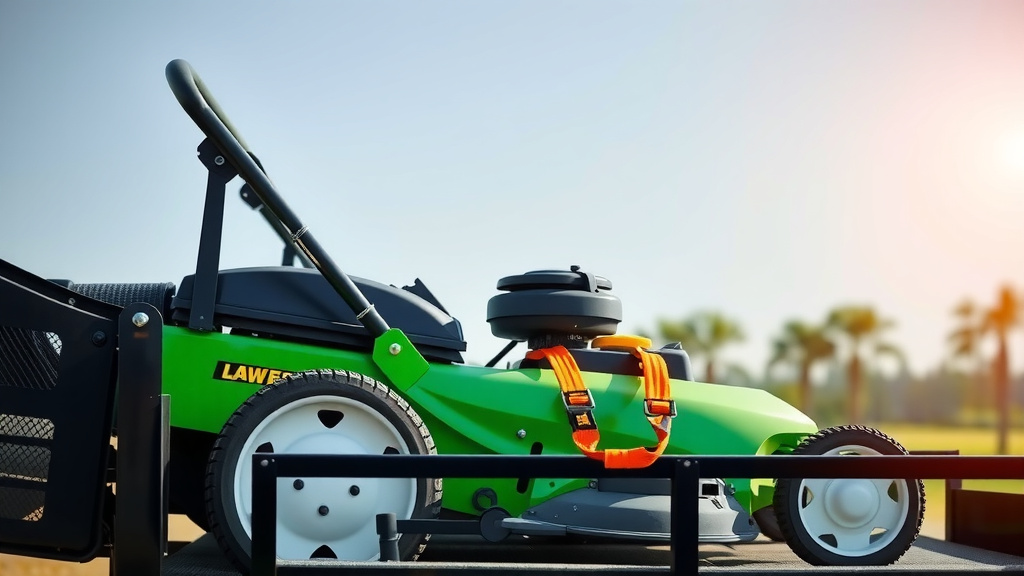
To safely tie down a lawn mower on a trailer, use at least four heavy-duty ratchet straps, securing one to each wheel or axle and anchoring them to the trailer’s D-rings.
Always ensure your mower’s brakes are engaged and the fuel valve is off, providing a stable, secure load for transit.
For those short on time, here’s a quick rundown of how to keep your lawn mower safe and sound during transport:
- Inspect Your Gear: Always check your straps and trailer for damage before you start.
- Position with Care: Load the mower evenly over the trailer axles for proper weight distribution.
- Engage Brakes: Lock the parking brake on your riding mower or zero-turn to prevent rolling.
- Four Points of Contact: Use at least four strong ratchet straps, one for each corner or wheel.
- Double-Check Everything: Give all straps a final tug and inspect the setup before hitting the road.
How To Tie Down Lawn Mower On Trailer?
Securing your lawn mower on a trailer means keeping it safe for everyone on the road. It also protects your valuable equipment from bumps and slides.
We’ve all seen things shift on a trailer, right? A properly tied-down mower stays put, preventing damage and potential hazards.
Why Securing Your Mower Matters So Much
Imagine your mower rolling free on the highway. Not a good picture! Proper tie-down practices prevent accidents and costly damage.
Many experts agree that an unsecured load is a serious road hazard (Department of Transportation). This is why knowing how to tie down a lawn mower on trailer is so important.
Understanding Your Lawn Mower Type
Different mowers need slightly different tie-down methods. Are you moving a push mower or a heavy-duty zero-turn?
A small push mower is easier, but a riding mower or a commercial zero-turn demands extra care due to its weight and size.
Push Mowers and Walk-Behinds
These are generally lighter. You might only need two good straps if they can be securely braced against the trailer front or sides.
However, we found that using four straps is always a safer bet, even for lighter models. More anchor points mean more stability.
Riding Mowers and Zero-Turns
These big machines need serious attention. Their weight means any movement could be disastrous.
You’ll absolutely need four strong ratchet straps, secured at all four corners of the mower to anchor it properly.
Gathering Your Essential Tie-Down Gear
Having the right tools makes all the difference. Don’t skimp on quality when it comes to straps and accessories.
Good quality gear is an investment in safety. It gives you peace of mind on every journey.
Choosing the Right Straps
Ratchet straps are your best friend here. They offer superior tension compared to bungee cords or rope.
Look for straps with a working load limit (WLL) that’s suitable for your mower’s weight. Many experts suggest using straps with a combined WLL of at least twice your mower’s weight.
| Strap Type | Pros | Cons |
|---|---|---|
| Ratchet Straps | Very strong, secure tension, reusable. | Can be complex to use for beginners, heavy. |
| Cam Buckle Straps | Easy to use, quick to secure. | Less tension than ratchets, not for heavy loads. |
| Rope | Cheap, versatile. | Can stretch, requires good knot-tying skills, less secure. |
Trailer Tie-Down Points
Most trailers have D-rings or similar anchor points. Make sure yours are sturdy and free from damage.
If your trailer doesn’t have enough, consider adding more anchor points. It’s a simple safety upgrade.
Preparing Your Lawn Mower for Transport
A little preparation goes a long way. These steps prevent leaks and ensure the mower stays in place.
Taking a few extra minutes before loading can save you a lot of trouble later on.
- Clear the Deck: Remove any loose items from the mower deck, like grass clippings or tools.
- Turn Off Fuel: If your mower has a fuel shut-off valve, close it. This prevents fuel leaks during transit.
- Engage the Brake: Always set the parking brake on riding mowers or zero-turns. This is a critical step.
- Raise Deck: Lift the cutting deck to its highest position. This gives you better clearance and prevents damage.
Loading Your Mower Onto the Trailer
Careful loading helps balance the weight. This is important for safe towing, especially on turns.
Try to center the mower’s weight over the trailer’s axles. This prevents the trailer from being too heavy at the front or back.
Ramps and Safety
Use sturdy ramps designed for vehicle loading. Always check their weight capacity.
Drive slowly and carefully up the ramps. Consider having a spotter to help guide you.
Positioning for Balance
Once on the trailer, move the mower so its weight is distributed evenly. Aim for about 60% of the mower’s weight to be ahead of the trailer axles.
This balance helps with trailer stability and handling on the road. Too far back, and your trailer could sway uncontrollably.
The Step-by-Step Tie-Down Process
Now for the main event: securing the mower. This process is about creating a firm, unyielding connection.
Follow these steps carefully to ensure your mower is locked down tight and ready for the journey.
Front Straps First
Attach two ratchet straps to the front of the mower. If possible, hook them to the axle or a sturdy frame component.
Connect the other end of each strap to a front D-ring on the trailer. Pull them taut but don’t fully tighten yet.
Securing the Rear
Repeat the process for the rear of the mower. Attach straps to the rear axle or frame points.
Connect them to the rear D-rings on the trailer. Your mower now has four main anchor points.
The “X” Pattern for Extra Stability (Optional but Recommended)
Some people prefer an “X” pattern. This means crossing the straps from one side of the mower to the opposite trailer D-ring.
This method can add an extra layer of stability, especially for larger, heavier mowers. It helps prevent side-to-side movement.
Tightening All Straps Evenly
Go around and tighten each strap a little at a time. This ensures even pressure and prevents the mower from tilting.
You want the straps to be drum-tight, with no slack. Give them a good tug to test their tension.
A Quick Pre-Trip Checklist
Before you even start the engine of your towing vehicle, run through this quick checklist. It’s like a final exam for your tie-down job.
This small step often catches little oversights that could make a big difference down the road.
- Are all four straps securely attached?
- Are the straps free from twists or frays?
- Is the mower’s parking brake engaged?
- Is the fuel valve closed (if applicable)?
- Does the mower feel completely stable when you push on it?
- Are there any loose items on the mower or trailer?
Troubleshooting Common Tie-Down Mistakes
Even experienced people can make mistakes. Knowing what to watch out for can save you a headache.
Many experts we’ve spoken with point to a few common errors. Let’s look at how to avoid them.
Using the Wrong Straps
Bungee cords are for light loads, not heavy machinery. Ropes can stretch and loosen. Always use strong ratchet straps.
Research shows that improper strap selection is a leading cause of unsecured loads (Federal Motor Carrier Safety Administration).
Not Enough Anchor Points
Two straps might seem enough for a small mower, but four is always better. More points mean less chance of movement.
Imagine trying to hold down a heavy box with just two hands instead of four. The same idea applies here.
Loose Straps
A strap that isn’t drum-tight is a loose strap. It offers little protection against bumps and turns.
Check the straps after a few miles of driving, especially on a long trip. They can sometimes loosen slightly.
Conclusion
Tying down your lawn mower on a trailer is more than just a chore; it’s a crucial safety measure. By choosing the right gear, preparing your mower, and following a careful tie-down process, you ensure a smooth and safe journey for everyone.
Remember, a little extra care and attention to detail go a long way in protecting your valuable equipment and preventing potential accidents. Happy towing!
How many straps do I need for a riding lawn mower?
You should use at least four heavy-duty ratchet straps for a riding lawn mower. Attach one strap to each corner or wheel area, securing it to a sturdy anchor point on the trailer.
Can I use rope to tie down a lawn mower?
It’s generally not recommended to use rope to tie down a lawn mower, especially heavy riding mowers. Rope can stretch, loosen, and requires complex knots that may fail. Ratchet straps offer much greater security and tension.
Where should I attach straps on my lawn mower?
Attach straps to the mower’s sturdy frame components, axles, or dedicated tie-down points if available. Avoid hooking straps to plastic parts, steering components, or anything that could bend or break under tension.
Should I remove gas from my mower before trailering?
While not always strictly necessary, it’s a good practice to turn off the fuel shut-off valve if your mower has one. This helps prevent fuel leaks during transit and can reduce fumes. Fully draining the tank is usually only needed for very long storage or shipping.
What is the most common mistake when tying down a mower?
The most common mistake is using insufficient or incorrect straps, such as bungee cords, which do not provide enough tension and can easily fail. Another frequent error is not tightening the straps enough, allowing the mower to shift during transport.
