
How To Strap Down A Lawn Mower?
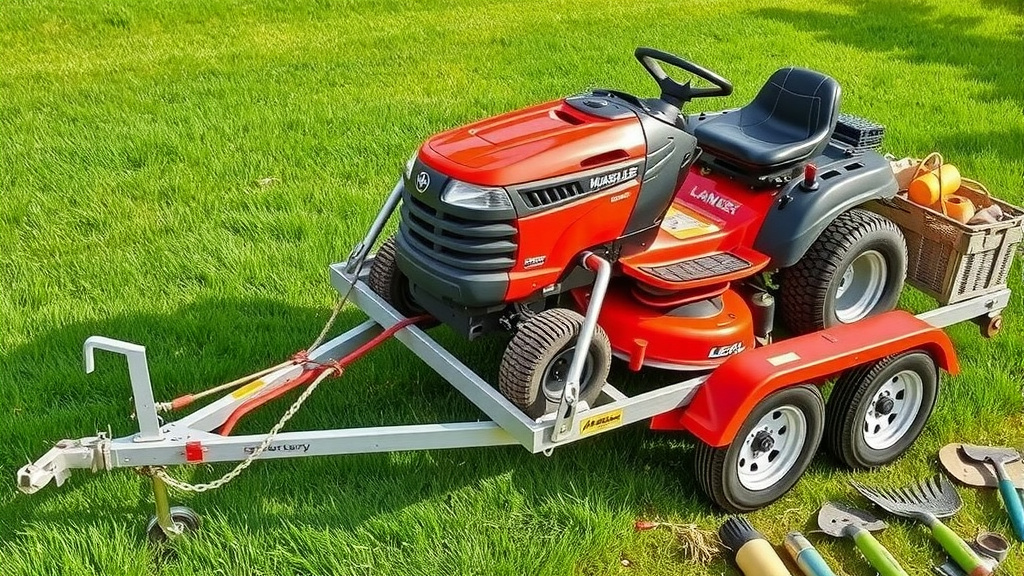
To properly strap down a lawn mower, use heavy-duty ratchet straps with a high working load limit, securing the mower to sturdy tie-down points on your trailer or truck bed.
Always drain fuel, disconnect the spark plug, and ensure all straps are tight and criss-crossed for maximum stability during transport, preventing movement and potential accidents.
- Properly securing your lawn mower is vital for safety on the road.
- Always drain fuel and disconnect the spark plug before loading.
- Use strong, correctly rated ratchet straps for reliable tie-down.
- Attach straps to the mower’s frame and trailer’s D-rings or anchors.
- Perform a “wiggle test” to confirm the mower is completely stable.
How To Strap Down A Lawn Mower?
Strapping down a lawn mower means ensuring it stays put during transport. You want to avoid any shifting or sliding, keeping everyone safe on the road.
Safety First: Why Securing Your Mower Matters
Picture this: you’re driving, and your mower suddenly shifts. That’s a hazard you want to avoid!
A properly secured mower protects your equipment, your vehicle, and other drivers. We found that loose cargo causes many accidents (National Safety Council).
Pre-Trip Mower Preparations
Before you even think about straps, a little prep goes a long way. This step is like setting the stage for a smooth journey.
Fuel and Fluids Check
Gasoline can spill, creating a fire risk. Always drain the fuel tank or run the engine until it’s empty.
We found that leaving even a little fuel can be risky. Also, check oil levels and ensure caps are tight (OSHA guidelines).
Spark Plug Disconnection
This is a small but mighty step. Disconnecting the spark plug wire prevents accidental starts. Imagine if your mower decided to crank up on the highway!
Securing Loose Parts
Bags, chutes, or grass catchers should be removed. They can become projectiles. Stow them safely in your vehicle or secure them separately.
Gathering Your Essential Gear
You wouldn’t start a race without the right shoes, right? The same goes for strapping down your mower. Having the correct tools makes all the difference.
Choosing the Right Straps
Not all straps are created equal. You need straps with enough strength for your mower’s weight.
Ratchet straps are a favorite for their tightening power. Cam buckle straps work for lighter items but offer less tension (Consumer Reports).
Consider the “Working Load Limit” (WLL) of your straps. This number tells you the maximum weight a strap can safely hold.
Ramps and Chocks
Ramps help you load the mower safely. Wheel chocks keep it from rolling once it’s on your trailer or truck bed. Don’t skip these!
Loading Your Mower Safely
Getting the mower onto the transport vehicle is the first physical challenge. Do it smart, do it slow.
Ramp Safety Tips
Always ensure ramps are securely attached to your trailer. Many experts say to load the mower slowly, driving it straight up the ramps.
If you’re walking it up, push from behind, don’t pull. This reduces the risk of the mower rolling back on you.
Positioning for Stability
Where you place your mower truly matters. Try to center the mower over the trailer’s axle or slightly forward.
This helps with weight distribution, reducing sway (Department of Transportation guidelines).
Understanding Tie-Down Points
Knowing where to attach your straps is just as important as the straps themselves. You need solid anchor points.
Mower Tie-Down Points
Look for the sturdy frame sections on your mower. Avoid plastic parts or steering components. The axles or frame rails are usually good spots.
Trailer/Truck Bed Anchors
Your trailer or truck bed should have D-rings or stake pockets. These are designed for securing cargo. Ensure they are firmly attached to the vehicle’s frame.
The Art of Strapping: A Step-by-Step Guide
Now for the main event! This is where you bring it all together.
Securing the Front
Attach two straps from the front of your mower’s frame. Angle them outwards to your trailer’s front anchor points. Tighten them until snug, but don’t overtighten just yet.
Securing the Rear
Do the same for the rear of the mower. Use two more straps, angling them to the rear anchor points. This forms a box-like securement.
The Criss-Cross Method
Many experts recommend a criss-cross pattern for extra stability. This means running a strap from the front-left of the mower to the rear-right anchor, and vice-versa.
This method helps to prevent any side-to-side movement (Federal Motor Carrier Safety Administration).
Here’s a quick visual on strap types:
| Strap Type | Best For | Pros | Cons |
|---|---|---|---|
| Ratchet Straps | Heavy items, high tension needed | Very strong, adjustable, tight grip | Can overtighten, takes practice |
| Cam Buckle Straps | Lighter items, quick securing | Easy to use, quick release | Lower tension, less secure for heavy loads |
The Wiggle Test: Your Final Check
You’ve got the straps on, but is it really secure? The “wiggle test” is your ultimate verification.
Grab the mower and try to shake it. If it moves more than an inch or two, tighten those straps! It should feel like it’s glued down.
Checklist: Your Mower Tie-Down Essentials
Before hitting the road, run through this quick list:
- Fuel drained or tank empty?
- Spark plug wire disconnected?
- All loose parts removed or secured?
- Heavy-duty ratchet straps used?
- Straps attached to sturdy frame points?
- All four points secured, maybe criss-crossed?
- Mower centered for weight distribution?
- Wiggle test passed?
Common Mistakes to Sidestep
Even seasoned pros can make small errors. Avoid these pitfalls to keep your mower secure.
Don’t overtighten your straps; you could damage your mower’s frame. Also, avoid using frayed or worn straps; they might snap under pressure.
Never rely on bungee cords for securing a heavy mower. They don’t provide enough tension and can stretch or break easily.
During Your Journey
Your job isn’t done once you start driving. A quick check can save a lot of headaches.
Periodically pull over, especially after the first few miles. Re-check the tension on your straps. Vibrations can cause them to loosen (AAA safety tips).
Conclusion
Securing your lawn mower for transport isn’t just about protecting your equipment; it’s about road safety for everyone. By taking a few extra minutes to drain the fuel, choose the right straps, and ensure a solid tie-down, you’re making a smart choice.
Remember, a well-secured mower means peace of mind on every journey. Drive safe!
How many straps do I need for a lawn mower?
You generally need a minimum of four heavy-duty ratchet straps to secure a standard riding lawn mower, one for each corner, ensuring it’s anchored at four distinct points to prevent movement.
Can I use rope to tie down a lawn mower?
While rope can seem like an easy solution, it’s not recommended for securing a lawn mower. Rope can stretch, loosen, and doesn’t provide the consistent, strong tension that specialized tie-down straps like ratchet straps offer, leading to an unsafe load.
Should I remove the blades when transporting a lawn mower?
No, it’s generally not necessary to remove the blades for transport. Your main focus should be on securing the entire mower safely to prevent any movement. However, ensuring the mower deck is raised to its highest setting can sometimes provide more clearance and stability.
What is the working load limit (WLL) for straps?
The Working Load Limit (WLL) indicates the maximum weight a strap can safely support without breaking. For securing a lawn mower, choose straps with a WLL that is at least equal to or greater than the weight of your mower to ensure adequate safety margins.
How tight should I make the straps?
Tighten your straps until they are firm and snug, eliminating any slack. The mower should not be able to shift or wiggle more than an inch when you try to move it by hand. Avoid overtightening, which could damage the mower’s frame or the trailer.
