Leaf Blower CFM vs MPH: Which Matters More? (November 2026)
For most yards, CFM matters more than MPH because volume moves leaves in bulk. MPH helps lift wet or stuck debris, so a high CFM and a solid MPH together beat a high speed number alone.
On this page (9 sections)
- Leaf blower CFM vs MPH: what each number really means
- The two numbers side by side
- When CFM decides the job
- When MPH decides the job
- What is a good CFM and MPH for a leaf blower?
- Cordless, corded and bare tool power
- Who should buy which model?
- How to use CFM and MPH without wasting time
- Leaf blower CFM vs MPH: the verdict
For most home yards, CFM matters more than MPH because volume does the bulk moving. In leaf blower CFM vs MPH terms, CFM is how much air moves and MPH is how fast that air travels.
You need enough speed to lift leaves, but you need volume to keep them rolling.
This guide compares four blowers with CFM from 180 to 600 and MPH from 110 to 180. The spread shows why a spec sheet can look strong on one number and weak on the other.
We compared the specs, features and buyer patterns for each model. We did not test them directly, so we label maker claims and tie every point to a stated spec.

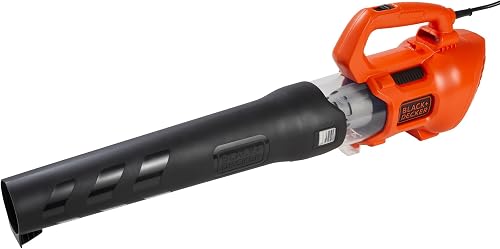 Best for corded power
BLACK+DECKER BLACK + DECKER Electric Leaf Blower
Leaf blower CFM vs MPH: what each number really means
CFM tells you air volume and MPH tells you airspeed. Think of CFM as the size of the air wave and MPH as the speed of that wave.
A high CFM blower pushes a wide stream that can roll a pile across a lawn. A high MPH blower pushes a narrow, fast jet that can break loose a stuck leaf.
Neither number works alone. Low CFM with high MPH can scatter dry leaves without moving a heavy pile.
High CFM with low MPH can move dry leaves but may fail on wet leaves or pine straw.
Noise, nozzle shape and power source also change how those numbers feel in use. A stated peak figure may only apply at top speed or in turbo mode.
Our score weighs specs, features and buyer feedback against what you are shopping for. That is why the strongest score here goes to a balanced cordless model, not the highest single number.
The two numbers side by side
The table shows a clear trade-off between volume and speed. No model here leads on both CFM and MPH at the same time.
| Model | CFM | MPH | Power |
|---|---|---|---|
| EGO POWER+ LB5302 | 530 | 110 | Cordless, battery included |
| BLACK+DECKER BEBL750 | 450 | 140 | Corded electric |
| BLACK+DECKER LB700 | 180 | 180 | Corded electric |
| PWOKVEC LB600 | 600 | 125 | Cordless, bare tool |
The PWOKVEC model leads on volume at 600 CFM. The BLACK+DECKER LB700 leads on speed at 180 MPH but has only 180 CFM.
The EGO model sits near the top on volume at 530 CFM with the lowest speed at 110 MPH. The BLACK+DECKER BEBL750 sits in the middle on both numbers.
That pattern matters more than any single peak figure. A buyer who only reads the biggest number on the box can pick the wrong tool for a yard.
When CFM decides the job
CFM decides how fast large piles move across a lawn. More volume means more leaves caught in each pass, so you make fewer return trips.
On a wide lawn with a deep leaf layer, a jump from 180 CFM to 450 CFM feels large. The bigger air stream rolls leaves along instead of just lifting the top layer.
The PWOKVEC blower at 600 CFM is built for that kind of bulk work. Its turbo boost mode is aimed at heavy wet leaves, rocks and stubborn debris, according to PWOKVEC.
The EGO blower at 530 CFM also targets bulk work. EGO says turbo mode reaches that figure for wet leaves, caked grass and rocks.
If your yard has large piles, choose CFM first. Our guide on what is a good cfm for a leaf blower helps you match volume to yard size.
Volume on grass versus hard surfaces
Grass slows a blower because leaves catch on blades and stems. A high CFM stream keeps working under the pile rather than skimming the top.
Driveways and patios are easier because leaves slide on a smooth surface. Even a lower CFM model can clear them in one pass when the leaves are dry.
Wet leaves act like a heavy mat on any surface. They need both volume to push the mat and speed to break the seal at the edges.
Start at the edge of a wet pile and work inward. That keeps the mat from spreading into a thinner layer that is harder to finish.
When MPH decides the job
MPH decides whether stuck or wet debris breaks loose. Speed gives the jet force to lift a leaf that volume alone may slide under.
The BLACK+DECKER LB700 reaches 180 MPH, the highest speed here. That jet suits dry leaves on decks, sidewalks and driveways where a fast stream clears corners fast.
The BLACK+DECKER BEBL750 reaches 140 MPH with 450 CFM. That mix helps it handle tough debris while still moving volume across a lawn.
High speed also has a cost. A fast narrow jet can scatter light leaves, stir dust and make fine debris harder to control.
Use a lower speed near flower beds and garden edges. The BEBL750 has 2-speed control for that reason, with a lighter setting around beds and a stronger setting for tough jobs.
Speed, nozzles and control
Nozzle shape changes speed and spread at the same outlet. A tapered nozzle tends to focus the stream, while a flat nozzle spreads it wider.
For gutter clearing, compare leaf blower gutter attachments.
The EGO blower includes flat and tapered nozzles, so you can trade focus for spread. That choice matters as much as the headline MPH figure.
A blower with variable speed lets you match the jet to the task. The EGO variable speed dial covers 250 to 400 CFM in its standard range, with turbo above that.
The PWOKVEC model uses a variable trigger with a speed lock and a turbo boost. That setup lets you start gentle and add force only at a stuck patch.
If you plan light daily touch-ups, read our guide on how to use leaf blower on lawn before you pick a speed.
What is a good CFM and MPH for a leaf blower?
A good range for most homes is 350 to 550 CFM and 100 to 140 MPH. That range handles dry and damp leaves on lawns of common size.
Below 250 CFM, expect slower work on large piles. The LB700 at 180 CFM fits small hard surfaces better than a full lawn in fall.
Above 550 CFM, you gain bulk power but may give up control or runtime. The PWOKVEC at 600 CFM is a volume-first choice for heavy work.
Speed above 150 MPH helps on hard surfaces and stuck debris. It does not replace volume on a wet lawn, as the LB700 shows with 180 MPH and 180 CFM.
Match the numbers to your yard, not to a neighbor's yard. A small patio needs less of both numbers than a half acre with mature trees.
For a wider buying view, see how to choose a leaf blower. It covers power source, weight and nozzle choices that sit behind the spec numbers.
Small yards, big yards and in-between
A small yard with one tree may need only 200 to 350 CFM. A light corded model can clear that space without battery worries.
A medium yard with several trees sits well at 400 to 550 CFM. That range moves piles in fewer passes and still leaves room for control.
A large yard or heavy wet leaf load pushes you toward 530 to 600 CFM. At that level, power source and runtime become deciding factors.
Do not buy for the largest pile of the year if most weeks need only a quick sweep. An oversized blower can feel heavy and loud for routine work.
Cordless, corded and bare tool power
Power source changes how CFM and MPH feel over a full job. A corded blower holds its numbers from start to finish.
A battery blower may fade as charge drops.
The EGO POWER+ LB5302 includes a 2.5Ah battery and charger. EGO says runtime reaches up to 75 minutes on a charge, with the battery charging in 50 minutes.
That runtime claim depends on speed. Turbo mode will use charge faster than a locked mid speed, so plan heavy sections first.
The PWOKVEC LB600 is a bare tool only. It takes DeWALT 20V MAX batteries, and PWOKVEC says a 4.0Ah pack runs up to 30 minutes in standard mode or 12 minutes in turbo mode.
The two BLACK+DECKER models are corded electric. They keep steady output but limit you to the reach of the cord and an outlet.
If you want cordless freedom without runtime worry, browse our Best Leaf Blower Cordless picks. They pair battery design with the CFM range most yards need.
Battery size and platform fit
Platform fit can save money when you already own batteries. The EGO blower works with all EGO 56V ARC Lithium batteries, and its included battery works with other EGO tools.
The PWOKVEC blower fits DeWALT 20V MAX packs, including the listed DCB200, DCB201, DCB203, DCB204, DCB205, DCB230 and DCB240 series. PWOKVEC says no new power system is needed if you own that platform.
Check your battery label before you order a bare tool. A pack that fits one brand may not fit another, even at the same voltage.
Larger batteries tend to hold output longer in turbo mode. Smaller packs are lighter but may drop to a lower top speed sooner.
Who should buy which model?
Pick by job type first, then by the CFM and MPH pair. The right blower for a patio is rarely the right blower for a leaf-covered lawn.
The EGO POWER+ LB5302 suits homeowners who want cordless use with strong volume. Its 530 CFM and 110 MPH pair, plus included battery and charger, fits medium to large yards.
The BLACK+DECKER BEBL750 suits buyers who want corded reliability with a balanced pair. Its 450 CFM and 140 MPH handle lawns, driveways and beds with 2-speed control.
The BLACK+DECKER LB700 suits light cleanup on hard surfaces. At 4.4 pounds it is easy to carry for decks and sidewalks, but 180 CFM limits it on big piles.
The PWOKVEC LB600 suits DeWALT battery owners who want max volume. At 600 CFM and 125 MPH it targets heavy piles, but you must supply your own battery and charger.
Not sure you need a blower at all, read Leaf Blower vs Leaf Vacuum: Which Do You Need?. Vacuuming suits small yards where you want leaves collected, not moved.
Trade-offs you should accept
Every model here trades something away. The EGO trades top speed for volume and battery freedom.
The LB700 trades volume for speed and light weight.
The BEBL750 trades cordless freedom for steady corded output. The PWOKVEC trades a complete kit for platform savings and top CFM.
Weight also matters over a long session. The EGO and BEBL750 each weigh 7 pounds, the PWOKVEC weighs 6 pounds, and the LB700 weighs 4.4 pounds.
A lighter blower is easier to aim, but a light blower with low CFM may need more passes. Choose the trade that matches your yard, not the lightest box.
How to use CFM and MPH without wasting time
Use volume to move the pile and speed to free stuck spots. Start with a wide, moderate setting and add speed only where leaves resist.
Sweep in arcs and let the pile roll ahead of you. Short back-and-forth strokes scatter leaves and make the pile thinner.
Work upwind when you can, so debris moves away from clean areas. On a lawn, push leaves toward a central pile rather than toward beds.
For wet leaves, break the edge first with a focused nozzle. The EGO tapered nozzle or a turbo burst can lift the seal, then volume can push the mat.
For dry leaves on a driveway, a lower CFM setting often finishes faster. It keeps leaves in a group instead of scattering them across the slab.
Our guide on How Much Does a Good Leaf Blower Cost? helps you weigh whether higher specs are worth it for your yard size.
Care, storage and safe use
Keep the intake and outlet clear of leaves and debris before each use. A blocked outlet lowers both CFM and MPH and strains the motor.
Store cordless blowers with batteries removed or charged as the maker directs. Keep corded cords free of kinks and check them for damage before use.
Wear eye protection and hearing protection as needed, and keep the blower away from people, pets and loose objects. High MPH can throw small stones and litter.
Do not use a blower near people who may be affected by dust, and avoid blowing dry leaves into streets or storm drains. Check local rules for yard waste.
Leaf blower CFM vs MPH: the verdict
Choose CFM first for lawns and MPH first for hard surfaces and stuck debris. In leaf blower CFM vs MPH choices, volume moves the pile and speed frees the stubborn pieces.
Pick the EGO POWER+ LB5302 for cordless volume at 530 CFM with 110 MPH. Pick the BLACK+DECKER BEBL750 for corded balance at 450 CFM and 140 MPH.
Pick the BLACK+DECKER LB700 for light, fast cleanup at 180 MPH on decks and sidewalks. Pick the PWOKVEC LB600 for max volume at 600 CFM if you already own DeWALT 20V batteries.
If you only remember one rule, match the pair to your worst typical pile. Then check our buying guide to how to choose a leaf blower and pick the setup that fits your yard.
Frequently asked questions
What is a good CFM and MPH for a leaf blower?
A good all-around range is about 350 to 550 CFM with 100 to 140 MPH for most home yards. That mix moves bulk leaves without blowing dust everywhere.
Small decks and patios can do well with less, while wet leaves and large piles need the top end.
Is higher MPH always better than higher CFM?
No, higher MPH is not always better than higher CFM. MPH is speed and CFM is volume, and leaves need volume to roll and tumble in a pile.
Too much speed with little volume scatters light leaves and stirs dust, while too little speed can fail on wet or stuck debris.
Why does one blower have high MPH but low CFM?
A narrow nozzle can raise speed while lowering total volume. That design works for tight spots and dry debris on hard surfaces.
It moves less air overall, so large piles on grass take more passes than a high CFM blower needs.


