How to Choose a Leaf Vacuum and Wood Chipper
Choose a leaf vacuum and wood chipper setup by matching chipper capacity, vacuum collection and debris type to your yard. A handheld blower-vacuum-mulcher suits dry leaves in a small yard, while a backpack blower suits large clearings and a separate chipper suits branches.
On this page (11 sections)
- How does a leaf vacuum and wood chipper combo differ from separate tools?
- What chipper capacity do you actually need?
- How much vacuum collection do you need?
- Which blower power suits your yard size?
- Should you choose corded, battery or gas power?
- Which handheld combo suits small yards and beds?
- When does a backpack blower beat a handheld combo?
- How should you handle wet leaves, matted leaves and mixed debris?
- How do you set up and care for a leaf vacuum and wood chipper?
- What trade-offs should you accept before you buy?
- Which setup should you choose for your yard?
Choose a leaf vacuum and wood chipper setup by matching chipper capacity, vacuum collection and debris type to your yard. A handheld blower-vacuum-mulcher suits dry leaves in a small yard, while a backpack blower suits large clearings and a separate chipper suits branches.
Start with the debris you make most often, then size the tool to that load.
Dry leaves, wet leaves and branches need different handling. Leaves can be blown, vacuumed and mulched.
Branches need feeding capacity and a motor built for wood. Treating both jobs as one purchase often leads to a tool that does leaves well and wood poorly.
Our score weighs specs, features and buyer feedback against what you're shopping for. We compared the three products below for how they move, collect and reduce yard debris in daily use.
How does a leaf vacuum and wood chipper combo differ from separate tools?
A combo saves space and money when your main job is leaves, while separate tools suit mixed debris. A combo converts between modes, but each mode shares one motor and one tube.
Separate tools let you size the blower for clearing and the chipper for branches.
For a small yard with mostly leaves, a combo is often enough. You blow leaves into piles, vacuum them and mulch them into a smaller volume.
The same machine cannot feed thick branches through a leaf impeller. That limit matters as soon as tree work becomes part of your cleanup.
Check what you produce after pruning. If you make twigs each season, you need a dedicated chipper sized for wood.
If you mostly make leaves and clippings, a blower-vacuum-mulcher covers the work. Our leaf mulcher or shredder guide helps you draw that line.
Rule: buy a combo for leaves first, and add a chipper only when branches are a regular part of your debris. That order stops you paying for wood capacity you will not use.
What chipper capacity do you actually need?
Chipper capacity is the largest branch diameter the machine can accept, and you should size it to your normal pruning. Small leaf mulchers handle leaves and soft green waste.
Dedicated chippers handle woody branches within a stated feed size. Buying far beyond your normal size adds weight and cost without daily benefit.
Think about your trees and shrubs. Light hedge work makes thin waste.
Tree work makes thicker branches. Feed only material within stated capacity, because forcing large wood can jam the feed path.
BLACK+DECKER says its BV3600 uses an anti-clog vortex impeller to help prevent clogging while mulching leaves.
Mulched leaves also take less space. BLACK+DECKER says this combo grinds up to 10 bags of mulch down to one.
That helps when you carry bags to the curb or fill a compost bin.
If branches are your main problem, compare models in our best leaf mulcher wood chipper roundup. Check feed size and motor type before you settle on a combo.
Rule: match chipper capacity to the thickest branch you feed every season, not the thickest branch you might find once. Most buyers do better with a leaf-first tool plus a plan for occasional wood.
How much vacuum collection do you need?
Vacuum collection determines how often you stop to empty a bag. A small bag suits a small yard and frequent emptying.
A large bag suits a bigger area but gets heavier as it fills. Check bag size, attachment and emptying method before you choose.
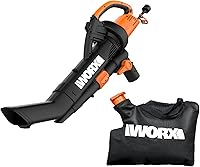
The BLACK+DECKER BV3600 includes a collection bag with a concentrator, a blow tube and a vacuum tube. Those parts let you switch from blowing to vacuuming without buying extra tubes.
The bag keeps the yard neat while you collect leaves in one pass. You still need to empty it when it fills.
Weight matters when the bag is full. This handheld combo weighs 8.1 pounds before debris.
Wet leaves add weight fast. A lighter empty tool can still feel heavy at the end of a session.
Hold the tool in blowing and vacuuming positions to check balance.
Use bag mode for beds and paths where you want a clean finish. Use blowing mode for open lawns where you plan a second pass with the vacuum.
Rule: choose collection size for your largest single cleanup, not your average one. Emptying once or twice is fine; stopping every few minutes is not.
Which blower power suits your yard size?
Blower power is shown as air speed and air volume, and both matter. Miles per hour helps move dry leaves across hard surfaces.
Cubic feet per minute describes volume and helps move larger piles. High speed with low volume can scatter leaves without moving a heavy mat.
The BLACK+DECKER BV3600 reaches up to 230 mph. It has two speed selections for flower beds and for matted leaves.
Use the lower setting near plants and the higher setting for paths. That control helps you avoid blasting mulch and soil from beds.
The Husqvarna 350BT has 692 CFM and 180 mph from a 50.2-cc, 2.1-HP engine. Volume helps it move large piles across a big area.
Backpack weight spreads the load across shoulders and hips.
If you are still deciding between blowing and vacuuming, read how to choose a leaf blower first.
Rule: choose blower power by surface and pile size, not by the largest number alone. High volume moves piles, while high speed clears hard surfaces.
Should you choose corded, battery or gas power?
Power source controls where you can work, how long you can work and how much the tool weighs. Corded tools give steady power near an outlet.
Battery tools give quiet mobility within a charge. Gas tools give long run time for large areas.
The BLACK+DECKER combo is corded electric with a 12 amp motor and a built-in cord retainer. That setup suits a small yard where the cord can reach the work area.
You trade mobility for consistent power.
The Greenworks 40V mower is battery powered. Greenworks says the 4.0 Ah battery cuts up to 1/3 acre on a full charge, depending on grass condition and technique.
It works with more than 75 Greenworks 40V tools. That shared battery matters if you plan to add other cordless tools.
Gas power, as on the Husqvarna 350BT, suits long sessions away from outlets. The trade-off is fuel handling and a heavier backpack load.
Rule: pick the power source that reaches your farthest work area without strain. Corded for small yards, battery for flexible quiet work, gas for large clearings.
Which handheld combo suits small yards and beds?
A handheld combo suits small to mid-size yards where you need blowing, vacuuming and mulching in one tool. It keeps storage simple and lets you finish beds without a second machine.
The trade-off is cord reach and a smaller bag.
The BLACK+DECKER BV3600 converts from blower to vacuum to mulcher without tools. It weighs 8.1 pounds.
BLACK+DECKER says the 12 amp motor clears leaves and debris at up to 230 mph. The anti-clog vortex impeller helps during mulching.
Two speed selections help you vary airflow for beds and matted leaves. Included parts are the blower vac, concentrator, blow tube, vacuum tube and collection bag.
That list covers the main mode changes in the box.
This design suits dry leaves and light debris. It is less suited to wet mats, thick branches or yards where the cord cannot reach.
For mulching options, see our best electric leaf mulcher guide.
Rule: choose a handheld combo when leaves are the main job and the cord can reach the work. If branches dominate, look for a dedicated chipper instead.
When should you add a dedicated mulcher?
Add a dedicated mulcher when leaf volume is your main chore. A larger feed path and bag can cut emptying stops.
Compare blade types in our best leaf mulcher with metal blades roundup.
Rule: add a dedicated mulcher when you fill bags faster than you can empty them. That need shows up most in large, leaf-heavy yards.
When does a backpack blower beat a handheld combo?
A backpack blower beats a handheld combo when you need to move large piles over a wide area. The harness spreads weight, and high volume moves heavy loads with less arm fatigue.
The trade-off is higher cost, fuel handling and less built-in vacuuming.
The Husqvarna 350BT weighs 22 pounds. Its ergonomic harness and adjustable offset handle help control blowing force.
LowVib technology reduces vibrations. An air purge system helps starting by removing air from the carburetor.
Cruise control and tube-mounted throttle controls help you hold airflow on long passes. Husqvarna describes the model for leaves, grass and hedge clippings.
It is a clearing tool first, not a vacuum or mulcher.
Use a backpack blower to gather leaves into windrows, then follow with a vacuum or rake. It is less efficient in flower beds, where a handheld tool gives finer control.
Rule: choose a backpack blower for large open areas and a handheld combo for beds, edges and collection. The right tool depends on where most leaves land.
How should you handle wet leaves, matted leaves and mixed debris?
Wet and matted leaves change the job from blowing to lifting. Wet leaves cling to grass and soil.
A vacuum with a concentrator gives more direct suction for beds and corners. Use lower blower speed near soil to avoid scattering mulch.
For matted leaves, work in short passes. Trying to clear a large wet mat in one pass can clog the tube and wet the bag.
The BLACK+DECKER combo has two speeds: gentle airflow for beds and stronger airflow for matted leaves.
Mixed debris needs sorting. Leaves suit a mulcher.
Woody branches suit a chipper if they fit. Stones and metal can damage an impeller.
Pick through piles before vacuuming if you find twigs or gravel.
Thick, wet clippings can clog tubes. Blow them into a pile first, then vacuum in thinner layers.
That sequence keeps airflow steady and reduces bag swaps.
Rule: handle wet and matted debris in small sections with the vacuum tube, not in one large blowing pass. Thin layers move faster than a single heavy mat.
How do you set up and care for a leaf vacuum and wood chipper?
Setup starts with matching parts to the job. Attach the blow tube for clearing, the vacuum tube and bag for collection, and the mulcher parts for reduction.
Check that each part locks in place before you start.
For corded models, route the extension cord first. The BV3600 has a built-in cord retainer to hold the cord in place.
Set the cord so it cannot pull free if you step back.
For backpack and gas models, check fuel, controls and harness fit. The Husqvarna 350BT uses an ergonomic harness and adjustable offset handle.
Set the straps so weight sits on your hips. Use cruise control to hold airflow without squeezing the handle.
Care is mostly cleaning and dry storage. Empty the bag after each use so damp leaves do not sit inside.
Clear leaves from tubes and the impeller area when off and unplugged. Store tubes and bags dry.
Rule: clean the bag, tubes and impeller area after every session, and store the tool dry. Five minutes of cleaning protects the next cleanup.
What trade-offs should you accept before you buy?
Every setup accepts a trade-off between versatility, power and weight. A handheld combo gives three modes but shares one motor and bag.
A backpack blower gives volume and endurance but no vacuuming. A dedicated chipper gives branch capacity but takes space and cost.
The BLACK+DECKER BV3600 gives a 12 amp corded motor, 230 mph and 3-in-1 conversion without tools. It weighs 8.1 pounds and includes tubes and bag.
Its limit is cord reach and leaf-first mulching, not branch chipping.
The Husqvarna 350BT gives 692 CFM, 180 mph and a 50.2-cc engine in backpack format. Its limit is that it clears debris rather than collecting or chipping it.
The Greenworks mower shows a different trade-off: shared battery power. Greenworks says it cuts up to 1/3 acre per charge and works with more than 75 tools in the 40V system.
It does not vacuum leaves or chip wood. Its value is as part of a cordless system.
If mowing comes first, our guide on how to choose a good lawn mower helps you size that part of the system.
Rule: accept the limit of the tool you buy, and plan a second pass for the job it cannot do. A blower plus a vacuum, or a vacuum plus a chipper, often beats one overstated combo.
Which setup should you choose for your yard?
Choose the setup by yard size, debris type and power reach. A small yard with dry leaves suits a handheld corded combo.
A large yard with open lawn suits a backpack blower plus a vacuum. A yard with regular branches needs a dedicated chipper.
For most homeowners, start with the handheld combo if leaves are the main problem. The BLACK+DECKER BV3600 covers blowing, vacuuming and mulching with included tubes and bag.
Add a dedicated mulcher if bag emptying is the bottleneck. Add a chipper if branches are regular.
If the yard is large and mostly open, start with the Husqvarna 350BT for clearing. Its 692 CFM volume moves large piles, and the harness supports long sessions.
Follow it with a vacuum or rake for collection.
If you want a cordless system, check battery sharing before you buy. Greenworks says its 40V battery works across more than 75 tools.
That sharing can simplify charging across mowing and trimming. It does not replace a leaf vacuum or chipper, so pair it with a debris tool that fits your yard.
Read our how to choose lawn mower guide if mowing is the next purchase in your system.
Rule: buy for your most common debris first, then add the tool for the second job. That order gives you the fastest useful result for a leaf vacuum and wood chipper decision.
Frequently asked questions
Can one tool replace a leaf vacuum and a wood chipper?
One handheld combo can replace a leaf vacuum for dry leaves and light mulching, but it does not replace a wood chipper for branches. Check chipper capacity against the thickest branch you plan to feed, and check vacuum collection size against your yard.
Use a blower for large areas and a vacuum for beds and edges.
What chipper capacity should I look for?
Look for a chipper capacity that covers the branch diameter you actually produce, not the largest branch you hope to handle once. Small electric leaf mulchers suit leaves and soft green waste, while dedicated chippers suit woody branches.
Confirm the feeding size before you order, so you do not force oversized material.
Should I choose corded, battery or gas for a leaf vacuum and wood chipper?
Choose corded for steady power in a small yard near an outlet, battery for quiet mobility, and gas for long clearing sessions. Each power source changes weight, run time and where you can work.
Match the source to your yard size and how far the extension cord, battery or fuel tank must carry you.
Is a leaf mulcher the same as a wood chipper?
No. A leaf mulcher reduces dry leaves to a fine mulch for beds or compost, while a wood chipper reduces branches and woody debris.
Some combos convert between blower, vacuum and mulcher modes, but that does not make them branch chippers.
Decide whether your debris is mostly leaves or mostly wood before you choose.
What should I check for vacuum collection and debris handling?
Check bag size, weight when full, how the bag attaches and how you empty it. A small bag means frequent stops, while a larger bag adds weight as it fills.
Also check whether the tube, concentrator and collection bag are included, so you can switch modes without buying extra parts.